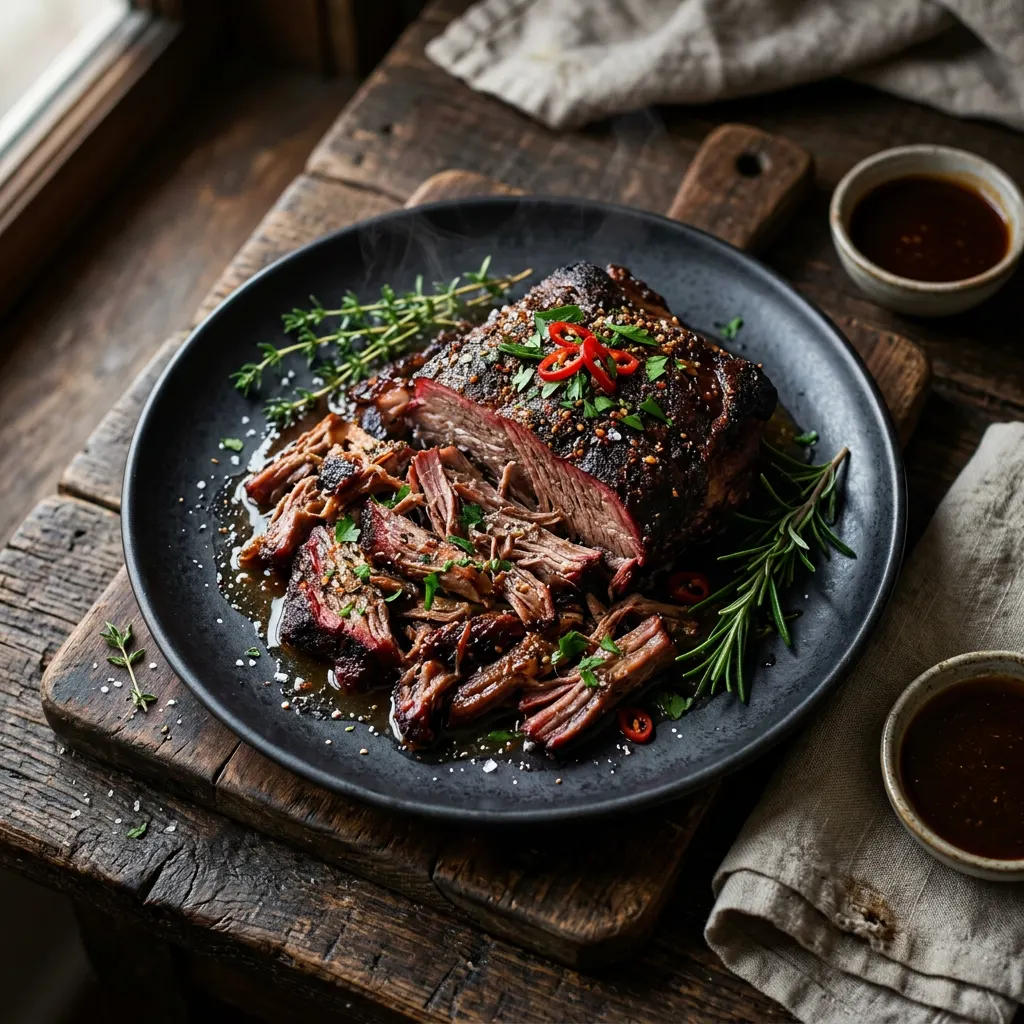
Smoked Pulled Wild Boar Shoulder
Wild boar shoulder low-and-slow until it pulls apart — leaner and gamier than pork, so a savory-sweet mop keeps it moist through the long stall.
Cook Mode
One step at a time, big text, timers, and your screen stays awake. 0/24 steps done.
Ingredients
Tap to tick off · 0/25 gathered
Method
- 12h
In a large food-safe container, dissolve 0.5 cup kosher salt and 0.25 cup brown sugar in 1 gallon of cold water. Add the wild boar shoulder, ensuring it is fully submerged. Brine in the refrigerator.
Why it matters
Wild boar is significantly leaner than domestic pork. Brining adds moisture and flavor deep into the meat, combating dryness and ensuring a tender final product.
Common mistake
Not ensuring the meat is fully submerged, leading to uneven brining.
- 12h
In a large container, dissolve 0.5 cup kosher salt and 0.25 cup brown sugar in 4 cups of water. Ensure the wild boar shoulder is fully submerged. Refrigerate for 12 hours. This deeply flavors the meat and helps retain moisture.
Why it matters
Brining is crucial for wild boar due to its leanness. The salt helps the muscle fibers retain moisture, preventing a dry end product and adding essential seasoning throughout the meat.
Common mistake
Not brining, or brining for too short a time, will result in dry and less flavorful pulled boar shoulder.
Dissolve salt and sugar in 2 quarts cold water. Submerge shoulder 12 hours in the fridge.
Pat dry, coat with the dry rub. Smoke at 225°F fat-side up over apple + hickory until internal 165°F, about 6 hours.
- 10 min
While the smoker preheats, tear off a large sheet of butcher paper (about 4-5 feet) and lay it out. In a small saucepan, combine 0.5 cup apple cider vinegar, 2 tbsp Worcestershire sauce, and 1 cup water. Simmer gently for 5 minutes.
Why it matters
Having your wrapping material and mop sauce ready minimizes heat loss from the smoker and prevents fumbling when the meat is ready for wrapping.
Common mistake
Preparing your mop sauce and wrap material after the meat hits the stall will cause unnecessary delays and temperature fluctuations.
- 30 min
Remove the shoulder from the brine and pat it thoroughly dry with paper towels. Discard the brine. Apply a light coat of yellow mustard over the entire surface of the shoulder as a binder, then liberally season with your chosen BBQ rub.
Why it matters
Drying the surface allows the rub to adhere better and helps in pellicle formation, contributing to a better bark. The mustard binder helps the rub stick without imparting a strong mustard flavor.
Common mistake
Leaving the boar wet after brining, which will prevent a good bark from forming.
- 15 min
Remove the boar shoulder from the brine and pat thoroughly dry with paper towels. In a small bowl, combine black pepper, garlic powder, onion powder, paprika, and cayenne pepper (if using) to create your rub. Apply an even layer of rub over the entire surface of the shoulder. For the mop, combine apple cider vinegar, chicken broth, and Worcestershire sauce in a spray bottle or small saucepan.
Why it matters
A dry surface allows the rub to adhere better and promotes a superior bark. The rub locks in flavor and moisture, while the mop keeps the surface moist and adds a tangy-savory layer.
Common mistake
Leaving the meat wet after brining, which can hinder bark formation.
- 225°F20 min
Remove the boar shoulder from the brine and pat completely dry with paper towels. Discard the brine. Apply a generous coating of black pepper, garlic powder, paprika, and cayenne pepper (if using) all over the shoulder. Preheat your smoker to 225°F, using apple and hickory wood for a balanced smoke flavor.
Why it matters
A dry surface for the meat allows the rub to adhere better and promotes good smoke penetration, leading to a richer bark. The consistent low temperature and specific woods are key for tender, flavorful results.
Common mistake
Not drying the meat properly means the rub won't stick and the bark won't develop as well. Over-seasoning with salt after brining can make it too salty.
Wrap in butcher paper with a splash of the apple-juice/vinegar mop. Return to smoker until probe-tender at 203°F, 4-5 more hours.
- 225°F30 min
Preheat your smoker or pellet grill to 225°F. Use a blend of apple and hickory wood for a balanced flavor profile that complements wild game.
Why it matters
Maintaining a consistent low temperature is crucial for rendering fat and breaking down tough connective tissues into gelatin, resulting in tender pulled meat.
Common mistake
Not allowing the smoker to reach a stable temperature before adding the meat, leading to inconsistent cooking.
- 225°F30 min
Preheat your smoker or pellet grill to a stable 225°F. Add a mix of apple and hickory wood for smoke production. Prepare a drip pan filled with water and place it on the grates below where the meat will sit. Insert a wireless temperature probe into the thickest part of the boar, avoiding the bone.
Why it matters
A stable temperature is critical for low-and-slow cooking. The wood choice provides a balanced, complementary smoke flavor. The water pan helps regulate temperature, add moisture, and catch drippings.
Common mistake
Not allowing the smoker to reach a stable temperature before putting on the meat, leading to fluctuating cook times and inconsistent results.
- 225°F4h
Place the wild boar shoulder directly on the smoker grates. Insert a wireless temperature probe into the thickest part of the meat, avoiding the bone. Smoke for 4-6 hours, or until the internal temperature reaches 165°F, spritzing with the mop every hour after the first two hours to keep the surface moist.
Why it matters
The initial smoking phase allows the meat to absorb maximum smoke flavor and develops a delicious bark. Spritzing helps prevent the surface from drying out.
Common mistake
Opening the smoker too frequently, causing temperature fluctuations and extended cook times.
Rest wrapped 45 minutes. Pull with claws, season the pulled meat with the resting juices.
- 225°F7h
Place the seasoned boar shoulder directly on the smoker grates, fat-cap side up. Close the lid and smoke until the internal temperature reaches 165°F.
Why it matters
This initial phase is where the smoke flavor penetrates the meat most effectively and the bark begins to form. Cooking fat-side up helps baste the meat as the fat renders.
Common mistake
Opening the smoker lid too frequently, which causes temperature fluctuations and extends cook time.
- 6h
Place the seasoned wild boar shoulder directly on the smoker grates. Insert a probe thermometer into the thickest part of the meat, avoiding the bone. Smoke until the internal temperature reaches 165°F.
Why it matters
This initial phase allows significant smoke absorption and bark formation. Hitting 165°F signals the point where most of the smoke flavor has been absorbed and the collagen is starting to break down.
Common mistake
Opening the smoker too frequently results in significant temperature drops and extended cooking times, impacting smoke penetration.
- 4h
Once the internal temperature hits 165°F, remove the shoulder from the smoker. Place it on your prepared butcher paper. Generously mop the shoulder with the warm mop sauce, then wrap it tightly in the butcher paper. Return the wrapped shoulder to the smoker, reinserting the probe.
Why it matters
Wrapping at 165°F (the 'stall' point) helps push through the plateau by trapping moisture and heat, speeding up the cook while keeping the meat juicy. The mop sauce adds moisture and flavor.
Common mistake
Wrapping too early can prevent good bark development. Wrapping too late prolongs the stall and can risk drying out the leaner wild boar shoulder.
- 225°F5h
Once the internal temperature reaches 165°F, remove the shoulder from the smoker. Place it on two layers of heavy-duty aluminum foil. Liberally spray more mop liquid over the shoulder, then wrap it tightly, sealing all seams. Return the wrapped shoulder to the smoker and continue cooking until the internal temperature reaches 200-205°F and a probe inserts with almost no resistance.
Why it matters
Wrapping helps push through 'the stall' by creating a braising environment, further tenderizing the meat and preventing moisture loss as collagen breaks down.
Common mistake
Unwrapping too early; the meat needs to reach the target temperature and be probe-tender to pull easily.
- 225°F5h
Once the internal temperature hits 165°F, prepare a mop by combining 1 cup apple cider vinegar, 1 cup apple juice, 0.25 cup Worcestershire sauce, 1 tbsp cracked black peppercorns, and 1 tbsp garlic powder. Remove the boar from the smoker and place it on a large sheet of heavy-duty foil. Generously mop the boar with the liquid, then tightly wrap the shoulder in several layers of foil, ensuring it is completely sealed.
Why it matters
Wrapping at 165°F helps the shoulder push through the 'stall' by retaining moisture and heat. The savory-sweet mop adds flavor and keeps the lean boar moist during the long cook, preventing it from drying out.
Common mistake
Wrapping too loosely, allowing steam and moisture to escape, which defeats the purpose of the wrap.
- 2h
Continue smoking the wrapped wild boar shoulder until the internal temperature reaches between 200–205°F and a probe inserted into the meat meets no resistance, like 'inserting into warm butter'. This can take several more hours.
Why it matters
The 'probe tender' test is more critical than a strict temperature for pulled meat. It signifies that the collagen has fully broken down into gelatin, resulting in tender, pullable meat.
Common mistake
Removing the shoulder based solely on temperature without checking for probe tenderness will result in tough, un-pullable meat as the collagen hasn't fully rendered.
- 2h
Once the wild boar shoulder reaches the desired internal temperature and tenderness, remove it from the smoker. Keep it tightly wrapped in the foil and then wrap it in a few towels. Place it in an insulated cooler for at least 1-2 hours.
Why it matters
Resting allows the muscle fibers to relax and reabsorb juices, ensuring a more tender and moist final product. Skipping this step results in dry, tough meat.
Common mistake
Cutting into the meat immediately, which causes juices to escape and leaves the meat dry.
- 225°F
Return the wrapped boar to the smoker. Continue cooking at 225°F until the internal temperature reaches 200–205°F and the probe slides in with very little resistance, feeling like it's going into warm butter.
Why it matters
Cooking to this high internal temperature is crucial for tender pulled boar as it allows the tough collagen to fully break down into gelatin.
Common mistake
Pulling the boar off the smoker too early (below 200°F) results in tough, chewy meat that won't pull apart easily.
- 1h
Once the boar reaches the desired tenderness, remove it from the smoker and, still wrapped, transfer it to a cooler lined with towels or an empty, pre-warmed oven. Let it rest.
Why it matters
Resting allows the muscle fibers to relax and reabsorb juices, resulting in a more tender and moist final product. Skipping this step can lead to dry pulled meat.
Common mistake
Skipping the rest, which causes the meat to lose valuable moisture when shredded.
- 2h
Once probe tender, remove the wrapped shoulder from the smoker. Place it, still wrapped, into an empty cooler or wrapped in towels on a counter. Allow it to rest for at least 1-2 hours.
Why it matters
Resting allows the muscle fibers to relax and reabsorb juices, ensuring a moister and more flavorful final product. Skipping this step will result in a dry shoulder.
Common mistake
Pulling the meat immediately after it comes off the smoker will cause all the precious juices to run out, leading to dry pulled boar.
- 15 min
After resting, unwrap the wild boar shoulder. The bone should pull out cleanly. Using bear claws or forks, shred the meat, discarding any large pieces of fat or connective tissue. Toss the pulled boar with some of the remaining mop sauce or drippings from the butcher paper to re-moisten. Serve warm.
Why it matters
Tossing the pulled meat with its own juices or additional mop sauce ensures every strand is flavorful and moist, enhancing the overall eating experience.
Common mistake
Not mixing in the accumulated juices or mop sauce can leave the pulled meat bland and dry, even after a proper rest.
Sauce It
Cooks & Reviews
Guild members can rate this recipe, log their cooks and share photos.
Sign in to continueMember reviews
No reviews yet — be the first to rate this cook.
Ask the Pitmaster about this recipe
Substitutions, scaling, technique, troubleshooting — get answers grounded in this cook.
Sign in to try the AI Pitmaster on Smoked Pulled Wild Boar Shoulder. New members get 3 free questions.
Sign in to tryComments(0)
Loading comments…