Competition-Style Foil-Boat Brisket
Published by Shannon Grendahl
The quick answer
- Smoker Temp
- 250°F
- Wood
- Post Oak
- Pull Temp
- 200–205°F, probe tender
- Est. Cook Time
- 12 hr
- Wrap Stage
- Wrap around 165–170°F once the bark sets
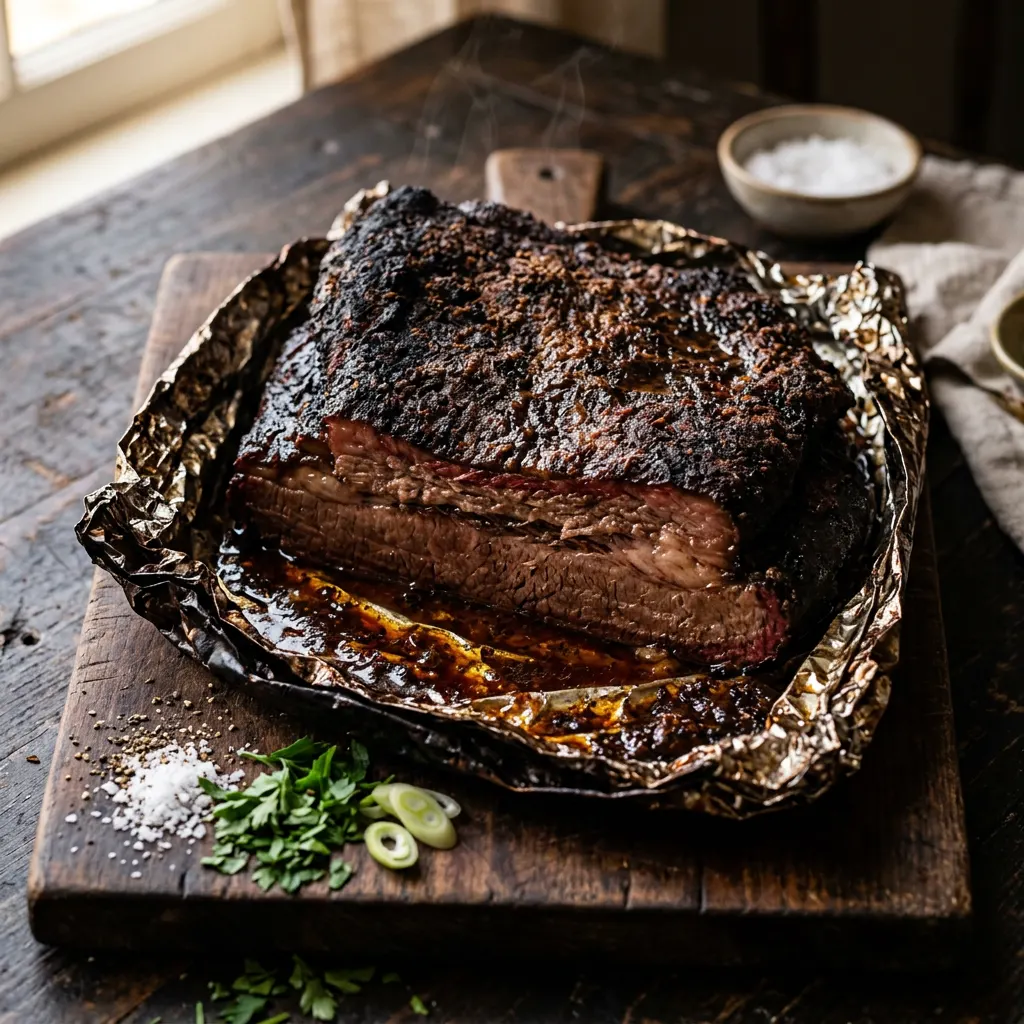
Naked bark for 6 hours, then unwrapped foil boat to finish.
Cook Mode
One step at a time, big text, timers, and your screen stays awake. 0/8 steps done.
Ingredients
Tap to tick off · 0/13 gathered
Method
- 30 min
Trim the hard, flaky fat from the flat and the deckle. Leave an even 1/4 inch of fat on the point side. Remove any silver skin. Square up the edges slightly.
Why it matters
Proper trimming ensures even cooking and allows the rub to penetrate effectively, creating a better bark. It also removes undesirable textures.
Common mistake
Over-trimming the fat, which can lead to a dry brisket.
- 2h
Mix black pepper, kosher salt, paprika, and granulated garlic. Apply generously to all surfaces. Let stand 30 minutes, or refrigerate up to 12 hours.
Why it matters
Allowing the brisket to sit with the rub at room temperature not only brings the meat temperature up slightly, but also allows the salt to start drawing moisture out and creating a pellicle, which helps with smoke adhesion.
Common mistake
Applying a rub to a cold brisket straight from the fridge; the rub won't adhere as well.
- 250°F30 min
Preheat your smoker to 250°F (121°C). Add your Post Oak wood chunks to establish a clean, consistent smoke. Ensure your water pan is full if your smoker uses one.
Why it matters
A stable temperature and clean smoke are crucial for developing deep smoky flavor and a good bark without off-flavors.
Common mistake
Rushing the preheating process or using too much wood upfront can lead to thick, acrid smoke, leaving a bitter taste.
- 250°F6h
Place the seasoned brisket directly on the grates, fat side up or towards the main heat source. Insert your probe into the thickest part of the flat, avoiding large pockets of fat. Allow the brisket to smoke undisturbed for 6 hours, or until a dark, mahogany bark has formed.
Why it matters
This initial 'naked' smoke period is essential for developing a deep, dark, and flavorful bark by allowing the rub to dry and adhere.
Common mistake
Peeking too often or spritzing early disrupts bark formation and extends cook time.
- 250°F4h
Once the bark is set, form a heavy-duty foil boat around the brisket’s bottom and sides, leaving the top exposed. Pour beef tallow over it. Mix vinegar and water, lightly spritz the top, and pour the remainder into the boat. Return to the smoker.
Why it matters
The foil boat protects the bottom and sides from drying out while allowing the top bark to continue soaking up smoke and firming up. The tallow adds moisture and richness.
Common mistake
Improperly forming the foil boat can lead to leaks, drying out the bottom, or not enough exposure for the top bark.
- 250°F4h
Continue cooking in the foil boat until the internal temperature reaches between 200-205°F (93-96°C) and the brisket is 'probe tender' – when an instant-read thermometer slides into the meat with very little resistance, like butter. This usually takes another 4-6 hours.
Why it matters
Doneness is determined by tenderness, not solely by temperature. Probe tenderness indicates collagen breakdown for a juicy, tender brisket.
Common mistake
Pulling the brisket solely based on temperature can result in tough meat if the collagen hasn't fully rendered.
- 4h
Once probe tender, remove the brisket from the smoker, leaving it in the foil boat. Wrap the entire boat tightly in additional foil or butcher paper, then wrap in a towel and place in an insulated cooler or oven (turned off) for a minimum of 2 hours, or ideally 4-6 hours.
Why it matters
Resting allows the meat's juices to redistribute throughout the brisket, resulting in a more tender and juicy final product.
Common mistake
Skipping or shortening the rest period, which results in dry, tough brisket.
- 15 min
Remove the brisket from the cooler. Separate the flat and the point. Slice the flat against the grain into pencil-thick slices. For the point, you can cube it for burnt ends or slice it thicker, also against the grain. Serve immediately.
Why it matters
Slicing against the grain ensures maximum tenderness by shortening the muscle fibers. Proper slicing is key to a pleasurable eating experience.
Common mistake
Slicing with the grain results in chewy, tough pieces of meat, regardless of how perfectly it was cooked.
Sauce It
Smoking this for the weekend? Send this recipe to your crew.
Free 12-Page Guide
The Pitmaster Field Manual
Five core habits, meat and wood reference charts, rub formulas, and a printable cook log. Download the free manual and join the Guild email list for new recipes and techniques.
Cooks & Reviews
Guild members can rate this recipe, log their cooks and share photos.
Sign in to continueMember reviews
No reviews yet — be the first to rate this cook.
Ask the Pitmaster about this recipe
Substitutions, scaling, technique, troubleshooting — get answers grounded in this cook.
Sign in to try the AI Pitmaster on Competition-Style Foil-Boat Brisket. New members get 3 free questions.
Sign in to tryComments(0)
Loading comments…