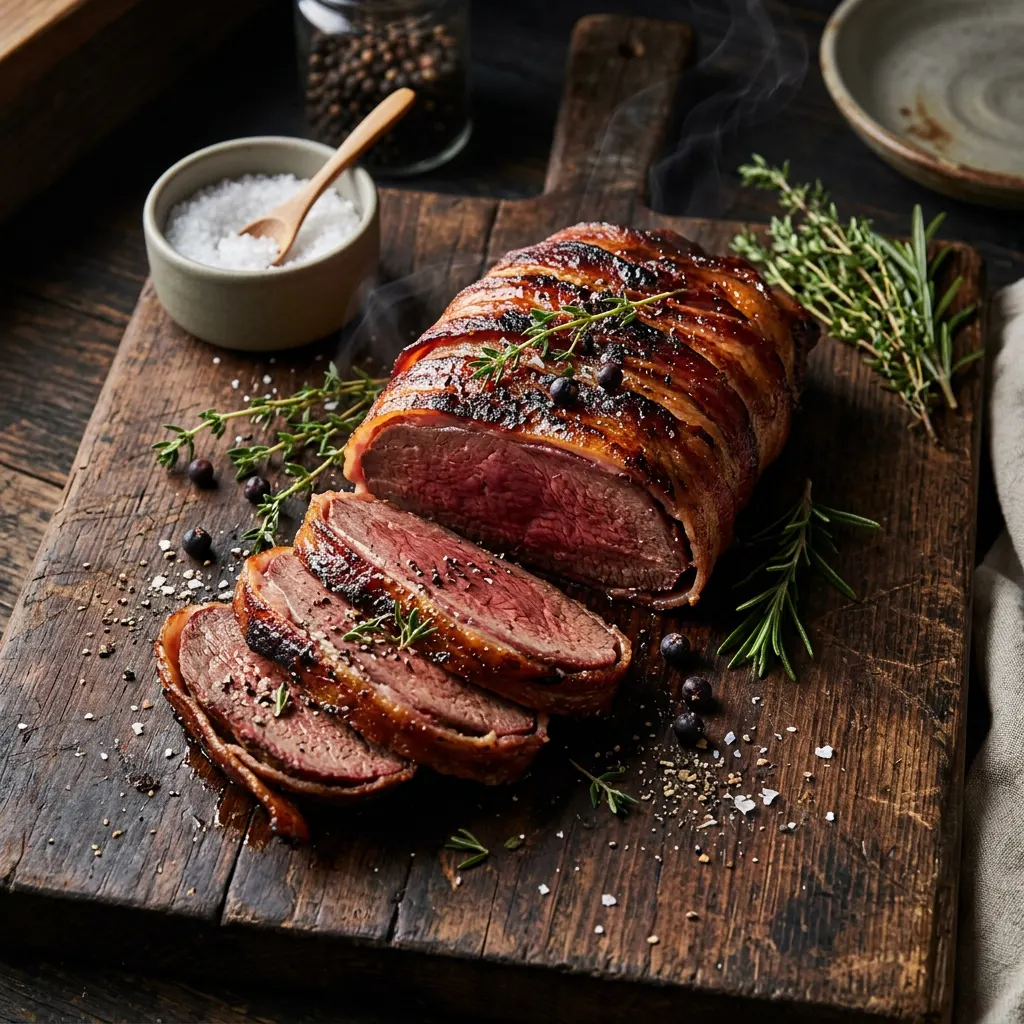
Bacon-Wrapped Smoked Goose Breast
Boneless wild goose breasts brined, wrapped in bacon, and smoked medium-rare — the friendliest way to convert a duck hater.
Cook Mode
One step at a time, big text, timers, and your screen stays awake. 0/19 steps done.
Ingredients
Tap to tick off · 0/20 gathered
Method
- 15 min
In a large pot, combine 4 cups of water, kosher salt, brown sugar, garlic powder, and black pepper. Bring to a simmer over medium heat, stirring until salt and sugar are dissolved. Remove from heat and add remaining 4 cups of cold water and the ice to rapidly cool the brine. Allow to cool completely to room temperature or colder.
Why it matters
A cold brine is crucial to prevent bacterial growth and ensure the goose breasts remain safe during the brining process. Dissolving the solids first ensures even flavor distribution.
Common mistake
Adding meat to warm or hot brine, which can precook the exterior.
- 4h
In a medium pot, combine 4 cups water, kosher salt, brown sugar, and crushed black peppercorns. Bring to a simmer, stirring until salt and sugar are dissolved. Remove from heat and stir in 4 cups ice water to cool rapidly. Once brine is completely cool, submerge goose breasts in the brine. Cover and refrigerate for 2-4 hours.
Why it matters
Brining adds moisture and flavor to the lean goose breast, preventing it from drying out during smoking and subtly seasoning it from within.
Common mistake
Using warm brine, which can start to cook the goose and promote bacterial growth.
Dissolve salt and sugar in apple juice. Brine breasts 8 hours refrigerated.
- 15 min
Remove goose breasts from the brine and pat them thoroughly dry with paper towels. Discard the brine. Individually wrap each goose breast tightly with 3-4 slices of bacon, ensuring full coverage and tucking the ends underneath.
Why it matters
A dry surface is crucial for the bacon to crisp and for the smoke to adhere. The bacon acts as a self-basting layer, protecting the lean goose from drying out during smoking.
Common mistake
Not drying the breasts sufficiently will lead to steamed bacon rather than crispy bacon.
- 4h
Submerge the goose breasts in the cooled brine. Ensure they are fully covered. Place the pot or a container with the goose breasts and brine in the refrigerator for 4-6 hours.
Why it matters
Brining adds moisture and flavor to the lean goose meat, preventing it from drying out during smoking and tenderizing it slightly. Don't over-brine, as it can make the meat too salty.
Common mistake
Brining for too long, resulting in overly salty meat.
Pat dry. Season with pepper and garlic. Wrap each breast with 2 slices of bacon, secured with toothpicks.
- 15 min
Remove goose breasts from the brine and rinse thoroughly under cold running water to remove excess salt. Pat breasts completely dry with paper towels. Sprinkle garlic powder evenly over all surfaces of the goose breasts. Tightly wrap each goose breast with thinly sliced bacon, overlapping slightly, to fully encase the meat. Secure the bacon with toothpicks.
Why it matters
Rinsing removes surface salt to prevent over-seasoning, and patting dry ensures proper bacon crisping. The bacon not only adds flavor but also self-bastes the lean goose during cooking.
Common mistake
Not rinsing enough, leading to overly salty goose, or not patting dry, which makes bacon difficult to crisp.
- 250°F20 min
Preheat your smoker or pellet grill to 250°F. Add your chosen wood (apple or maple) to the smoker box or hopper.
Why it matters
Starting with a preheated smoker ensures consistent temperature from the moment the meat goes in, preventing undercooking and promoting even smoke penetration.
Common mistake
Placing meat in a cold smoker can lead to a 'creosote' flavor and longer cook times due to fluctuating temperatures.
Smoke at 250°F over apple and maple to internal 130°F, ~1 hour.
- 250°F20 min
Preheat your pellet grill or smoker to a steady 250°F. Ensure your wood hopper is filled with a mix of apple and maple pellets or chips.
Why it matters
Maintaining a consistent low smoking temperature is crucial for slow cooking the goose without drying it out, allowing the bacon to render, and infusing deep smoke flavor.
Common mistake
Not waiting for the smoker to fully stabilize at target temperature, leading to fluctuating cook temperatures.
- 15 min
Remove goose breasts from the brine and pat them thoroughly dry with paper towels. Wrap each goose breast tightly with thin-sliced bacon, overlapping slightly. Secure the bacon with toothpicks if necessary.
Why it matters
Patting dry is crucial for pellicle formation during smoking and for the bacon to adhere well. The bacon provides fat for self-basting and adds immense flavor, protecting the lean goose from drying out.
Common mistake
Not drying the goose breasts thoroughly, which can lead to steamed rather than smoked bacon.
Rest 10 minutes. Slice thin across the grain, discard toothpicks.
- 250°F20 min
Preheat your smoker or pellet grill to 250°F. Add apple and maple wood for light, fruity, and slightly sweet smoke.
Why it matters
Maintaining a consistent low temperature is key for slow smoking, allowing the wood smoke to penetrate the meat without overcooking. Apple and maple provide a balanced, mild smoke perfect for poultry.
Common mistake
Fluctuating temperatures, which can lead to uneven cooking or harsh smoke flavor.
- 250°F1h
Place the bacon-wrapped goose breasts directly on the smoker grates. Insert a wireless temperature probe into the thickest part of one of the goose breasts, avoiding touching the bacon or bone (if any). Smoke until the internal temperature reaches 130°F.
Why it matters
Cooking to 130°F ensures a perfect medium-rare finish for the lean goose, keeping it tender and preventing a 'gamey' texture. The bacon will crisp up nicely during this time.
Common mistake
Overcooking past 135°F, which will result in dry, tough goose meat.
- 15 min
Once the internal temperature reaches 130°F, remove the goose breasts from the smoker and place them on a cutting board. Tent loosely with foil and let them rest for 10-15 minutes.
Why it matters
Resting allows the muscle fibers to relax and reabsorb the juices, resulting in a more tender and flavorful product. The internal temperature will also continue to rise a few degrees during this time.
Common mistake
Cutting into the meat immediately after smoking will cause all the delicious juices to run out, leaving the meat dry.
- 130°F10 min
Continue smoking the goose breasts until the internal temperature reaches a target of 130°F for a perfect medium-rare finish. If the bacon isn't as crispy as you'd like, you can briefly increase the smoker temperature to 350-375°F for 5-10 minutes at the very end, watching carefully to prevent burning.
Why it matters
Pulling at 130°F ensures a tender, juicy, and mild-flavored breast. The subsequent rest will carry over the temperature to 135-138°F.
Common mistake
Overcooking past 135°F, which can make the lean goose tough and livery.
- 15 min
Once the desired internal temperature is reached, carefully remove the goose breasts from the smoker. Place them on a cutting board, tent loosely with foil, and let rest for 10-15 minutes.
Why it matters
Resting allows the juices to redistribute throughout the meat, resulting in a more tender and moist final product. Skipping this step leads to dry meat as juices escape when cut.
Common mistake
Cutting into the goose immediately after removing it from the smoker.
- 15 min
Once the internal temperature hits 130°F, remove the goose breasts from the smoker. Tent loosely with foil and let them rest on a cutting board for 10-15 minutes.
Why it matters
Resting allows the muscle fibers to relax and reabsorb juices, ensuring a tender and moist final product. The internal temperature will also rise a few degrees during this time (carry-over cooking).
Common mistake
Slicing too soon, which causes all the flavorful juices to run out.
- 5 min
Remove toothpicks (if used). Slice the goose breasts against the grain into 1/2-inch thick medallions. Serve immediately.
Why it matters
Slicing against the grain shortens the muscle fibers, making each bite more tender and enjoyable. This presentation highlights the beautiful pink interior.
Common mistake
Slicing with the grain, which creates a chewier texture.
Sauce It
Cooks & Reviews
Guild members can rate this recipe, log their cooks and share photos.
Sign in to continueMember reviews
No reviews yet — be the first to rate this cook.
Ask the Pitmaster about this recipe
Substitutions, scaling, technique, troubleshooting — get answers grounded in this cook.
Sign in to try the AI Pitmaster on Bacon-Wrapped Smoked Goose Breast. New members get 3 free questions.
Sign in to tryComments(0)
Loading comments…