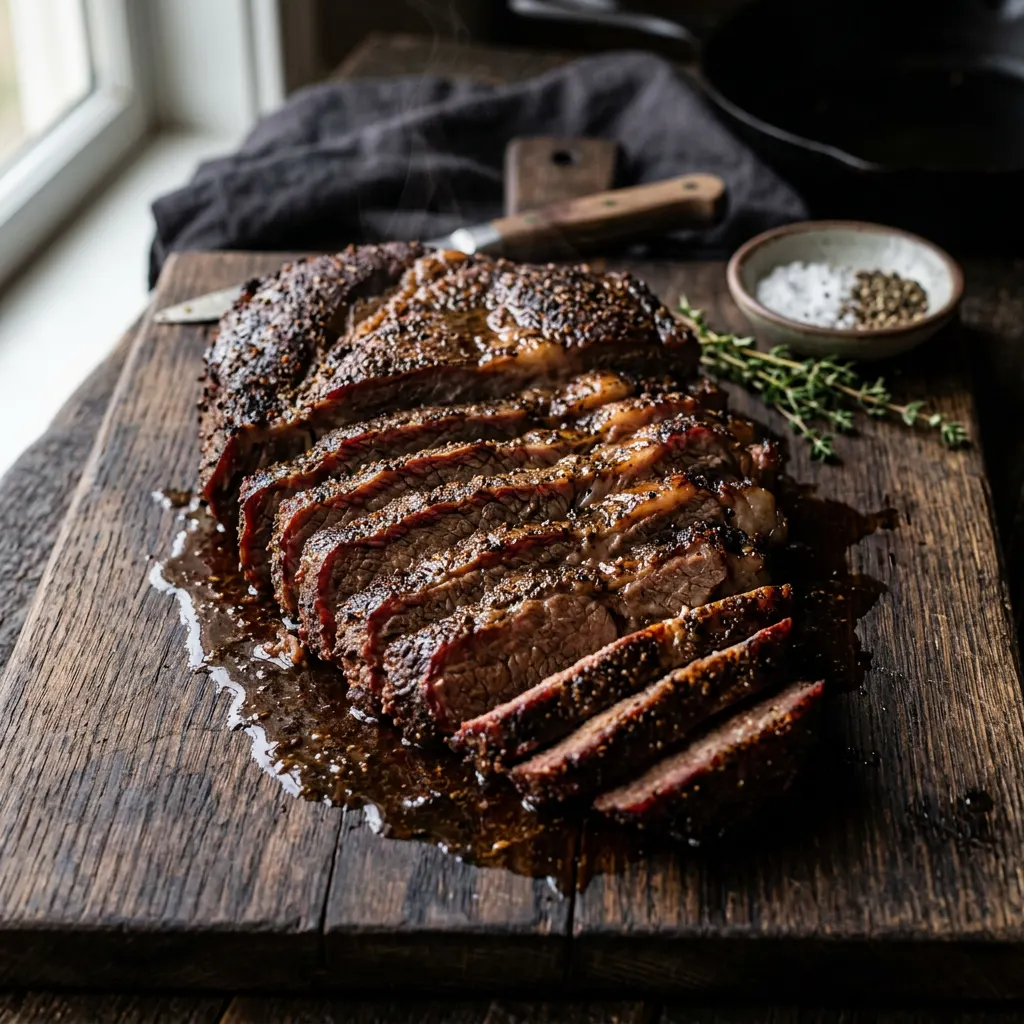
Hickory-Smoked Chuck Roast Poor-Man's Brisket
$15 chuck smoked and braised tastes like a $80 brisket.
Cook Mode
One step at a time, big text, timers, and your screen stays awake. 0/7 steps done.
Ingredients
Tap to tick off · 0/10 gathered
Method
- 15 min
Carefully unwrap your chuck roast. Trim any large, loose pieces of hard fat, but leave a decent fat cap for moisture. Mix salt, pepper, garlic powder, and smoked paprika thoroughly. Apply a generous, even coating of the rub to all sides of the chuck roast. Don't be shy!
Why it matters
Proper trimming ensures even cooking and prevents rubbery bits, while a liberal application of rub builds that foundational flavor and bark.
Common mistake
Undertrimming or overtrimming fat; not applying enough rub.
- 250°F20 min
Load your pellet grill or smoker with oak pellets/wood chunks. Preheat your smoker to a stable 250°F. While it's preheating, place a water pan (if your smoker supports it) in the chamber.
Why it matters
A stable, consistent temperature is crucial for low and slow cooking, allowing connective tissues to break down gradually. The water pan adds humidity, which helps with bark formation and prevents the surface from drying out.
Common mistake
Not waiting for the smoker to stabilize at the target temperature before adding the meat.
- 250°F3h
Place the seasoned chuck roast directly on the grates in the preheated smoker. Insert a temperature probe into the thickest part of the roast, avoiding bone or large fat pockets. Close the lid and let it smoke undisturbed.
Why it matters
This initial phase is where the chuck absorbs most of its smoky flavor and begins to form a beautiful, dark bark. Don't open the lid too often, as 'if you're lookin', you ain't cookin'!'
Common mistake
Opening the smoker lid frequently, which causes temperature fluctuations and prolongs cooking time.
- 250°F2h 30m
Once the chuck roast reaches an internal temperature of about 165-175°F (the 'stall'), transfer it to an aluminum foil pan. Pour in the beef broth and Worcestershire sauce. Top the roast with butter pats. Cover the pan tightly with foil.
Why it matters
Wrapping the chuck roast with liquid creates a braising environment, tenderizing the meat significantly and preventing it from drying out during the second, longer phase of cooking. The butter adds richness.
Common mistake
Wrapping too early before good bark has formed, or not sealing the foil tightly enough, allowing steam to escape.
- 250°F
Return the wrapped chuck roast in the pan to the smoker. Continue cooking at 250°F until the internal temperature reaches 200-205°F and the meat is probe-tender. You should be able to insert a probe into the meat with very little resistance, like sliding it into warm butter.
Why it matters
Tenderness is king for 'poor-man's brisket.' Cooking to temperature AND feel ensures all that tough collagen has broken down into gelatin, creating a moist, pull-apart texture.
Common mistake
Cooking strictly by temperature without checking for probe tenderness, which can lead to tough meat if it hasn't broken down sufficiently.
- 1h
Once probe-tender, remove the pan from the smoker. Leave the chuck roast in the foil-covered pan with all its juices. Place the pan in an insulated cooler (without ice) or wrap it in towels on the counter. Let it rest.
Why it matters
Resting allows the muscle fibers to relax and reabsorb the flavorful juices, resulting in a significantly more tender and moist finished product. Skipping this step is a cardinal sin in BBQ!
Common mistake
Cutting into the meat immediately after removing it from the smoker, which causes all the precious juices to run out.
After resting, carefully remove the chuck roast from the pan. The meat will likely be very tender and may want to fall apart. Slice or pull the meat against the grain into desired pieces. Drizzle with the pan juices before serving.
Why it matters
Slicing against the grain shortens the muscle fibers, making each bite more tender. The pan juices are liquid gold, full of concentrated beefy flavor.
Common mistake
Slicing with the grain, which results in chewy, tougher bites of meat.
Sauce It
Cooks & Reviews
Guild members can rate this recipe, log their cooks and share photos.
Sign in to continueMember reviews
No reviews yet — be the first to rate this cook.
Ask the Pitmaster about this recipe
Substitutions, scaling, technique, troubleshooting — get answers grounded in this cook.
Sign in to try the AI Pitmaster on Hickory-Smoked Chuck Roast Poor-Man's Brisket. New members get 3 free questions.
Sign in to tryComments(0)
Loading comments…