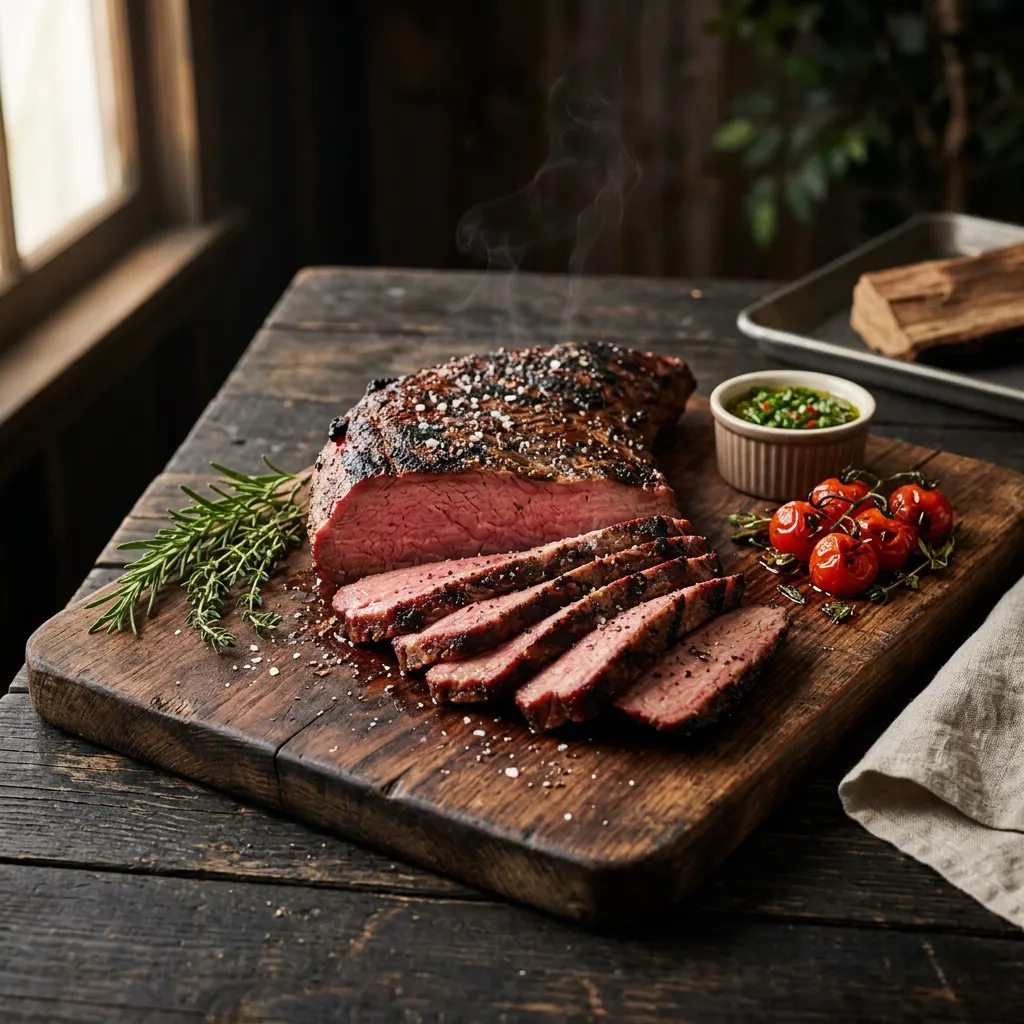
Simple Reverse-Sear Tri-Tip
Smoke to 115°F internal, blast over coals to crust.
Cook Mode
One step at a time, big text, timers, and your screen stays awake. 0/7 steps done.
Ingredients
Tap to tick off · 0/8 gathered
Method
- 10 min
Pat the tri-tip dry with paper towels. Trim off any hard fat or silver skin. Apply a thin coat of olive oil as a binder, then liberally season all sides with a mix of kosher salt, coarse black pepper, garlic powder, and smoked paprika. Ensure an even coating.
Why it matters
Trimming removes undesirable textures and allows for better rub adhesion. A good binder helps the seasoning stick and creates a better crust. Even seasoning ensures flavor in every bite.
Common mistake
Not patting the meat dry, which prevents a good crust from forming. Skipping the trimming leaves chewy, inedible bits.
- 225°F15 min
Set your smoker or pellet grill to 225°F (107°C). Add your oak wood chunks to the firebox once the smoker is heating up to ensure clean smoke. For pellet grills, ensure your hopper is full of oak pellets.
Why it matters
Maintaining a consistent low temperature is crucial for slow, even cooking and maximizing smoke flavor absorption without overcooking the exterior.
Common mistake
Adding wood too early, leading to 'dirty' smoke, or not waiting for the smoker to stabilize at the target temperature.
- 115°F1h
Place the seasoned tri-tip directly on the grates of your preheated smoker. Insert a reliable probe thermometer into the thickest part of the meat, avoiding bone or large fat pockets. Smoke until the internal temperature reaches 115°F (46°C).
Why it matters
Smoking at a low temperature allows for tenderization and deep smoke penetration. Reaching 115°F internal leaves enough room for the high-heat sear without pushing the final temperature past medium-rare.
Common mistake
Not using a reliable probe thermometer, leading to overcooked or undercooked meat. Opening the smoker lid too frequently, which fluctuates temperature and extends cook time.
- 10 min
Once the tri-tip hits 115°F, remove it from the smoker and set aside. At the same time, prepare a high-heat searing station. This can be a charcoal chimney filled with lit lump charcoal, a gas grill on high, or a cast iron pan over high heat. The goal is screaming hot temperatures.
Why it matters
Allowing the tri-tip to rest briefly and preparing the searing station simultaneously saves time and ensures the searing surface is incredibly hot, crucial for a quick, impactful sear.
Common mistake
Not having the searing station ready immediately after removing the tri-tip, allowing the meat to cool down too much or over-resting before searing.
- 130°F6 min
Place the tri-tip directly over the high heat. Sear each side for 2-3 minutes, or until a beautiful, dark mahogany crust (Maillard reaction) forms. If using a charcoal grill, rotate the tri-tip occasionally to ensure even searing and avoid burning. Target an internal temp of 125-130°F (52-54°C) for medium-rare.
Why it matters
The high-heat sear creates a delicious, flavorful crust and adds significant texture, completing the reverse-sear process. This quick burst of heat prevents overcooking the interior while achieving that desired Maillard browning.
Common mistake
Searing too long, which results in a gray band. Not hot enough heat, which steams the meat instead of searing it.
- 15 min
Once the desired internal temperature (125-130°F) is reached, remove the tri-tip from the heat. Place it on a cutting board, tent loosely with foil, and let it rest for at least 10-15 minutes.
Why it matters
Resting allows the muscle fibers to relax and reabsorb the juices, resulting in a more tender and moist finished product. Cutting too early will cause the juices to run out, leaving dry meat.
Common mistake
Cutting the meat immediately after searing, leading to significant loss of moisture and a dry steak.
- 5 min
After resting, slice the tri-tip against the grain. Tri-tip has two distinct grain patterns that meet in the middle, so you'll need to cut it in half first, then slice each half against its respective grain. Serve immediately.
Why it matters
Slicing against the grain shortens the muscle fibers, making the meat much more tender and enjoyable to eat. Recognizing the dual grain pattern is key for tri-tip.
Common mistake
Slicing with the grain, which results in tough, chewy pieces of meat, even if cooked perfectly.
Sauce It
Cooks & Reviews
Guild members can rate this recipe, log their cooks and share photos.
Sign in to continueMember reviews
No reviews yet — be the first to rate this cook.
Ask the Pitmaster about this recipe
Substitutions, scaling, technique, troubleshooting — get answers grounded in this cook.
Sign in to try the AI Pitmaster on Simple Reverse-Sear Tri-Tip. New members get 3 free questions.
Sign in to tryComments(0)
Loading comments…