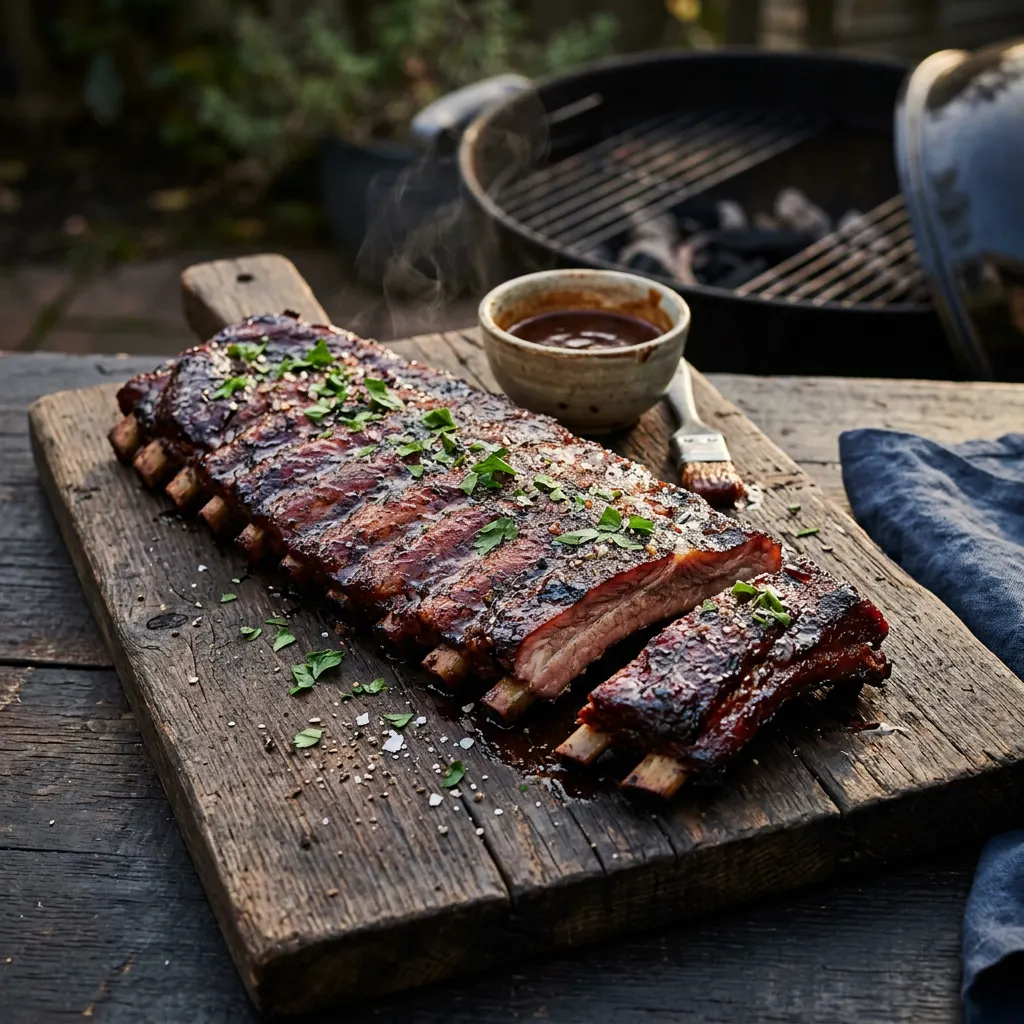
Cherry-Smoked Snake-Method Kettle Ribs
Charcoal kettle, snake of briquettes, hickory chunks every six.
Cook Mode
One step at a time, big text, timers, and your screen stays awake. 0/8 steps done.
Ingredients
Tap to tick off · 0/12 gathered
Method
- 15 min
Remove the silver skin membrane from the bone side of the ribs. Trim any excessively loose or fatty bits. Apply a thin, even layer of yellow mustard as a binder across both sides of the rack. Generously season all surfaces with your competition BBQ rub, ensuring an even coating.
Why it matters
Removing the membrane ensures a tender bite and allows smoke and rub flavors to penetrate. The mustard acts as a binder, helping the rub adhere, and its slight acidity complements the pork.
Common mistake
Not removing the membrane leads to a tough, papery texture. Uneven rub application results in inconsistent flavor.
- 250°F20 min
Arrange your briquettes in a 'snake' pattern around the perimeter of your charcoal kettle, two briquettes wide and two briquettes high. Place a foil pan (half-filled with water) in the center of the grill below where the ribs will sit. Add a hickory wood chunk every 6-8 briquettes along the 'snake'. Light about 8-10 briquettes in a charcoal chimney starter. Once ashed over, place them at one end of the 'snake' to begin the slow burn.
Why it matters
The snake method provides a consistent, long-duration low temperature without frequent charcoal additions. Wood chunks distributed throughout ensure continuous smoke flavor. The water pan helps stabilize temperature and adds moisture to the cooking environment.
Common mistake
Lighting too many briquettes at once will cause the grill to overshoot the target temperature. Not having enough briquettes for the full cook will result in an early temperature drop.
- 250°F20 min
Close the lid, ensuring the top vent is 1/4 to 1/2 open and the bottom vent is mostly closed (or set to your smoker's specific low-and-slow setting). Allow the smoker to come up to the target temperature of 250°F and stabilize for at least 15-20 minutes. Adjust vents as needed to maintain temp.
Why it matters
A stable temperature is crucial for even cooking and proper smoke ring formation. Fluctuations can lead to overcooked or undercooked spots and poor bark development.
Common mistake
Placing the meat on the smoker before it's at a stable temperature can lead to inconsistent cooking and difficulty maintaining heat.
- 250°F3h
Place the prepared ribs, bone side down, on the grate directly above the water pan, avoiding direct heat from the lit briquettes. Close the lid and maintain the smoker at 250°F. Spritz the ribs every hour with a 50/50 mix of apple cider vinegar and water.
Why it matters
This phase develops the desirable smoky bark and infuses deep flavor. Spritzing keeps the surface moist, helps the rub adhere, and promotes better smoke absorption while preventing the bark from drying out.
Common mistake
Opening the lid too frequently causes significant temperature drops, prolonging the cook and hindering bark formation. Not spritzing can lead to a dry exterior.
- 250°F1h 30m
After 3 hours, or when the bark is set and has a rich, dark color, remove the ribs from the smoker. Lay out a large sheet of heavy-duty aluminum foil. Sprinkle 1/4 cup brown sugar evenly on the foil, add 2 tablespoons of honey, and place 4 pats of butter on top. Place the ribs, meat side down, on this mixture. Wrap tightly, ensuring a good seal to prevent steam from escaping.
Why it matters
Wrapping creates a braising environment, tenderizing the meat and pushing through 'the stall' (when evaporative cooling slows cooking). The additions of sugar, honey, and butter add moisture, richness, and enhance flavor.
Common mistake
Not wrapping tightly allows steam to escape, reducing the braising effect and lengthening cook time. Wrapping too early can prevent proper bark formation.
- 250°F30 min
After 90 minutes in the foil, carefully unwrap the ribs. Check for tenderness; they should be very pliable. If desired, brush a thin layer of your favorite BBQ sauce on both sides of the ribs. Place the unwrapped ribs back on the smoker, meat side up.
Why it matters
This final phase allows the sauce to caramelize and set, adding another layer of flavor and texture. It also firms up the bark slightly after the wrap.
Common mistake
Applying too much sauce too early can lead to it burning. Not allowing enough time for the sauce to set results in a sticky mess rather than a glaze.
- 30 min
Once the sauce is set and the ribs are tender (they should bend easily when lifted from one end, and the meat should have pulled back from the bones), remove them from the smoker. Place them on a cutting board, tent loosely with foil, and let them rest.
Why it matters
Resting allows the internal juices to redistribute throughout the meat, resulting in a more moist and tender product. Cutting immediately can cause juices to run out, leading to dry ribs.
Common mistake
Cutting into the ribs immediately after removing them from the smoker will cause them to lose moisture and become less tender.
After resting, slice the ribs between the bones. Serve immediately and enjoy your perfectly smoked ribs!
Why it matters
Proper slicing ensures each piece is a perfect serving size and highlights the beautiful smoke ring and tender meat.
Common mistake
Slicing against the bone can ruin the presentation and make individual portions difficult to eat.
Sauce It
Cooks & Reviews
Guild members can rate this recipe, log their cooks and share photos.
Sign in to continueMember reviews
No reviews yet — be the first to rate this cook.
Ask the Pitmaster about this recipe
Substitutions, scaling, technique, troubleshooting — get answers grounded in this cook.
Sign in to try the AI Pitmaster on Cherry-Smoked Snake-Method Kettle Ribs. New members get 3 free questions.
Sign in to tryComments(0)
Loading comments…