Apple-Smoked Snake-Method Kettle Ribs
Published by Shannon Grendahl
The quick answer
- Smoker Temp
- 250°F
- Wood
- Hickory
- Pull Temp
- 195–203°F, bend test
- Est. Cook Time
- 5 hr 30 min
- Wrap Stage
- Optional wrap once color sets
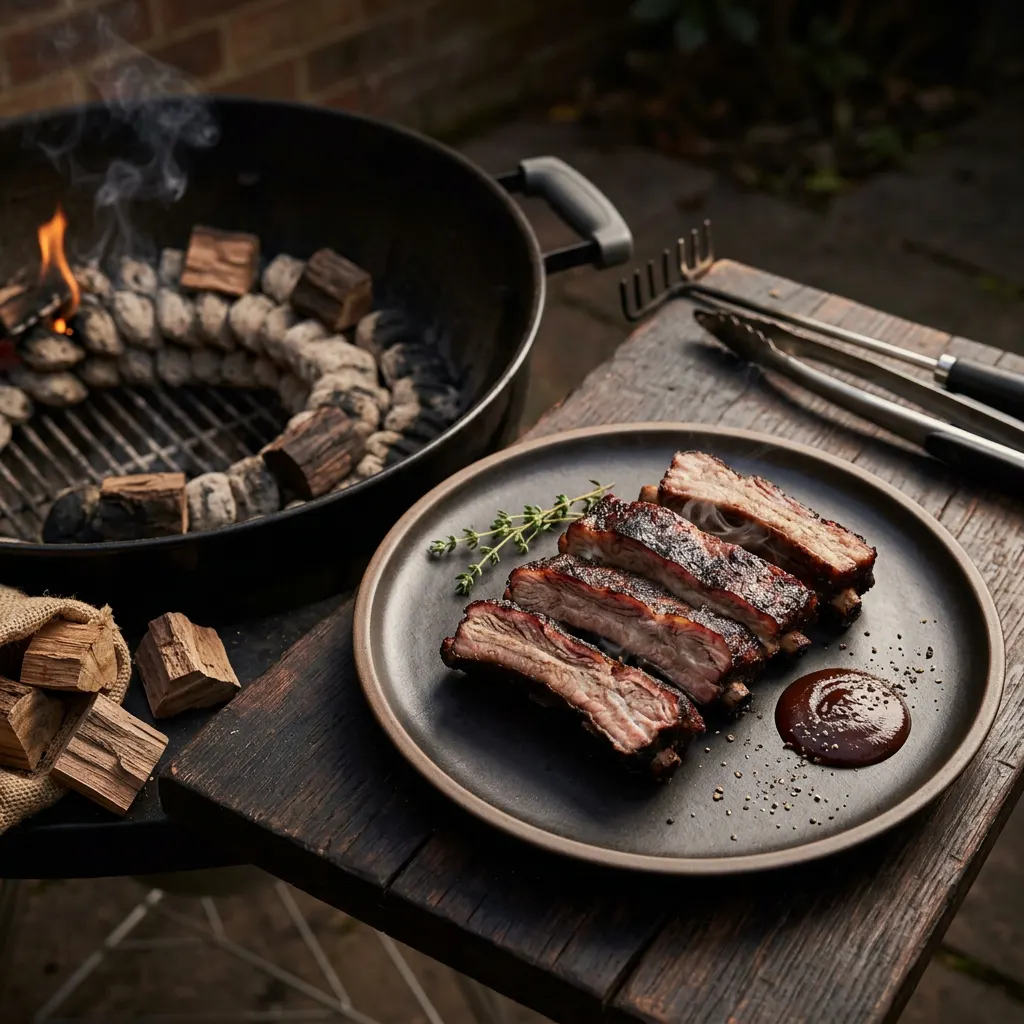
Charcoal kettle, snake of briquettes, hickory chunks every six.
Cook Mode
One step at a time, big text, timers, and your screen stays awake. 0/9 steps done.
Ingredients
Tap to tick off · 0/17 gathered
Method
- 30 min
Remove the membrane from the back of each rib rack. Trim any excess fat or ragged edges. Apply a thin coat of yellow mustard as a binder, then generously coat both sides of the ribs with BBQ rub. Let sit at room temperature while preparing the grill.
Why it matters
Removing the membrane ensures a more tender bite and allows the smoke and rub to penetrate the meat better. The mustard acts as an excellent binder for the rub without imparting a strong mustard flavor.
Common mistake
Forgetting to remove the membrane results in chewy, less flavorful ribs.
- 250°F30 min
Arrange a charcoal snake around the kettle perimeter, two briquettes wide and two high. Space hickory chunks about every sixth briquette. Put a water-filled foil pan in the center beneath the ribs.
Why it matters
The snake method allows for a long, consistent burn at a low temperature, ideal for smoking ribs. The water pan helps regulate temperature and adds moisture to the cooking environment, preventing the ribs from drying out.
Common mistake
Overloading the snake with too many lit briquettes, causing the temperature to spike too high.
- 250°F30 min
Light 8-10 briquettes in a charcoal chimney. Once fully ashed over, place them at one end of your charcoal snake. Close the lid, ensuring the bottom vent is mostly open and the top vent is directly over the ribs (opposite the lit charcoal) to draw smoke across the meat. Adjust vents to achieve a stable temperature of 250°F.
Why it matters
Proper vent control is crucial for maintaining a consistent temperature in a kettle grill. Stabilizing the temperature before adding the meat prevents temperature spikes and ensures an even cook.
Common mistake
Opening the lid too frequently to check the temperature disrupts the airflow and prolongs the stabilization time.
- 250°F3h
At a stable 250°F, place ribs bone-side down above the water pan, away from lit coals. Smoke 3 hours, spritzing with apple cider vinegar every 60 minutes.
Why it matters
This initial phase is crucial for smoke penetration and bark development. Keeping the ribs away from direct heat prevents burning and allows for slow, even cooking.
Common mistake
Opening the lid too frequently to check on the ribs will cause significant temperature drops, extending the cook time and reducing smoke penetration.
- 250°F1h 30m
After 3 hours, remove the ribs from the smoker. Lay out a large piece of heavy-duty aluminum foil. Place 2 tablespoons of butter, 2 tablespoons of brown sugar, and 1 tablespoon of honey on the foil, spreading slightly. Place a rack of ribs bone-side up on top of this mixture. Repeat for the second rack. Wrap the ribs tightly in the foil, creating a sealed packet.
Why it matters
Wrapping the ribs in foil, often called the 'Texas Crutch,' tenderizes them quickly by steaming them in their own juices and added liquids. The butter, sugar, and honey add moisture, sweetness, and enhance the flavor profile.
Common mistake
Not sealing the foil tightly, allowing steam to escape and reducing the effectiveness of the crutch.
- 250°F1h
Place the wrapped ribs back on the smoker, over the water pan, and continue to cook for another 90 minutes. At the end of this period, check for doneness by the 'bend test' – hold the ribs at one end with tongs, and if they bend significantly without breaking, they are ready. You can also check for internal temperature in the thickest part of the meat (avoiding bone) around 200-205°F.
Why it matters
This final unwrapped phase allows the bark to firm up and prevents the ribs from becoming too mushy. The bend test is a reliable indicator of optimal tenderness, where the collagen has broken down.
Common mistake
Undercooking the ribs, resulting in tough meat that's difficult to pull from the bone.
- 250°F1h
After the wrapped cook, carefully unwrap and optionally brush with BBQ sauce. Return to the grill uncovered until the sauce sets and ribs are tender, checking during the final hour.
Why it matters
Unwrapping allows the bark to firm up again and for the BBQ sauce (if used) to caramelize, adding another layer of flavor and texture.
Common mistake
Applying BBQ sauce too early can cause it to burn due to the sugar content.
- 30 min
Once the ribs pass the bend test, remove them from the smoker. You can either leave them wrapped in their foil or loosely tent them with foil. Let them rest on a cutting board for at least 30 minutes, or up to an hour.
Why it matters
Resting allows the internal temperature to equalize and the juices to redistribute throughout the meat, resulting in a more tender and moist product. Slicing too early can cause juices to run out, drying out the ribs.
Common mistake
Slicing the ribs immediately after removing them from the heat, leading to dry and less flavorful meat.
After resting, slice the ribs between the bones and serve immediately with any remaining BBQ sauce on the side.
Why it matters
Proper slicing ensures each piece is clean and presentable, and serving immediately ensures the ribs are enjoyed at their peak temperature and texture.
Common mistake
Slicing across the bones or unevenly can make them difficult to eat and less appealing.
Sauce It
Smoking this for the weekend? Send this recipe to your crew.
Free 12-Page Guide
The Pitmaster Field Manual
Five core habits, meat and wood reference charts, rub formulas, and a printable cook log. Download the free manual and join the Guild email list for new recipes and techniques.
Cooks & Reviews
Guild members can rate this recipe, log their cooks and share photos.
Sign in to continueMember reviews
No reviews yet — be the first to rate this cook.
Ask the Pitmaster about this recipe
Substitutions, scaling, technique, troubleshooting — get answers grounded in this cook.
Sign in to try the AI Pitmaster on Apple-Smoked Snake-Method Kettle Ribs. New members get 3 free questions.
Sign in to tryComments(0)
Loading comments…