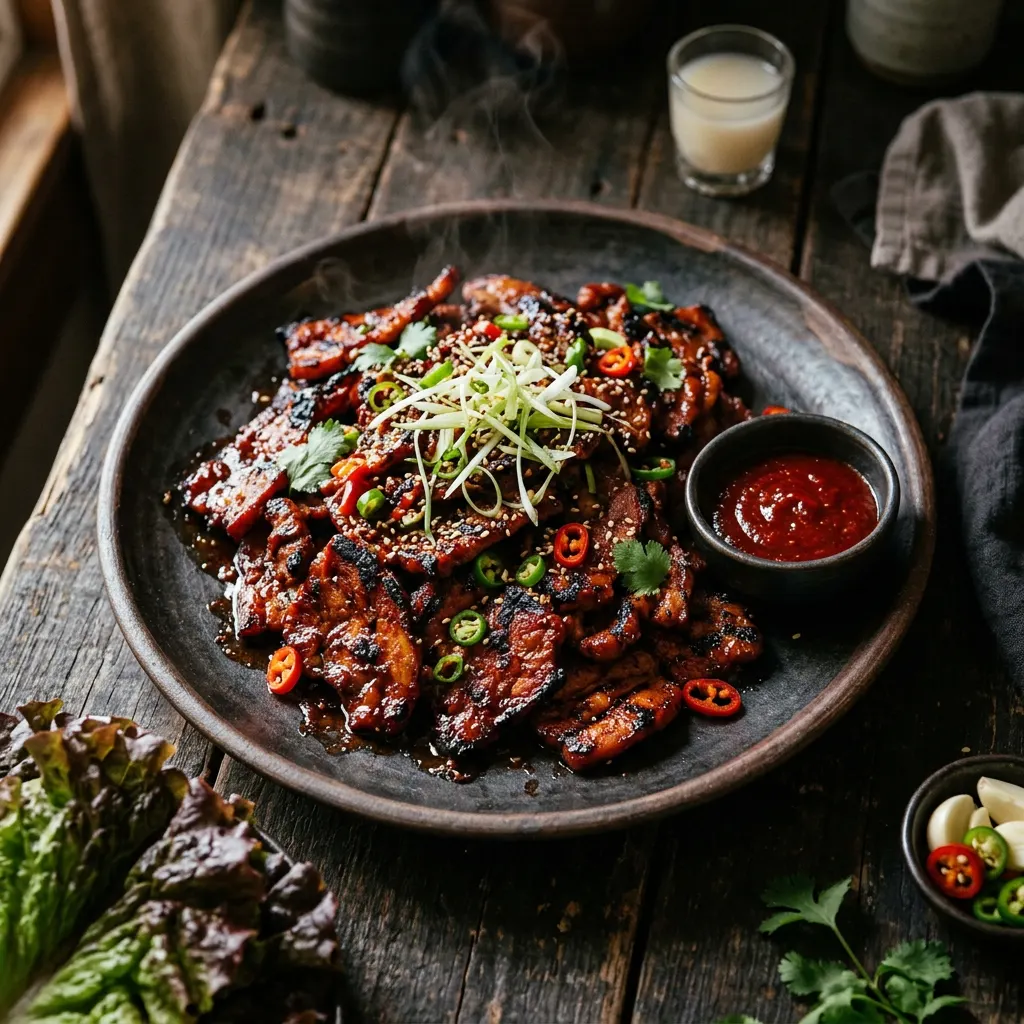
Variation of Smoked Pork Bulgogi
Korea's everyday favorite — thin pork slices in a gochujang-and-garlic marinade that's sweet, savory, and gently fiery. Smoking dwaeji bulgogi adds a layer the fast stir-fry version never has. Pile it into lettuce wraps with rice and ssamjang.
Cook Mode
One step at a time, big text, timers, and your screen stays awake. 0/7 steps done.
Ingredients
Tap to tick off · 0/11 gathered
Method
- 5 min
In a large bowl, combine the gochujang, soy sauce, mirin, sesame oil, minced garlic, grated ginger, brown sugar, and black pepper. Whisk until thoroughly combined and the sugar is dissolved.
Why it matters
A well-mixed marinade ensures even flavor distribution. The sugar needs to dissolve fully to prevent it from burning unevenly on the meat.
Common mistake
Not mixing thoroughly, leading to pockets of concentrated flavor or undissolved sugar.
- 3h
Add the thinly sliced pork to the marinade, ensuring every piece is coated. Cover the bowl and refrigerate.
Why it matters
Marinating allows the flavors to penetrate the meat, tenderizing it slightly and infusing it with the bulgogi's signature sweet, savory, and spicy notes. For thin slices, 3 hours is plenty.
Common mistake
Not marinating long enough, resulting in less flavorful meat, or marinating too long (over 12 hours) which can break down the meat too much.
- 275°F20 min
Set up your pellet grill or smoker for indirect cooking at 275°F. For best results, use a grill grate or wire rack that allows smoke to circulate evenly around the thin pork slices. Use apple or cherry wood pellets/chips for a mild, fruity smoke flavor.
Why it matters
Preheating is crucial for stable temperature and consistent cooking. Indirect heat prevents charring on the thin slices while allowing the smoke to do its work. Apple or cherry wood complements the sweet-spicy profile without overpowering.
Common mistake
Putting meat on a cold smoker, leading to dirty smoke and uneven cooking. Using strong wood like mesquite which can overwhelm the delicate bulgogi flavor.
- 275°F25 min
Lay the marinated pork slices directly on the preheated grill grates or wire rack in a single layer, ensuring they don't overlap too much. Close the smoker lid.
Why it matters
A single layer ensures even smoke penetration and cooking. Overlapping meat will steam rather than smoke, preventing a good bark and even color development.
Common mistake
Overcrowding the grates, leading to uneven cooking, steaming, and loss of smoke flavor.
- 275°F25 min
After 25 minutes, flip the pork slices. Continue to smoke until the pork is caramelized around the edges and reaches an internal temperature of 175-180°F. The thin slices will cook quickly.
Why it matters
Flipping promotes even cooking and browning on both sides, contributing to a better texture and flavor. While bulgogi is safe at lower temps, cooking to 175-180°F for thin slices enhances flavor and texture for this specific dish.
Common mistake
Not flipping, leading to uneven cooking. Overcooking the thin slices, making them dry and tough.
- 10 min
Once cooked, remove the bulgogi from the smoker and let it rest for 5-10 minutes. This allows the juices to redistribute. Garnish generously with sliced green onions and sesame seeds.
Why it matters
Resting meat allows the muscle fibers to relax and reabsorb juices, resulting in more tender and moist bulgogi. Garnishes add freshness, texture, and visual appeal.
Common mistake
Cutting into the meat immediately, which allows flavorful juices to escape. Forgetting the fresh garnishes, which are essential for balancing the rich flavors.
Serve the smoked pork bulgogi hot, wrapped in fresh lettuce leaves with rice and ssamjang (Korean dipping sauce) on the side.
Why it matters
Bulgogi is best enjoyed hot off the smoker when the flavors are most vibrant and the meat is tender. The lettuce wraps, rice, and ssamjang create a complete and traditional Korean experience.
Common mistake
Serving cold, as the texture and flavor lose their appeal. Not offering traditional accompaniments, which are crucial to the bulgogi experience.
Sauce It
Free Guide
5 Techniques Competition Smokers Use That Home Cooks Don't
Join the Guild email list and we'll send you the free guide — the exact moves that separate backyard cooks from competition pitmasters.
Cooks & Reviews
Guild members can rate this recipe, log their cooks and share photos.
Sign in to continueMember reviews
No reviews yet — be the first to rate this cook.
Ask the Pitmaster about this recipe
Substitutions, scaling, technique, troubleshooting — get answers grounded in this cook.
Sign in to try the AI Pitmaster on Variation of Smoked Pork Bulgogi. New members get 3 free questions.
Sign in to tryComments(0)
Loading comments…