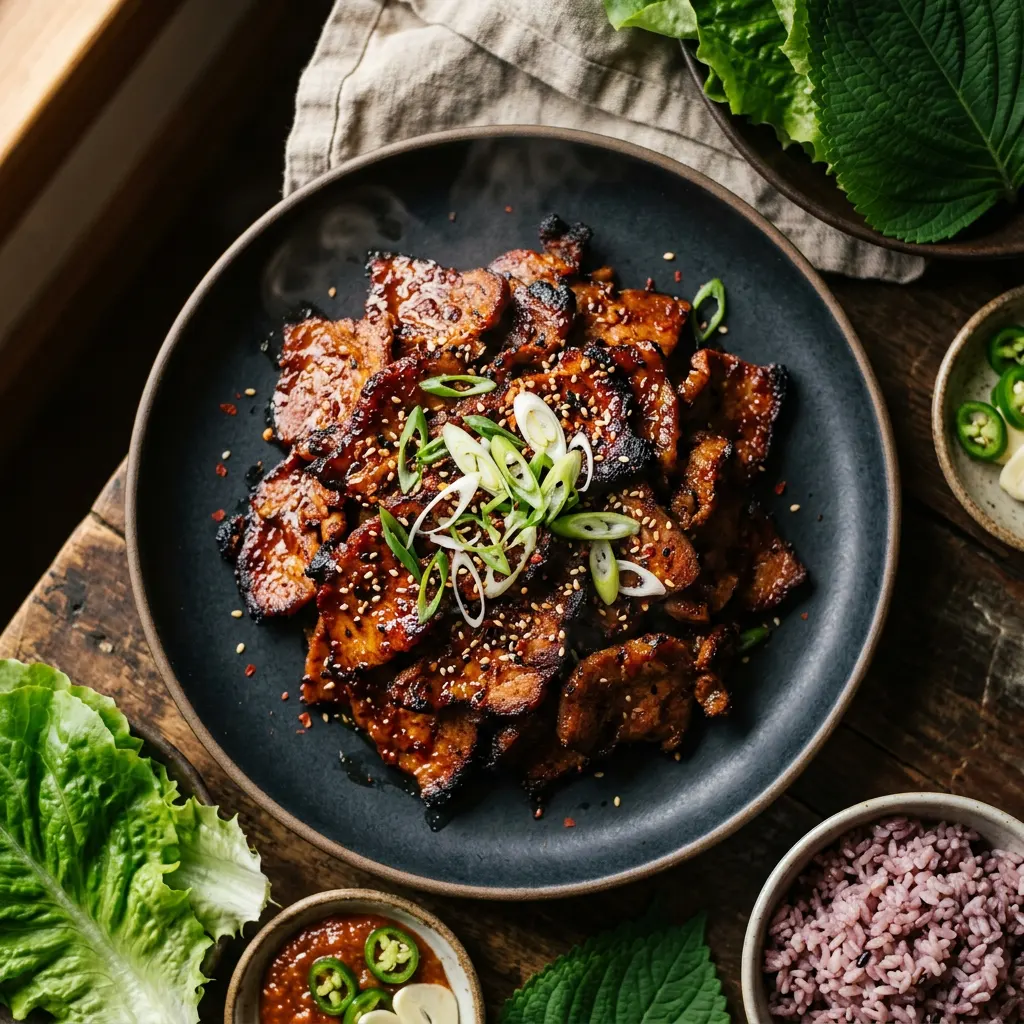
Low-and-Slow Smoked Pork Bulgogi
Korea's everyday favorite — thin pork slices in a gochujang-and-garlic marinade that's sweet, savory, and gently fiery. Smoking dwaeji bulgogi adds a layer the fast stir-fry version never has. Pile it into lettuce wraps with rice and ssamjang.
Cook Mode
One step at a time, big text, timers, and your screen stays awake. 0/8 steps done.
Ingredients
Tap to tick off · 0/12 gathered
Method
- 10 min
In a large bowl, combine gochujang, soy sauce, sesame oil, minced garlic, grated ginger, brown sugar, and grated Asian pear/apple. Mix thoroughly until all ingredients are well incorporated into a smooth paste.
Why it matters
A well-mixed marinade ensures even distribution of flavors, which is key for bulgogi. The pear helps tenderize the meat and adds natural sweetness.
Common mistake
Not fully dissolving the sugar, leading to gritty marinade.
- 3h
Add the thinly sliced pork to the marinade, ensuring every piece is coated. Use your hands to really work the marinade into the meat. Cover the bowl and refrigerate.
Why it matters
Marinating allows the flavors to penetrate the meat, making it tender and infusing it with the characteristic sweet and spicy bulgogi taste. Three hours is sufficient for thin slices.
Common mistake
Not marinating long enough, resulting in bland pork.
- 275°F15 min
Set your smoker or pellet grill to 275°F (135°C). Load with apple or cherry wood pellets/chips.
Why it matters
Preheating ensures your smoker maintains a consistent temperature when the meat goes in, preventing temperature fluctuations that can affect cook time and texture. Apple or cherry wood provides a great mild, fruity smoke flavor that complements pork.
Common mistake
Putting meat in before the smoker stabilizes at the target temperature.
- 275°F40 min
Arrange the marinated pork slices in a single layer directly on the grates of your preheated smoker. Do not overcrowd the grates, as this can impede smoke circulation and even cooking.
Why it matters
Smoking at a relatively low temperature for thin slices allows the pork to absorb significant smoke flavor without drying out. A single layer ensures each piece gets direct smoke exposure.
Common mistake
Overcrowding the smoker, leading to uneven cooking and less smoke flavor.
- 145°F
Smoke until the pork reaches an internal temperature of 145°F (63°C). The edges will be slightly charred and the bulgogi will have a beautiful smoky aroma. If desired, you can briefly sear on a hot grill or cast iron pan for extra caramelization after smoking.
Why it matters
Reaching 145°F ensures the pork is safely cooked and tender, while still retaining juiciness.
Common mistake
Overcooking the thin slices, which can lead to dry, tough pork.
- 145°F5 min
The pork is done when it's caramelized, tender, and has reached an internal temperature of about 145-160°F (63-71°C) if using thick cuts (though thin bulgogi cooks quickly by visual cues). Garnish with chopped green onions immediately after removing from the smoker.
Why it matters
Pork bulgogi is best served fresh off the smoker to retain its succulence and the heat of the marinade.
Common mistake
Overcooking, which can dry out the thin pork slices.
- 10 min
Remove the smoked pork bulgogi from the smoker/grill and let it rest for 5-10 minutes. Garnish with fresh chopped scallions.
Why it matters
Resting allows the juices in the meat to redistribute, resulting in a more tender and flavorful final product. The scallions add a fresh, pungent counterpoint to the rich, smoky, sweet-spicy pork.
Common mistake
Cutting into the meat immediately, causing juices to run out.
Serve the smoked pork bulgogi immediately with steamed rice, lettuce leaves for wraps, and ssamjang (Korean dipping sauce).
Why it matters
The combination of the warm, smoky pork with cool, crisp lettuce and spicy ssamjang creates a balanced and satisfying eating experience typical of Korean BBQ.
Common mistake
Not having all accompaniments ready, diminishing the full bulgogi experience.
Sauce It
Cooks & Reviews
Guild members can rate this recipe, log their cooks and share photos.
Sign in to continueMember reviews
No reviews yet — be the first to rate this cook.
Ask the Pitmaster about this recipe
Substitutions, scaling, technique, troubleshooting — get answers grounded in this cook.
Sign in to try the AI Pitmaster on Low-and-Slow Smoked Pork Bulgogi. New members get 3 free questions.
Sign in to tryComments(0)
Loading comments…