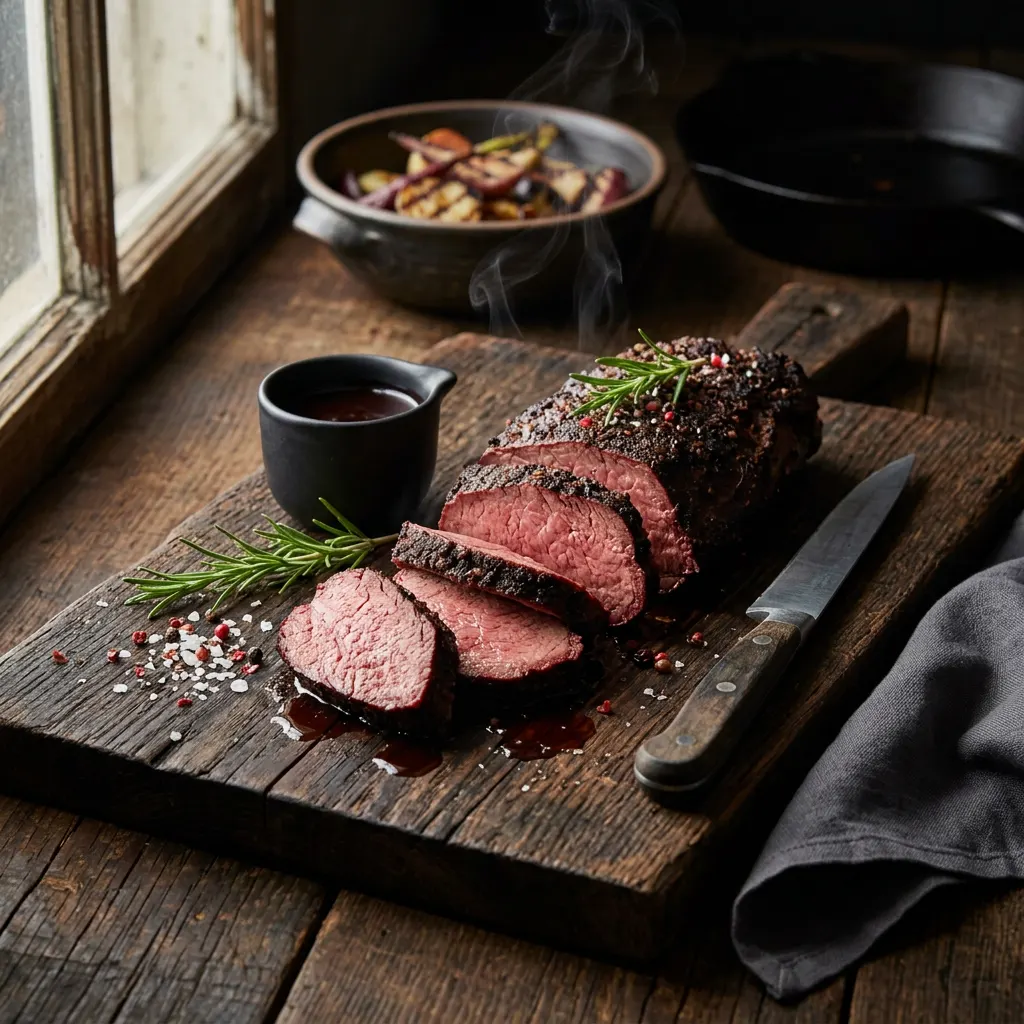
Coffee-Rubbed Elk Tenderloin
Elk tenderloin is lean and mild — a coffee-cocoa crust and a quick reverse sear preserve every drop of moisture in this trophy-cut showpiece.
Cook Mode
One step at a time, big text, timers, and your screen stays awake. 0/22 steps done.
Ingredients
Tap to tick off · 0/22 gathered
Method
Blend the dry ingredients. Coat the tenderloin, rest 30 minutes on a rack.
- 15 min
Carefully trim any silver skin or excess fat from the elk tenderloin. In a small bowl, combine the finely ground coffee, cocoa powder, smoked paprika, garlic powder, onion powder, salt, and black pepper. Pat the tenderloin dry with paper towels, then generously coat all sides with the rub, pressing it gently to adhere.
Why it matters
Trimming silver skin is crucial as it won't render and will make the meat tough. Patting the meat dry helps the rub adhere and promotes a better crust.
Common mistake
Leaving silver skin on, resulting in chewy bites.
- 15 min
Pat the elk tenderloin thoroughly dry with paper towels. In a small bowl, combine the finely ground coffee, cocoa powder, brown sugar, kosher salt, black pepper, garlic powder, and smoked paprika. Drizzle the tenderloin with a light coating of olive oil, then generously apply the rub, pressing it firmly into the meat on all sides. Ensure full coverage.
Why it matters
Drying the meat helps the rub adhere better and promotes a superior crust. The coffee and cocoa create a rich, dark crust, while sugar aids in caramelization.
Common mistake
Not drying the meat or not pressing the rub firmly enough, leading to an uneven crust.
- 5 min
In a small bowl, combine the finely ground coffee, cocoa powder, brown sugar, smoked paprika, garlic powder, kosher salt, and black pepper. Whisk until thoroughly mixed.
Why it matters
A well-mixed rub ensures consistent flavor distribution across the tenderloin. The fine grind prevents a gritty texture.
Common mistake
Not grinding coffee fine enough, leading to a crunchy texture on the crust.
- 225°F15 min
Preheat your pellet grill or smoker to 225°F. Add cherry and oak wood pellets/chunks to the hopper/chamber. These woods provide a complementary, mild smoke flavor that won't overpower the delicate elk.
Why it matters
Consistent low temperature is crucial for slow cooking the lean elk without drying it out, allowing the smoke flavor to permeate gently.
Common mistake
Opening the smoker too often, causing temperature fluctuations and inconsistent cooking.
- 30 min
Place the seasoned tenderloin on a wire rack set over a baking sheet and refrigerate uncovered for at least 30 minutes, or up to 2 hours.
Why it matters
This step helps create a 'pellicle' – a slightly tacky surface – which aids in smoke adhesion and leads to a better crust during the final sear.
Common mistake
Skipping this step can result in less smoke flavor absorption and a less satisfying crust.
Smoke at 225°F over cherry and oak until internal 115°F, about 45–60 minutes.
- 30 min
Pat the elk tenderloin dry with paper towels. Lightly coat the tenderloin with olive oil, then generously apply the coffee rub, pressing it firmly into the meat on all sides. Allow to sit at room temperature for 30 minutes.
Why it matters
Drying the meat helps with bark formation, and the oil helps the rub adhere. Sitting at room temp allows the rub to penetrate slightly and ensures more even cooking.
Common mistake
Applying rub to wet meat, which can create a paste rather than a crust.
- 225°F15 min
Preheat your pellet grill or smoker to 225°F (107°C). Use cherry and/or oak wood pellets/chunks for a rich, complementary smoke flavor.
Why it matters
Maintaining a stable low temperature is crucial for the reverse sear, allowing the core to cook slowly and evenly without drying out the lean elk.
Common mistake
Not allowing the smoker to come to temperature and stabilize before placing the meat inside.
- 225°F20 min
Fill your pellet grill with cherry and oak pellets. Preheat your smoker to 225°F (107°C). Ensure the temperature is stable before adding the elk.
Why it matters
Maintaining a stable low temperature is key for gentle cooking and maximum smoke penetration without overcooking the lean elk.
Common mistake
Not allowing enough time for the smoker to preheat and stabilize, leading to inconsistent cooking temperatures.
- 225°F1h
Place the elk tenderloin directly on the grates of your preheated smoker. Insert a reliable meat probe into the thickest part of the tenderloin, avoiding any fat or bone. Close the lid and smoke until the internal temperature reaches 125°F.
Why it matters
Smoking to 125°F allows the tenderloin to absorb smoke flavor while reserving enough internal temperature for a perfect reverse sear to medium-rare.
Common mistake
Smoking past 125°F internal temperature, which will result in overcooked, dry elk after the searing step.
Heat tallow in a cast-iron pan until smoking. Sear the loin 45 seconds per side to a dark crust, pulling at 130°F for medium-rare.
- 5 min
Once the tenderloin reaches 125°F, remove it from the smoker and set it aside. Increase your smoker's temperature (if it can reach high heat) to its maximum setting, or heat a cast-iron skillet on high heat on your stovetop until it's screaming hot. Add the butter to the skillet just before searing.
Why it matters
A very hot surface is essential to create a quick, restaurant-quality crust without raising the internal temperature too much. Butter adds richness and aids in browning.
Common mistake
Not getting the skillet hot enough, leading to a steamed rather than seared exterior.
Rest 8 minutes tented. Slice 1/2" thick against the grain.
- 125°F1h
Place the elk tenderloin directly on the smoker grates. Insert a meat probe into the thickest part of the tenderloin, avoiding bone or fat. Smoke until the internal temperature reaches 125°F (52°C).
Why it matters
Elk is extremely lean and can overcook quickly. Pulling it at 125°F ensures a perfect medium-rare center after the sear and rest.
Common mistake
Overcooking past 130°F on the smoker will result in dry, tough elk.
- 4 min
Carefully place the tenderloin on the hot grates or into the screaming hot cast-iron skillet. Sear for 1-2 minutes per side, turning frequently, until a dark, appealing crust forms. The internal temperature will rise a few degrees during this process.
Why it matters
This rapid high-heat sear creates a delicious crust and locks in moisture, bringing the internal temperature to a perfect 130-135°F for medium-rare.
Common mistake
Over-searing, which will quickly take the delicate elk past medium-rare and into dry territory.
- 10 min
Once the tenderloin reaches 125°F, remove it from the smoker and loosely tent with foil. While it rests, heat a heavy-bottomed cast iron skillet over high heat on your stovetop or side burner until screaming hot. You should see wisps of smoke.
Why it matters
A brief rest allows the surface moisture to redistribute slightly, setting up for a better sear. A very hot pan is essential for a quick, impactful crust.
Common mistake
Skipping the rest, which can make the searing more challenging, or not getting the pan hot enough producing a steamed exterior.
- 8 min
While the elk is smoking, heat a cast iron skillet over high heat until smoking lightly, then add olive oil and butter. Once the elk reaches 125°F, immediately transfer it to the hot skillet. Sear all sides for 1-2 minutes per side until a deep, dark crust forms. You can baste with the butter and pan drippings during searing.
Why it matters
The high-heat sear creates a delicious crust (Maillard reaction) and locks in juices, completing the reverse-sear process for optimum tenderness and flavor.
Common mistake
Not getting the skillet hot enough will result in a steamed exterior rather than a crust.
- 10 min
Remove the tenderloin from the heat and transfer it to a cutting board. Tent it loosely with foil.
Why it matters
Resting allows the juices to redistribute throughout the meat, ensuring a more tender and flavorful result. Cutting it too soon will cause juices to run out.
Common mistake
Cutting into the tenderloin immediately after searing, which results in dry meat.
- 15 min
Remove the tenderloin from the skillet and place it on a cutting board. Tent loosely with foil and let it rest for 10-15 minutes.
Why it matters
Resting allows the muscle fibers to relax and reabsorb redistributed juices, ensuring a tender and moist final product. Skipping this step leads to dry meat.
Common mistake
Cutting into the meat immediately, causing all the flavorful juices to run out.
- 10 min
Remove the tenderloin from the skillet and let it rest on a cutting board, loosely tented with foil, for 5-10 minutes. Slice against the grain into 1/2-inch thick medallions and serve immediately.
Why it matters
This final rest allows the juices to redistribute throughout the meat, preventing them from escaping when sliced, resulting in a more tender and flavorful bite.
Common mistake
Slicing the tenderloin too soon, causing all the delicious juices to run out.
- 1 min
After resting, slice the tenderloin against the grain into 1/2-inch thick medallions. Serve immediately.
Why it matters
Slicing against the grain shortens the muscle fibers, making each bite more tender and easier to chew.
Common mistake
Slicing with the grain, which makes the meat chewier and less enjoyable.
Cooks & Reviews
Guild members can rate this recipe, log their cooks and share photos.
Sign in to continueMember reviews
No reviews yet — be the first to rate this cook.
Ask the Pitmaster about this recipe
Substitutions, scaling, technique, troubleshooting — get answers grounded in this cook.
Sign in to try the AI Pitmaster on Coffee-Rubbed Elk Tenderloin. New members get 3 free questions.
Sign in to tryComments(0)
Loading comments…