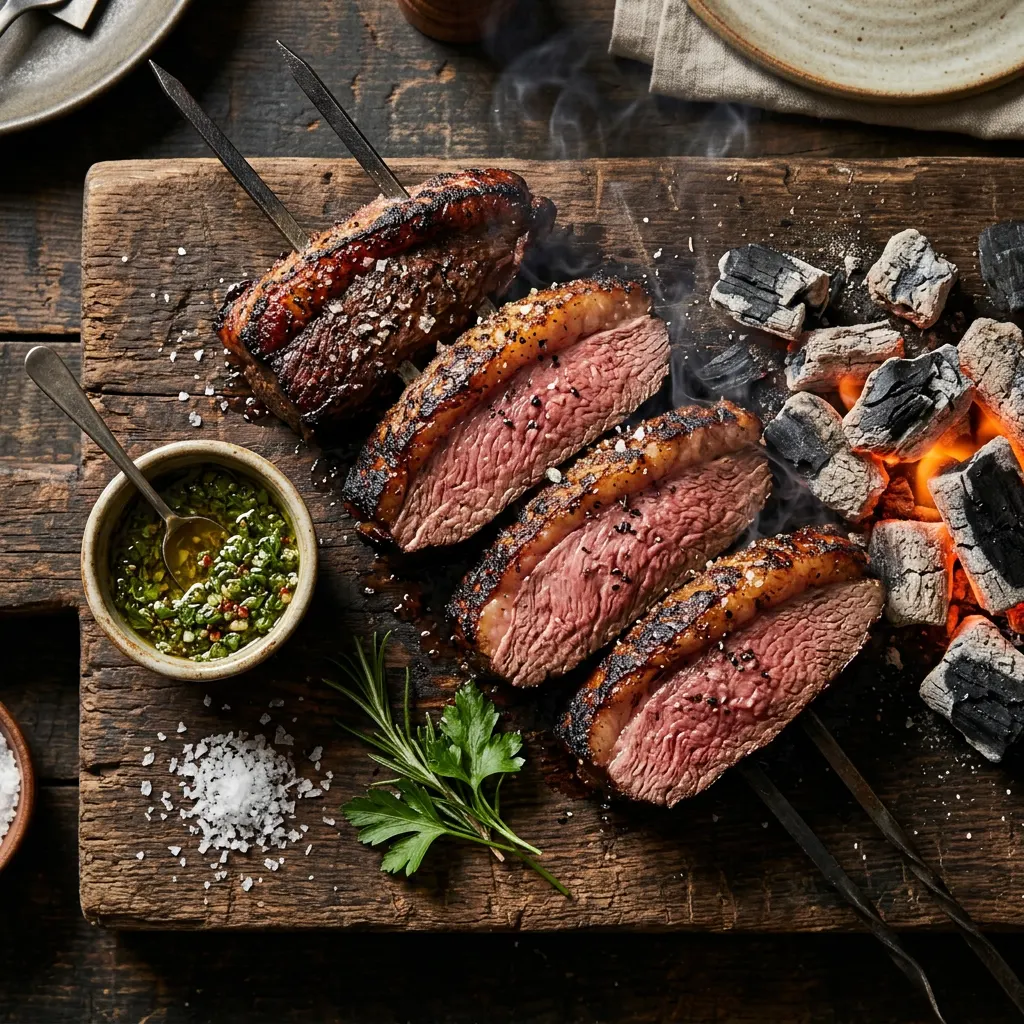
Hickory-Smoked Picanha on the Kettle
Skewered top sirloin cap, hot coals, Argentinian style.
Cook Mode
One step at a time, big text, timers, and your screen stays awake. 0/16 steps done.
Ingredients
Tap to tick off · 0/16 gathered
Method
- 15 min
Score the fat cap of the picanha in a diamond pattern, being careful not to cut into the meat. Cut the picanha against the grain into thick, approximately 1.5 to 2-inch wide steaks. Fold each steak into a 'C' shape, with the fat cap on the outside, and thread onto metal skewers, alternating the direction of the 'C' to fill the skewer. Season generously with coarse sea salt and freshly ground black pepper.
Why it matters
Scoring the fat cap helps it render more evenly and allows the seasoning to penetrate. Cutting against the grain is crucial for tender bites after cooking, and folding into a 'C' shape positions the fat cap properly for basting and crisping.
Common mistake
Rushing the cutting and not scoring the fat, leading to tough meat and unrendered fat.
- 15 min
Fill a chimney starter with lump charcoal and light it from the bottom. Let the coals burn until they are fully ignited and glowing orange, with a light layer of ash.
Why it matters
Getting the coals to a uniform, hot temperature ensures consistent direct heat for searing and a proper crust.
Common mistake
Starting to cook before coals are fully ignited, resulting in uneven heat and dirty smoke.
- 5 min
Generously season all sides of the skewered picanha with coarse sea salt and freshly ground black pepper. Press the seasoning into the meat and fat cap.
Why it matters
The coarse salt and pepper create a flavorful crust as the meat cooks, which is characteristic of traditional picanha. Salt also helps draw out some moisture to aid in crust development.
Common mistake
Not seasoning enough, or using fine salt which can make the meat too salty very quickly.
- 450°F20 min
Fill your chimney starter with charcoal briquettes. Place unlit charcoal in your kettle grill on one side to create a two-zone fire. Light the charcoal in the chimney starter. Once fully lit (coals are mostly ash-covered and glowing red), carefully pour them onto the unlit charcoal in the kettle grill, forming a hot, direct heat zone.
Why it matters
A two-zone fire is crucial for grilling picanha, allowing you to sear over direct high heat and then move to indirect heat if needed to finish cooking without burning, although with picanha on skewers, direct is often king.
Common mistake
Not waiting for the coals to be fully lit, which results in uneven heat and off-flavors.
- 450°F15 min
Fill a chimney starter to the top with lump charcoal and light it. Once the coals are fully ash-covered and glowing red, carefully pour them onto one side of your kettle grill, creating a two-zone fire (direct heat on one side, indirect on the other). Place your oak wood chunks directly on top of the lit coals. Set the grill grate in place and close the lid, allowing the grill to preheat.
Why it matters
A two-zone fire gives you control: high heat for searing, and a cooler zone for managing flare-ups or finishing. The oak wood adds a subtle, complementary smoke flavor to the beef.
Common mistake
Not letting the charcoal get fully ignited before spreading, leading to uneven heat and smoke.
- 450°F5 min
Once the coals are ready, dump them onto one side of your kettle grill, creating a high-heat direct zone. Place a couple of oak chunks on top of the hot coals for flavor if desired. Ensure your grill grate is clean and in place. You want the grill grate to be very hot.
Why it matters
A clean, hot grate prevents sticking and helps create a strong crust. Concentrating coals to one side allows for direct searing and an indirect zone for resting if needed.
Common mistake
Not preheating the grate sufficiently, which causes the meat to stick and tear.
- 450°F3 min
Once the grill reaches 450°F, place the skewered picanha over the direct heat, fat cap down. Sear for 2-3 minutes, rotating as needed until the fat cap is crispy and golden brown, but not burnt. Watch for flare-ups.
Why it matters
Searing the fat cap first renders it down, creating a delicious crispy texture and basting the meat, contributing to the 'beefy' flavor profile.
Common mistake
Burning the fat cap by not watching it closely or searing too long, which imparts a bitter taste.
- 450°F10 min
Once the coals are glowing, add the oak wood chunks directly onto the hot coals. Place the cooking grate on the kettle grill. Allow the grill to preheat with the lid on for 5-10 minutes to reach the target temperature.
Why it matters
Oak wood provides a quintessential beefy smoke flavor that complements picanha. Preheating the grate ensures a good sear and prevents sticking.
Common mistake
Adding wood chunks too early, burning them off before the meat is on, or too late, not getting enough smoke flavor.
- 450°F15 min
Place the skewered picanha directly over the hot coals, fat cap side down first. Close the lid if using wood chunks to capture the smoke. Cook for 3-4 minutes per side, rotating the skewers to ensure even searing and crisping of the fat cap. Target an internal temperature of 120-125°F for rare to medium-rare.
Why it matters
Starting with the fat cap down renders it beautifully, basting the meat below and creating a delicious crispy outer layer. High direct heat develops a fantastic crust.
Common mistake
Overcooking to chase a higher internal temperature, resulting in dry meat. Picanha is best served medium-rare.
- 10 min
Use an instant-read thermometer to check the internal temperature of the picanha in several spots. Remove the skewers when the desired doneness is reached (target 120-125°F for rare/medium-rare). Transfer the picanha to a cutting board and tent loosely with foil.
Why it matters
Resting allows the meat juices to redistribute throughout the muscle fibers, ensuring a more tender and flavorful finished product.
Common mistake
Slicing immediately after cooking, which causes all the flavorful juices to run out, leaving dry meat.
- 450°F15 min
Place the skewered picanha directly over the hot coals (direct heat zone) with the fat cap facing upward initially. Close the lid. Cook for 3-4 minutes per side, turning the skewers every few minutes to ensure even cooking and a beautiful crust on all sides. The goal is a medium-rare to medium internal temperature.
Why it matters
The high heat creates a fantastic crust while the fat cap bastes the meat as it renders. Frequent turning ensures an even sear without burning.
Common mistake
Overcooking the picanha; it's best served medium-rare to medium for tenderness and juiciness.
- 15 min
Move the skewers to maintain direct heat and turn them every 3-4 minutes to cook all sides evenly. Continue cooking until the internal temperature reaches your desired doneness (e.g., 125°F-130°F for medium-rare, or 135°F-140°F for medium). Be mindful of flare-ups from the rendering fat; move to the indirect side if necessary.
Why it matters
Even rotation ensures all sides get a good crust and cook uniformly, while moving to indirect heat is crucial for preventing burning and managing the cook.
Common mistake
Overcooking the meat or not rotating, leading to uneven cooking and a tough texture on one side.
- 10 min
Once the picanha reaches your desired internal temperature, remove the skewers from the grill and place them on a cutting board. Tent loosely with foil.
Why it matters
Resting allows the muscle fibers to relax and reabsorb juices that have migrated to the center during cooking, resulting in a more tender and juicy steak.
Common mistake
Cutting into the meat immediately after cooking, causing all the delicious juices to run out.
Use an instant-read thermometer to check the internal temperature of the picanha. For medium-rare, aim for 125-130°F (it will rise during rest). For medium, aim for 130-135°F. Since this is a quick cook, ensure you probe multiple pieces.
Why it matters
Accurate temperature readings prevent overcooking and guarantee the desired doneness.
Common mistake
Relying on visual cues alone, which can be deceiving with high-heat grilling.
- 2 min
After resting, remove the picanha from the skewers. Slice against the grain into 1/4 to 1/2-inch thick pieces. Serve immediately.
Why it matters
Slicing against the grain breaks up the muscle fibers, making the picanha incredibly tender and enjoyable.
Common mistake
Slicing with the grain, making the meat tough to chew despite proper cooking.
- 2 min
Remove the meat from the skewers. Slice against the grain into individual portions, making sure each slice has some of the delicious fat cap. Serve immediately.
Why it matters
Slicing against the grain ensures maximum tenderness, enhancing the eating experience.
Common mistake
Slicing with the grain, which makes the meat chewier.
Free Guide
5 Techniques Competition Smokers Use That Home Cooks Don't
Join the Guild email list and we'll send you the free guide — the exact moves that separate backyard cooks from competition pitmasters.
Cooks & Reviews
Guild members can rate this recipe, log their cooks and share photos.
Sign in to continueMember reviews
No reviews yet — be the first to rate this cook.
Ask the Pitmaster about this recipe
Substitutions, scaling, technique, troubleshooting — get answers grounded in this cook.
Sign in to try the AI Pitmaster on Hickory-Smoked Picanha on the Kettle. New members get 3 free questions.
Sign in to tryComments(0)
Loading comments…