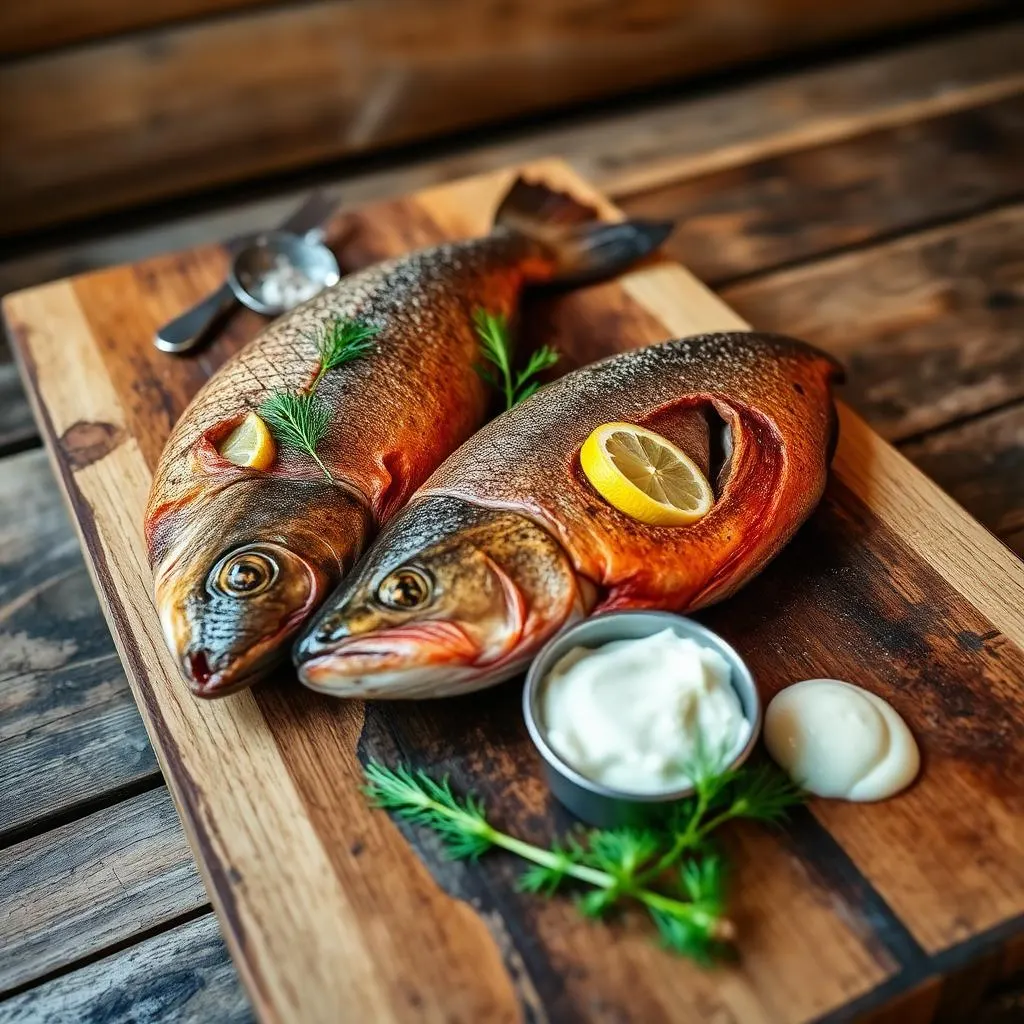
Whole Smoked Trout
One of the oldest smokes in the north and one of the simplest. A short brine seasons the delicate flesh, then gentle alder smoke does the rest, with dill and lemon in the cavity.
Cook Mode
One step at a time, big text, timers, and your screen stays awake. 0/8 steps done.
Ingredients
Tap to tick off · 0/8 gathered
- — MAIN —
- — BRINE —
- — CAVITY & FINISH —
Method
- 30 min
Begin by creating a basic equilibrium brine in a medium saucepan using 4 cups water, 0.25 cup kosher salt, 2 tbsp brown sugar, and 1 tbsp black peppercorns. Bring the mixture to a brief simmer, stirring until the solids are fully dissolved, then remove from heat. You must cool this liquid to below 40°F before it touches the fish; adding raw trout to warm liquid will cause the proteins to denature prematurely, resulting in a rubbery texture and a compromised safety profile. This step ensures the salt and sugar can penetrate the cellular structure of the fish through osmosis, seasoning the deep muscle fibers and increasing the moisture-holding capacity of the protein.
Why it matters
The brine equilibrates moisture and seasons through the flesh; skipping it gives you dry, bland trout.
Common mistake
Adding fish to a brine that is still warm, which par-cooks the delicate skin and flesh.
- 38°F2h
Place the 2 whole cleaned trout (approx. 1 lb each) into a non-reactive vessel and pour the chilled brine over them until they are completely submerged. Refrigerate for exactly 60 to 120 minutes; because trout are relatively small and lean, exceeding this window will lead to over-curing, where the salt begins to chemically 'cook' the fish, making it unpleasantly salty and mushy. This short cure is essential for inhibiting bacterial growth during the low-temperature smoking process.
Why it matters
A precise curing window allows the salt to denature proteins just enough to lock in moisture without ruining the texture.
Common mistake
Leaving the fish in the brine overnight, which results in a product that is far too salty.
- 45 min
Remove the trout from the brine and discard the liquid. Pat the fish inside and out until bone-dry with paper towels, then place them on a wire rack in the refrigerator for 30 to 60 minutes. This air-drying phase is critical for the formation of the 'pellicle' — a thin, slightly tacky protein film on the surface of the fish. This film acts as the primary adhesive for smoke particulates; without a proper pellicle, the smoke will not stick evenly, and you will miss out on the characteristic golden-brown lacquer and deep flavor depth.
Why it matters
The pellicle provides a tacky surface that allows smoke compounds to bond to the fish rather than sliding off.
Common mistake
Smoking wet fish, which leads to 'steaming' and a gray, unappealing exterior.
- 200°F20 min
Preheat your smoker to a stable 200°F using Alder wood chunks or pellets. Alder is the traditional choice for Nordic-style trout because its smoke profile is light and slightly sweet, complementing rather than masking the mild flavor of fresh-water fish. Ensure your grates are scrubbed clean and lightly coated with neutral oil to prevent the delicate skin from tearing when you try to remove the fish later.
Why it matters
Using a mild wood like Alder prevents the delicate fish from being overwhelmed by harsh, acrid smoke flavors.
Common mistake
Using heavy woods like hickory or mesquite which will make the trout taste like bitter ash.
- 10 min
Just before loading the smoker, lightly rub the exterior of the trout with a thin layer of neutral oil for a professional sheen. Open the belly cavities and stuff each with several lemon slices (1 lemon, sliced) and half a bunch of fresh dill. These aromatics provide a moisture buffer from the inside out and infuse the meat with bright, herbaceous notes as the fish fat renders slightly. Do not overstuff; you want enough airflow so that the smoke can still penetrate the interior of the ribcage.
Why it matters
Internal aromatics season the thickest part of the fish and prevent the belly walls from drying out.
Common mistake
Overstuffing the cavity so tightly that smoke cannot circulate, leaving the interior bland.
- 200°F1h 15m
Lay the trout directly on the grates, spaced at least 2 inches apart to ensure uniform smoke contact. Maintain a clean, blue smoke at 200°F. The target is an internal temperature of 145°F at the thickest part of the shoulder. Watch for the skin to transition from pale to a burnished golden hue. Smoking fish moves quickly; you are looking for the point where the proteins have fully set and the collagen in the skin has softened, typically taking 60 to 75 minutes.
Why it matters
Low and slow heat prevents the albumin (white protein) from bleeding out of the muscle fibers too quickly.
Common mistake
Opening the lid too often, which causes temperature swings and dries out the lean fish.
- 145°F10 min
Once the trout hits an internal temperature of 145°F, carefully remove it using a wide spatula to support the entire length of the fish. Allow the trout to rest on a room-temperature platter for 10 minutes. This rest is non-negotiable; as the fish cools slightly, the internal juices thicken and redistribute, ensuring that the moisture stays in the flesh when you crack the skin. Carryover cooking may nudge the temperature up by 2-3 degrees, which is the perfect safety buffer.
Why it matters
Resting allows the delicate fish flakes to firm up so the fish doesn't shatter when served.
Common mistake
Flaking the fish immediately after removal, causing all the essential oils and juices to run off the plate.
Serve the trout whole to showcase the Alder-smoked finish. To serve, use a knife to gently slice along the spine and lift the top fillet away from the bone structure; the bones should pull away cleanly from the bottom fillet if the fish was cooked to the correct temperature. Serve with the rendered lemon slices from the cavity and fresh sprigs of dill. The result should be buttery, lightly smoky, and perfectly seasoned from the brine.
Why it matters
Proper presentation honors the craft and ensures the guest receives the highest quality portions of the meat.
Common mistake
Serving the fish without checking for pin bones, which can be an unpleasant surprise for the diner.
Sauce It
Cooks & Reviews
Guild members can rate this recipe, log their cooks and share photos.
Sign in to continueMember reviews
No reviews yet — be the first to rate this cook.
Ask the Pitmaster about this recipe
Substitutions, scaling, technique, troubleshooting — get answers grounded in this cook.
Sign in to try the AI Pitmaster on Whole Smoked Trout. New members get 3 free questions.
Sign in to tryComments(0)
Loading comments…