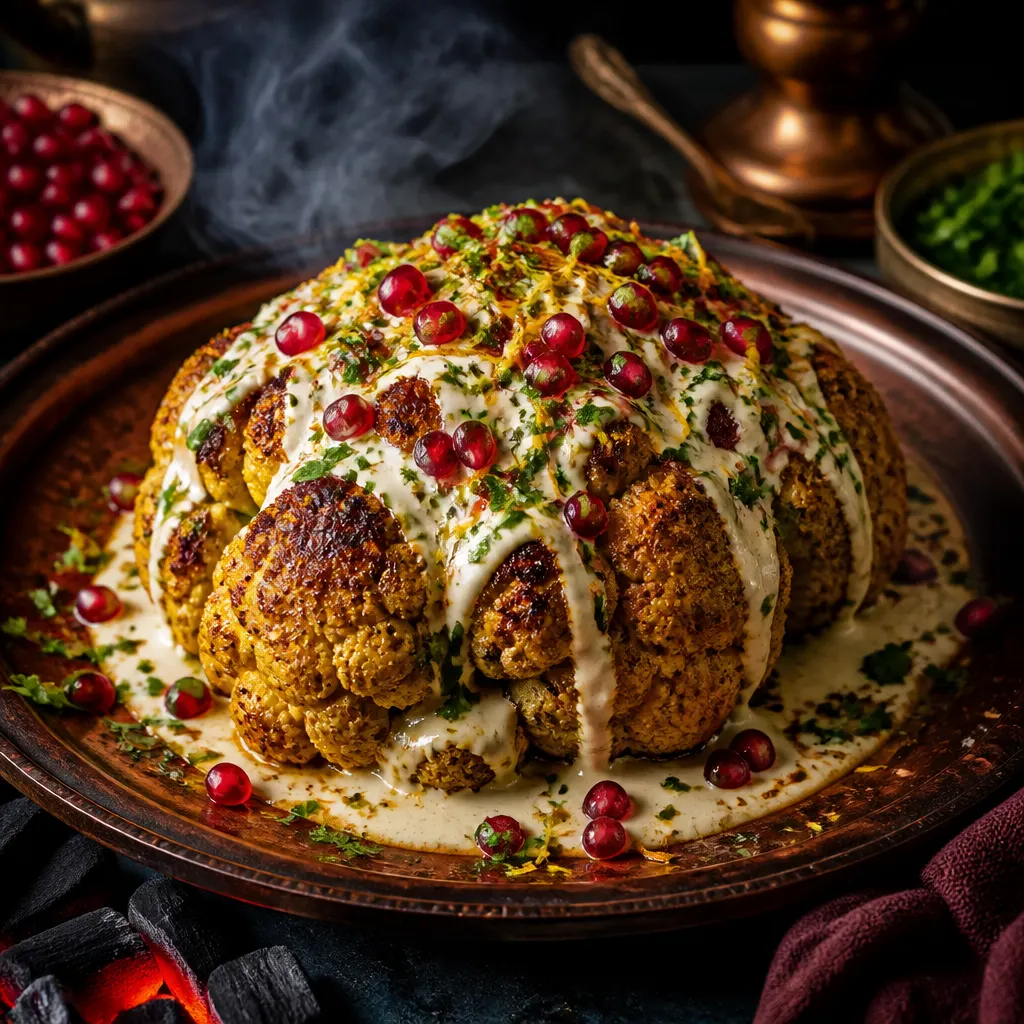
Whole Smoked Cauliflower with Tahini & Lemon
The vegetarian centerpiece of modern Levantine restaurants — parboiled, smoked until bronzed and tender, then drowned in lemony tahini. Carve at the table like a roast.
Cook Mode
One step at a time, big text, timers, and your screen stays awake. 0/9 steps done.
Ingredients
Tap to tick off · 0/9 gathered
Method
- 15 min
Fill a large 8-quart stockpot with water and bring it to a rolling boil. Carefully submerge the trimmed, whole head of cauliflower for exactly 5 minutes. This step is critical for large brassicas as it breaks down the pectin in the dense interior stem, ensuring the core reaches a tender texture before the delicate outer florets burn in the smoker's dry heat.
Why it matters
Parboiling ensures the dense core and the exterior florets finish cooking at the same time.
Common mistake
Skipping this step leads to a raw, crunchy core and a bitter, over-smoked exterior.
- 10 min
Using a spider strainer or two slotted spoons, remove the cauliflower from the boiling water and place it on a wire cooling rack for 10 minutes. This allows the surface moisture to evaporate via residual heat; if the cauliflower is wet when the oil and rub are applied, the seasoning will slide off into the fire rather than adhering to the vegetable surface.
Why it matters
A dry surface is essential for the oil binder to adhere and create a bronzed crust.
Common mistake
Applying oil to a wet cauliflower, which prevents browning and causes seasoning runoff.
- 5 min
While the cauliflower is still warm and the pores are open, rub the entire surface and the underside with 3 tbsp of olive oil. Evenly sprinkle a mixture of 1 tbsp salt and 1 tsp ground cumin over every floret and into the crevices, patting gently. The oil acts as a binder for the spices and provides the fat necessary for the Maillard reaction (browning) to occur during the smoke.
Why it matters
The oil-to-spice ratio creates a savory crust that balances the vegetable's natural sugars.
Common mistake
Failing to season the underside, resulting in bland bites once the head is carved.
- 275°F20 min
Preheat your smoker to a steady 275°F using apple or oak wood. These mild fruitwoods or hardwoods provide a clean smoke profile that complements the earthy cauliflower without the harshness of hickory or mesquite. Clean your grates thoroughly to ensure no residual meat proteins transfer to the vegetable centerpieces.
Why it matters
Clean grates and stable temperature management are the foundations of professional vegetable smoking.
Common mistake
Using heavy woods like mesquite which can easily overwhelm the delicate flavor of cauliflower.
- 275°F1h 50m
Place the seasoned cauliflower directly on the center of the grate, stem-side down, to allow maximum airflow around the florets. Close the lid and smoke for 90 to 120 minutes. Modern pitmasters look for a deep, bronzed appearance and a tactile 'give'—the cauliflower is done when a paring knife or temperature probe slides into the thickest part of the stem with the same resistance as room-temperature butter.
Why it matters
The low and slow heat further softens the parboiled interior while depositing smoke phenols onto the oil-coated surface.
Common mistake
Opening the lid too frequently, which fluctuates the temperature and stalls the softening of the core.
- 5 min
While the cauliflower smokes, combine 0.5 cup tahini, 0.25 cup lemon juice, 3 cloves of grated garlic, 1 tsp ground cumin, and 1 tsp salt in a bowl. Whisk until the mixture 'seizes' into a thick, dry paste. This seizure is a specific chemical reaction where the lemon juice acid causes the sesame proteins to clump; do not discard the mixture, as this is the necessary precursor to a stable emulsion.
Why it matters
Understanding the science of protein seizure allows you to build a stable, creamy sauce without splitting.
Common mistake
Panic-discarding the sauce when it thickens and looks 'broken' after adding lemon juice.
- 5 min
To the thickened tahini paste, slowly drizzle in 0.25 cup of ice water, one tablespoon at a time, while whisking aggressively. The cold water works to re-emulsify the fats and proteins, turning the dark paste into a light, airy, and pourable cream. Stop adding water once the sauce reaches the consistency of heavy cream—it should be thin enough to drape over the cauliflower but thick enough to cling to the florets.
Why it matters
Ice water aerates the fat in the tahini, creating a fluffy texture that lightens the mouthfeel of the dish.
Common mistake
Adding room temperature water, which fails to create the same light, whipped volume.
- 10 min
Remove the cauliflower from the smoker and let it rest on the serving platter for 5 to 10 minutes. Like meat, vegetables experience carryover cooking as the internal heat equilibrates; this short rest ensures the core is fully softened and makes the cauliflower easier to carve without the florets shattering from excessive steam pressure.
Why it matters
Resting allows internal moisture to redistribute so the sauce clings better to the surface.
Common mistake
Carving immediately, which causes steam to escape and can result in a drier final texture.
- 5 min
Pour the prepared tahini sauce generously over the crown, allowing it to pool at the base. Garnish with a vibrant layer of pomegranate seeds, fresh parsley, and toasted pine nuts (1 each). Carve the cauliflower into thick wedges at the table, ensuring each guest receives a portion of the smoked crust, the tender core, and plenty of the bright, acidic sauce to cut through the smoke.
Why it matters
The combination of hot smoked brassica and cold, zesty tahini creates a high-contrast flavor profile.
Common mistake
Under-dressing the cauliflower; the starches in the vegetable require significant sauce for balance.
Cooks & Reviews
Guild members can rate this recipe, log their cooks and share photos.
Sign in to continueMember reviews
No reviews yet — be the first to rate this cook.
Ask the Pitmaster about this recipe
Substitutions, scaling, technique, troubleshooting — get answers grounded in this cook.
Sign in to try the AI Pitmaster on Whole Smoked Cauliflower with Tahini & Lemon. New members get 3 free questions.
Sign in to tryComments(0)
Loading comments…