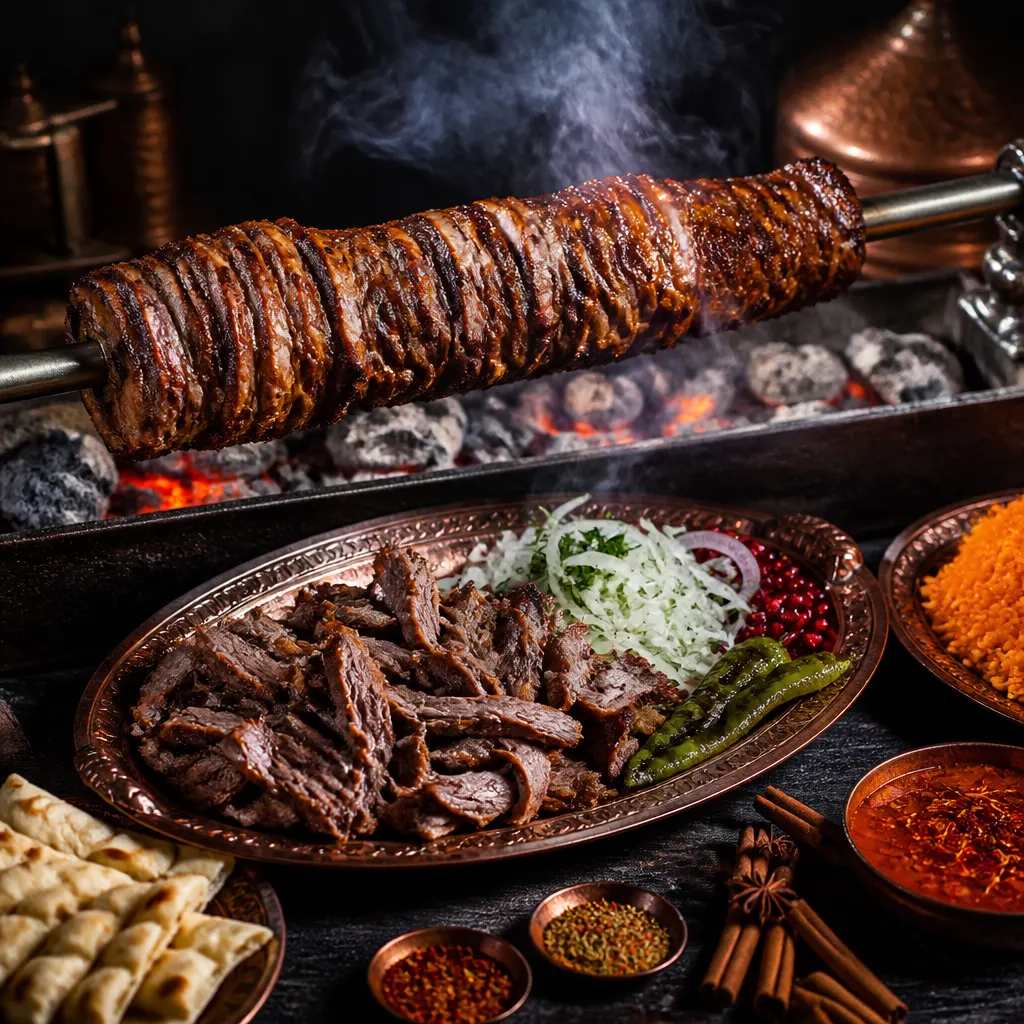
Turkish Cag Kebabi — Smoked Horizontal Lamb Spit
The lesser-known ancestor of shawarma and doner from eastern Turkey — lamb cured in onion pulp for 48 hours, then horizontally spit-smoked. The flavor is lamb, onion, and smoke. No heavy spice mix.
Cook Mode
One step at a time, big text, timers, and your screen stays awake. 0/8 steps done.
Ingredients
Tap to tick off · 0/6 gathered
Method
- 30 min
Begin by grating 3 large yellow onions and collecting the results in a fine-mesh strainer over a bowl. Firmly squeeze the pulp to separate every drop of juice; you will whisk the reserved onion juice and pulp with 2 tbsp salt, 1 tbsp coarsely ground black pepper, and 1 tsp ground white pepper. This mixture creates a high-enzyme alkaline environment rich in sulfur compounds that will chemically tenderize the meat fibers and break down tough connective tissue in the lamb shoulder and leg over the next two days.
Why it matters
The enzymes in onion juice act as a natural tenderizer that softens the lamb's lean muscle without making it mushy like chemical marinades.
Common mistake
Throwing away the onion pulp and only using juice, which robs the meat of the full concentration of savory aromatics.
- 38°F48h
Slice 5 lbs of boneless lamb shoulder and leg into sheets approximately 1/2-inch thick. In a non-reactive glass or ceramic dish, massage every inch of the lamb slices with the prepared onion and pepper mixture, ensuring the spices and juice are evenly distributed. This step is critical for food safety and flavor; the salt must penetrate the meat to inhibit bacterial growth during the long cure, so ensure no surface is left dry.
Why it matters
A 48-hour cold cure allows the salt and onion essence to reach the center of the lamb slabs, ensuring deep seasoning.
Common mistake
Using a metal bowl which can react with the acidic onion juice and impart a metallic tang to the lamb.
- 45 min
After 48 hours, remove the lamb from the refrigerator and wipe off the visible onion pulp with your hands or the back of a knife. You must remove the solids because they contain sugars and fibers that will burn and turn bitter in the smoke, whereas the liquid essence has already flavored the interior. Slice 1 lb of lamb fat or fatback into thin, translucent sheets of equal surface area to the meat slices; these will serve as internal basting layers on the spit.
Why it matters
Removing the onion solids prevents a charred, acrid crust, ensuring only clean smoke flavor adheres to the meat.
Common mistake
Washing the lamb with water, which removes the concentrated seasoning and ruins the surface texture.
- 30 min
Secure the first fork on your horizontal rotisserie skewer and begin threading the lamb and fat. Alternate the layers by packing a lamb slice followed by a thin sheet of the 1 lb lamb fat, pressing each layer firmly against the previous one to eliminate internal air pockets. Tighten the second spit fork once the 5 lb stack is complete, creating a dense, uniform cylinder. This compression ensures the meat doesn't separate or cook unevenly as it rotates over the heat.
Why it matters
Dense packing prevents air pockets where bacteria could thrive and ensures the fat stays trapped between meat layers to lubricate the lean muscle.
Common mistake
Leaving gaps between the meat and fat layers which causes the turkey-style 'loaf' to fall apart during slicing.
- 275°F1h 30m
Heat your smoker to a consistent 275°F using clean-burning oak. Position a wide drip pan directly beneath the rotisserie path to prevent grease flare-ups from the rendering lamb fat. Mount the spit into the motor and begin the rotation; oak is the ideal choice here because its medium-bodied smoke complements the distinct lanolin flavor of the lamb without overwhelming the delicate onion notes.
Why it matters
Oak provides a steady, neutral smoke base that develops a mahogany color without the bitterness of heavier woods like hickory.
Common mistake
Starting the rotisserie before the smoker has reached a 'blue smoke' state, which coats the lamb in soot.
- 275°F45 min
After 90 minutes of smoking, the exterior should appear deep mahogany and the internal fat should be translucent and bubbling. Reach into the drip pan with a brush and lightly coat the rotating cylinder with its own rendered fat and the residual onion juices. This 'self-basting' technique accelerates the Maillard reaction on the surface while protecting the lamb from drying out in the 275°F convective environment.
Why it matters
Recirculating the fat and juices onto the meat builds layers of caramelized flavor that would otherwise be lost to the drip pan.
Common mistake
Opening the smoker too frequently, which drops the temperature and stalls the rendering of the lamb fat.
- 145°F3h
Once the exterior is crispy and browned, use a very sharp knife to shave the outer 1/8-inch of cooked meat directly onto pita. Because this is a progressive cook, you are serving the outer 'bark' while the inner layers continue to cook. Ensure that by the time you reach the inner core, the temperature has maintained at least 145°F to ensure food safety. Continue to smoke and rotate the remaining core between each shaving pass until the skewer is finished.
Why it matters
Shaving progressive layers allows each guest to receive the perfect ratio of smoky crust and tender, succulent interior lamb.
Common mistake
Shaving too deep into the raw center, which exposes undercooked meat to the guests.
- 10 min
Place the shaved lamb on warm pita strips. The pita acts as a secondary rest surface, absorbing the juices and fat from the lamb shoulder. Garnish with very thin slices of white onion, fresh parsley, and a dusting of sumac to provide the necessary acid to cut through the richness of the lamb fat. Serve immediately while the fat is still in a liquid state for the most luxurious mouthfeel.
Why it matters
The high fat content of lamb shoulder needs the astringency of sumac and raw onion to balance the palate.
Common mistake
Serving the lamb on cold bread, which causes the rendered tallow to seize and feel waxy on the tongue.
6 more steps locked
You've seen the ingredients and the first two steps. Pit Members get every step, every temp, every glaze — plus the Cook Monitor and Pitmaster AI.
See Membership OptionsAlready a member? Sign in.
Sauce It
Cooks & Reviews
Guild members can rate this recipe, log their cooks and share photos.
Sign in to continueMember reviews
No reviews yet — be the first to rate this cook.
Ask the Pitmaster about this recipe
Substitutions, scaling, technique, troubleshooting — get answers grounded in this cook.
Sign in to try the AI Pitmaster on Turkish Cag Kebabi — Smoked Horizontal Lamb Spit. New members get 3 free questions.
Sign in to tryComments(0)
Loading comments…