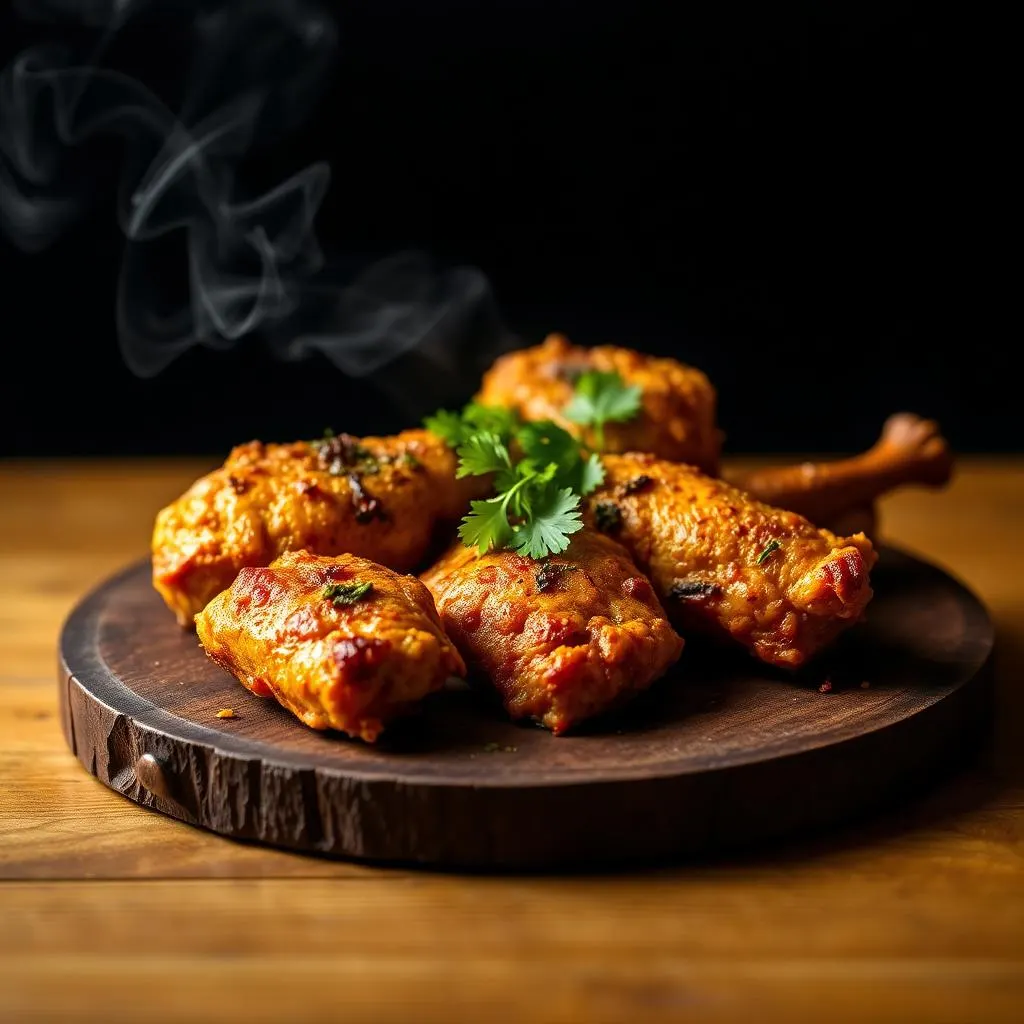
Trinidadian Curry Smoked Chicken
Trinidad does curry differently — green seasoning and bloomed curry powder build a deep, earthy base, and the smoke adds a layer you never get from a stovetop.
Cook Mode
One step at a time, big text, timers, and your screen stays awake. 0/8 steps done.
Ingredients
Tap to tick off · 0/12 gathered
- — MAIN —
- — GREEN SEASONING —
- — CURRY COAT —
Method
- 15 min
Create the foundation of Trinidadian flavor by blending 1 bunch of cilantro/culantro, 1 bunch of scallions, 6 cloves of garlic, 1 inch of ginger, 1 tbsp of fresh thyme, 1 whole scotch bonnet, 2 tbsp of lime juice, and 1 tsp of salt. Process these ingredients into a thick, fibrous paste. The lime juice acts as a mild acid to begin protein breakdown, while the aromatics provide the deep herbal profile characteristic of the region. Be extremely careful with the scotch bonnet; its oils are potent and can cause severe skin irritation.
Why it matters
The green seasoning provides the aromatic depth and acidity required to penetrate the muscle fibers for a consistent flavor profile.
Common mistake
Adding liquid like water to the blender, which dilutes the flavor and prevents the seasoning from adhering to the chicken.
- 24h
Place 3.5 lbs of bone-in chicken pieces into a vacuum-seal or heavy-duty zip-top bag and pour in the green seasoning. For the Smoke Brothers signature move, freeze the chicken flat for at least 24 hours. As the water in the seasoning and chicken cells turns to ice, it expands and ruptures the cell walls. When you thaw the bird in the refrigerator 24 hours before your cook, the seasoning gets pulled deep into the core of the meat rather than just sitting on the surface.
Why it matters
Freezing creates physical pathways in the meat fibers for the marinade to penetrate far deeper than standard refrigerator soaking.
Common mistake
Thawing the meat on the counter, which allows the exterior to reach the 40-140°F danger zone before the interior is safe.
- 5 min
In a small skillet, heat 2 tbsp of vegetable oil until it shimmers, then add 3 tbsp of Caribbean or Madras curry powder and 1 tsp of ground cumin. Whisk for exactly 60 seconds. You are blooming the fat-soluble flavor compounds in the spices, transforming the raw, dusty taste of curry into a rich, nutty, and complex profile. Remove from the heat immediately when it turns a shade darker to prevent bitter burnt notes and let it cool completely.
Why it matters
Blooming spices in oil unlocks aromatic compounds that remain dormant when the spices are applied dry.
Common mistake
Using high heat, which flashes the spices and creates a bitter, blackened taste that ruins the meat.
- 10 min
Remove the thawed chicken from the bag and apply the cooled curry oil directly over the green seasoning layer. Massage the oil into everything—ensure the thighs, wings, and drumsticks are heavily coated in the golden yellow mixture. This double-layering technique is essential for building a competition-style bark that stands up to the high moisture environment of the smoker without washing off.
Why it matters
The oil in the curry coating acts as a heat conductor and protects the herbal seasoning from drying out too quickly.
Common mistake
Applying the curry oil while it is still hot, which partially cooks the surface of the chicken and prevents proper smoke adhesion.
- 275°F30 min
Preheat your smoker to 275°F using oak or apple pellets; these provide a clean smoke that won't distract from the intense curry aromatics. While the smoker settles, place the chicken on a wire rack over a baking sheet for 30 minutes. This air-drying period allows the lime juice and salt to finish their surface work while the skin develops a tacky texture known as a pellicle, which is vital for the smoke to 'stick' and create that mahogany color.
Why it matters
A dry surface and established pellicle ensure the smoke particles adhere uniformly rather than sliding off with the condensation.
Common mistake
Putting wet, cold chicken into a cold smoker, which leads to rubbery skin and grey, unappealing color.
- 275°F1h 30m
Arrange the chicken pieces on the grates with at least 1-2 inches of space between each piece to ensure total smoke circulation. Close the lid and maintain a steady 275°F. Around the 60-minute mark, check the color; you are looking for a matte, deep mahogany-orange finish. This is the KCBS standard for appearance—balanced, glossy from the rendered fat, and uniformly colored across every piece of the bird.
Why it matters
Maintaining a steady temp prevents the 40-140°F stall from lasting too long and ensures the fat renders effectively.
Common mistake
Opening the lid repeatedly to check the chicken, which drops the pit temp and prevents the skin from crisping.
- 175°F30 min
Continue smoking until the internal temperature reaches a target of 175°F for all pieces. While 165°F is the food safety minimum, regional curry chicken is at its best when the connective tissues in the thighs and drumsticks are fully rendered. Use a high-quality instant-read thermometer to check the thickest part of the meat away from the bone. At 175°F, the meat will have a slight tug but pull away cleanly, satisfying texture requirements for competition-grade poultry.
Why it matters
Targeting 175°F allows collagen to convert to gelatin, providing a much more succulent and 'fall-apart' texture than lower temps.
Common mistake
Pulling the meat at exactly 165°F, which often leaves bone-in dark meat feeling tough and under-rendered.
- 15 min
Transfer the chicken to a warm platter and tent loosely with foil—do not wrap it tightly, or the steam will soften the skins you worked hard to build. Let the chicken rest for 15 minutes. During this time, the carryover heat will finish the cooking process while the muscle fibers relax and re-absorb the moisture that was pushed to the surface during the cook. This ensures that when the judge or guest bites in, the juice stays in the meat.
Why it matters
A proper rest prevents the liquid loss that occurs when cutting into hot, constricted muscle fibers.
Common mistake
Cutting into the chicken immediately, resulting in all the flavor running out onto the cutting board.
Sauce It
Cooks & Reviews
Guild members can rate this recipe, log their cooks and share photos.
Sign in to continueMember reviews
No reviews yet — be the first to rate this cook.
Ask the Pitmaster about this recipe
Substitutions, scaling, technique, troubleshooting — get answers grounded in this cook.
Sign in to try the AI Pitmaster on Trinidadian Curry Smoked Chicken. New members get 3 free questions.
Sign in to tryComments(0)
Loading comments…