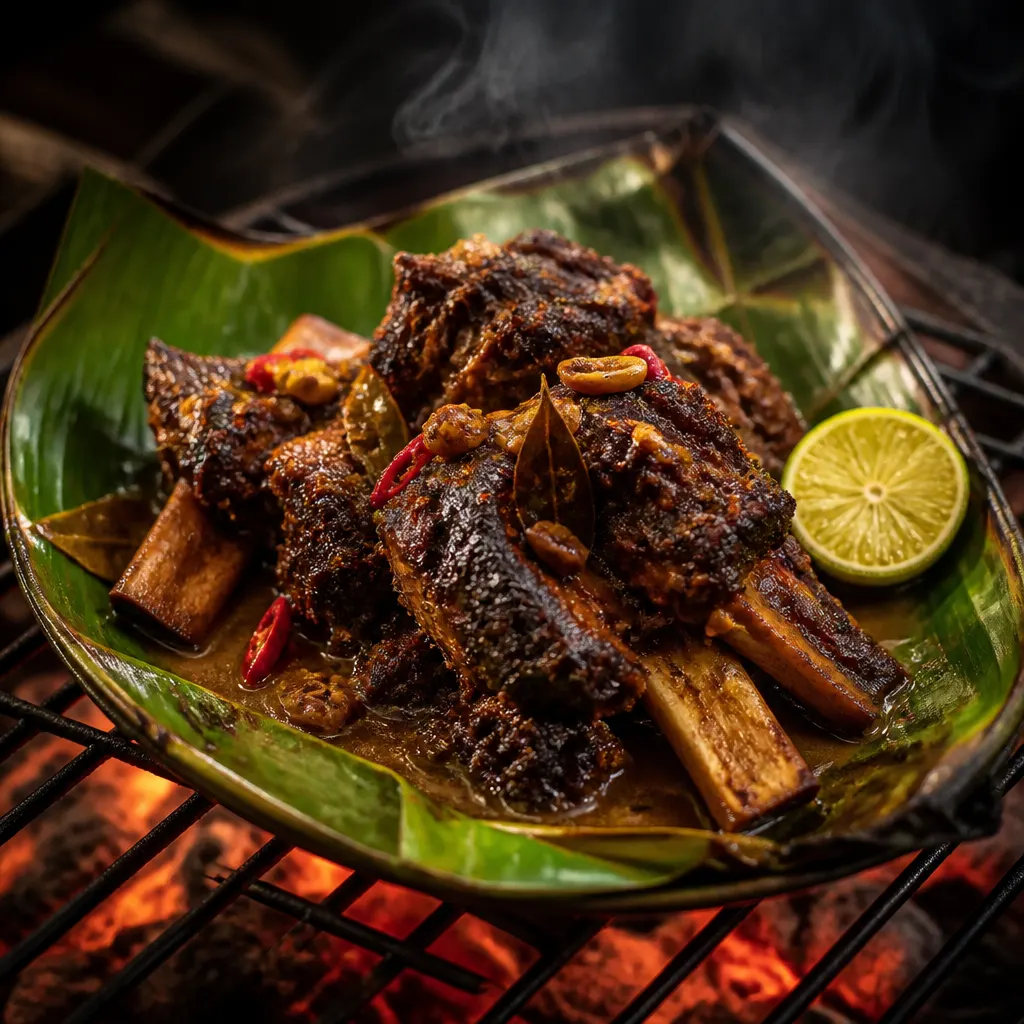
Thai Massaman Smoked Beef Short Ribs
Southern Thailand's most complex curry, Muslim-influenced and built on warm spices that point as much toward India as toward the rest of Thai cooking. Beef short ribs smoked hard first, then braised in massaman curry until they fall apart.
Cook Mode
One step at a time, big text, timers, and your screen stays awake. 0/9 steps done.
Ingredients
Tap to tick off · 0/18 gathered
Method
- 15 min
Begin by removing 4.5 lbs of beef short ribs from their packaging and patting them completely dry to ensure optimal rub adhesion. In a small bowl, combine 2 tbsp brown sugar, 1 tbsp salt, 1 tbsp ground coriander, 1 tbsp white pepper, 1 tsp ground cardamom, and 1 tsp ground cinnamon. Apply this mixture generously to all sides of the beef, pressing it firmly into the meat surface. The salt acts as a dry brine, drawing moisture out to dissolve the spices and then pulling that seasoned brine back into the muscle fibers, while the warm spice profile begins to bridge the gap between Texas-style BBQ and Thai flavor profiles.
Why it matters
A dry brine seasons the meat deeply and alters the protein structure to retain more moisture during the long smoking process.
Common mistake
Applying the rub to a wet meat surface which results in a patchy, uneven bark.
- 38°F12h
Wrap the rubbed short ribs tightly in plastic wrap or place them in a vacuum-sealed bag. Refrigerate the meat for at least 12 hours. During this time, the spices undergo a 'cold-bloom,' where the aromatic oils in the cinnamon and cardamom penetrate the fat cap. This step is crucial for transforming the beef into a substrate for the Massaman flavors before it ever hits the heat. This also ensures the meat enters the smoker at a food-safe temperature below 40°F.
Why it matters
Extended contact time allows the salt to penetrate the dense center of the short rib, seasoning the meat all the way to the bone.
Common mistake
Rushing the cure time, which leaves the interior of the thick plate ribs bland and unseasoned.
- 250°F45 min
Preheat your smoker to a steady 250°F using a base of high-quality lump charcoal and chunks of apple wood. Apple wood provides a mild, sweet fruit smoke that avoids overpowering the delicate cardamom and coriander notes in the rub. Ensure you have a 'clean' blue smoke coming from the stack; heavy, white, or billowy smoke indicates incomplete combustion which will leave a bitter creosote flavor on the meat. Place a water pan in the smoker to maintain a humid environment, which helps in smoke adherence and bark formation.
Why it matters
A stable temperature and clean wood combustion prevent the acrid carbon flavors that can ruin a complex curry base.
Common mistake
Adding meat to the smoker before the fire has stabilized, leading to creosote buildup.
- 165°F5h
Place the ribs bone-side down on the grate. Smoke undisturbed for approximately 5 hours or until the internal temperature reaches roughly 165°F (the 'stall'). During this phase, the surface proteins undergo the Maillard reaction, forming a mahogany bark. We are intentionally avoiding a wrap or spritz here; we want a rugged, dehydrated exterior crust that can withstand several hours of braising without turning into a mushy slurry. The beef will transition through the 40-140°F danger zone safely during this high-heat application.
Why it matters
The bark provides the textural contrast and concentrated smoky punch that defines smoked Massaman vs. standard braised Massaman.
Common mistake
Spritzing the ribs, which softens the bark and prevents it from standing up to the braising liquid later.
- 20 min
While the ribs smoke, prepare the braise base. In a heavy Dutch oven, heat 0.333 cup Massaman curry paste over medium heat. Stir constantly for 3-5 minutes until the paste browns slightly and the oils separate—this 'blooming' process activates the fat-soluble compounds in the dried chilies and galangal. Slowly whisk in one can of coconut milk, followed by the second can, 0.25 cup fish sauce, 3 tbsp palm sugar, and 3 tbsp tamarind paste. These provide the four pillars of Thai flavor: salty, sweet, sour, and creamy.
Why it matters
Blooming the paste in fat is the only way to unlock the full aromatic potential of the spices and curry herbs.
Common mistake
Adding the liquid ingredients too quickly before the paste has properly cooked out and separated.
- 250°F2h
Add 0.5 cup roasted peanuts, 2 cinnamon sticks, 5 crushed cardamom pods, and 5 whole cloves to the liquid. These whole spices will infuse the coconut milk as it simmers. Once the beef ribs have hit their 165°F target and have a set bark, carefully nestle them bone-side down into the Dutch oven. The liquid should come at least halfway up the sides of the ribs. Cover with a tight-fitting lid or a double layer of heavy-duty foil to trap the steam and heat created by the liquid's moisture.
Why it matters
Braising converts the tough collagen in the short ribs into gelatin, which provides the rich, silky mouthfeel characteristic of high-end ribs.
Common mistake
Failing to seal the Dutch oven tightly, which leads to excessive evaporation and tough meat.
- 203°F1h
After 2 hours of braising, add 1 wedged onion and 2 chunks of Yukon Gold potatoes into the liquid around the beef. Cover and continue cooking at 250°F. The potatoes will absorb the beef fat and coconut milk as they soften, acting as sponges for the smoke-infused curry. Continue cooking until the potatoes are fork-tender and the beef reaches an internal temperature of 203°F-205°F. At this point, the connective tissue has completely liquefied.
Why it matters
Adding vegetables late prevents them from disintegrating into the sauce while ensuring they are fully cooked and flavored.
Common mistake
Pulling the beef too early before the internal temperature has allowed the collagen to fully break down.
- 20 min
Carefully remove the ribs from the liquid and place them on a warm platter, tented loosely with foil. Allow the meat to rest for at least 20 minutes. This rest is vital for carryover cooking and to allow the internal juices to redistribute so the meat doesn't 'bleed' when sliced. While the meat rests, skim any excess fat from the surface of the curry. If the sauce is too thin, simmer it uncovered on a stovetop for 5-10 minutes until it thickens to a nappe consistency, coating the back of a spoon.
Why it matters
Resting prevents the meat from becoming dry and stringy upon slicing, while sauce reduction concentrates the final flavor profile.
Common mistake
Slicing the beef immediately without a rest, causing the internal moisture to spill out.
Slice the ribs between the bones into massive individual portions. Return the ribs to the sauce to glaze them one last time. Serve in deep bowls over jasmine rice, ensuring each portion receives a generous amount of the curry liquid, potatoes, and peanuts. The final dish should display a clear smoke ring beneath the thick curry glaze, representing the marriage of pitmaster technique and traditional Thai aromatics.
Why it matters
The final presentation emphasizes the contrast between the dark, smoky bark and the vibrant, creamy curry sauce.
Common mistake
Serving with cold rice or insufficient sauce, which detracts from the richness of the beef.
7 more steps locked
You've seen the ingredients and the first two steps. Pit Members get every step, every temp, every glaze — plus the Cook Monitor and Pitmaster AI.
See Membership OptionsAlready a member? Sign in.
Sauce It
Cooks & Reviews
Guild members can rate this recipe, log their cooks and share photos.
Sign in to continueMember reviews
No reviews yet — be the first to rate this cook.
Ask the Pitmaster about this recipe
Substitutions, scaling, technique, troubleshooting — get answers grounded in this cook.
Sign in to try the AI Pitmaster on Thai Massaman Smoked Beef Short Ribs. New members get 3 free questions.
Sign in to tryComments(0)
Loading comments…