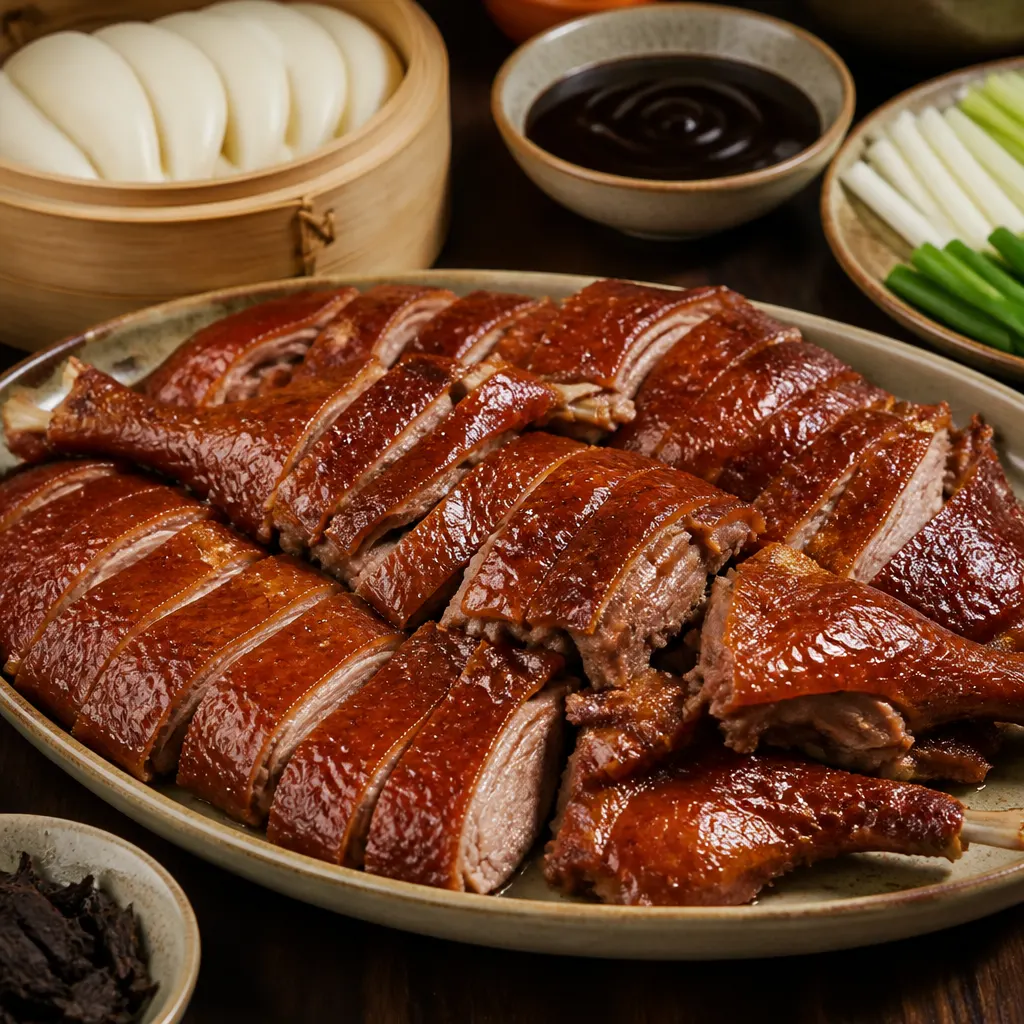
Tea-Smoked Duck (Zhangcha Ya)
Zhangcha duck is one of the great smoking achievements of world cuisine — the signature banquet dish of Sichuan, traditionally smoked over camphor wood and tea leaves, then steamed and fried for the ultimate texture. This is true Chinese tea-smoking at its most refined, a multi-stage masterpiece of cure, smoke, steam, and crisp. It's an all-day project that rewards patience with something most people have only ever had in a high-end restaurant. The showpiece of the entire card.
Cook Mode
One step at a time, big text, timers, and your screen stays awake. 0/8 steps done.
Ingredients
Tap to tick off · 0/12 gathered
Method
- 24h
Begin by prepping the 5.5 lb whole duck. In a small bowl, combine 2 tbsp salt, 1 tbsp toasted and ground Sichuan peppercorns, 1 tbsp five-spice powder, 2 tbsp Shaoxing wine, and 1 tbsp grated ginger. Rub this aromatic paste thoroughly over the exterior skin and inside the cavity of the bird. This high-salt dry brine initiates the denaturing of proteins, helping the meat retain moisture through the subsequent high-heat stages while seasoning the deep muscle tissue with classic Sichuan flavor profiles.
Why it matters
The salt and alcohol in the Shaoxing wine act as a vehicle to pull Sichuan aromatics into the meat while managing moisture levels.
Common mistake
Skipping the 24-hour window, which prevents the salt from penetrating the thick duck breast meat.
- 2h
Thoroughly rinse the duck under cold running water to remove excess surface salt and ginger bits that might burn. Pat the duck completely dry with paper towels inside and out. For the best results, place the duck on a wire rack in the refrigerator for an additional 2-4 hours to allow the skin to tighten and form a slight pellicle. A dry surface is essential for the tea smoke to adhere evenly and create that signature golden-bronze lacquer.
Why it matters
A dry exterior allows the smoke particles to bond directly to the skin rather than sliding off a layer of surface moisture.
Common mistake
Attempting to smoke a damp duck, resulting in a splotchy, uneven color and steamed flavor.
- 225°F10 min
Line a large heavy-bottomed wok or a dedicated smoking pan with heavy-duty aluminum foil. Mix 0.5 cup loose black tea leaves, 0.5 cup raw rice, 0.5 cup brown sugar, 2 whole star anise, 1 whole cinnamon stick, and the optional camphor or cypress chips. Place this mixture in the bottom of the pan. The rice acts as a heat sink to prevent the sugar from burning too quickly, while the sugar provides the carbon for smoke and the tea provides the unique floral aroma.
Why it matters
The specific ratio of rice to sugar manages the combustion rate of the aromatics to prevent acrid flavors.
Common mistake
Neglecting to line the pan with foil, making the charred sugar nearly impossible to clean.
- 225°F35 min
Place a wire rack over the tea mixture and set the duck on the rack. Heat the pan over medium heat until the first wisps of smoke appear, then cover tightly with a lid or more foil to trap the smoke. Maintain a smoker or ambient temperature of roughly 225°F. Smoke for 35 minutes; you are looking for the skin to transform into a deep, burnished mahogany color. Note that this stage is for color and aroma, not for cooking the meat through.
Why it matters
This step imparts the primary flavor profile and creates the base for the final visual presentation.
Common mistake
Opening the lid too often, which lets out the delicate tea smoke and drops the temperature.
- 1h
Transfer the smoked duck to a steamer basket over boiling water. Steam the bird for 60 minutes. This critical traditional step renders out the heavy subcutaneous fat characteristic of duck and breaks down the tough connective tissues. By the end of this hour, the meat should be succulent and nearly falling off the bone, but the skin will be soft and pale—this is normal and will be corrected in the final stage.
Why it matters
Steaming ensures the meat is tender and fully cooked while removing excess fat that would otherwise prevent the skin from crisping.
Common mistake
Shortening the steam time, which leaves the duck fat unrendered and the meat chewy.
- 175°F20 min
Remove the duck from the steamer and let it air-dry for 15 minutes to remove surface steam. Deep-fry the whole bird in a wok or place it in a high-heat smoker/oven at 475°F. Cook until the skin is crackling and crisp, which usually takes 15-20 minutes. Monitor the internal temperature of the thigh closely; you are aiming for a final food-safe temperature of 175°F to ensure the dark meat is fully tender and the fat has completely liquefied.
Why it matters
High-heat finishing produces the Maillard reaction and skin texture that defines Chinese banquet-style poultry.
Common mistake
Pulling the duck when it looks 'done' but before the internal temperature has reached the 175°F threshold for leg tenderness.
- 15 min
Allow the duck to rest on a carving board for at least 15 minutes before slicing. During this time, the internal juices will redistribute from the surface back into the muscle fibers, and carryover cooking will finish the tenderization process. If you cut into the duck immediately, the juices will run out, leaving the breast meat dry despite the lengthy prep process.
Why it matters
Resting prevents moisture loss and ensures the meat remains succulent during service.
Common mistake
Slicing too soon, which causes the skin to pull away from the meat and the juices to purge.
Using a heavy cleaver, chop the duck through the bone into bite-sized rectangular pieces, a technique that allows the marrow to season the meat. Arrange the pieces on a platter to reconstruct the shape of the bird. Serve immediately with steamed lotus buns, hoisin sauce, and perhaps a small dish of additional Sichuan pepper-salt for dipping. This presentation highlights the contrast between the smoky aroma, the tender meat, and the glassy, crisp skin.
Why it matters
Bone-in chopping is traditional for Zhangcha duck and provides the most authentic texture and flavor experience.
Common mistake
Deboning the duck like a standard roast, which loses the traditional aesthetic and the flavor of the marrow.
6 more steps locked
You've seen the ingredients and the first two steps. Pit Members get every step, every temp, every glaze — plus the Cook Monitor and Pitmaster AI.
See Membership OptionsAlready a member? Sign in.
Sauce It
Cooks & Reviews
Guild members can rate this recipe, log their cooks and share photos.
Sign in to continueMember reviews
No reviews yet — be the first to rate this cook.
Ask the Pitmaster about this recipe
Substitutions, scaling, technique, troubleshooting — get answers grounded in this cook.
Sign in to try the AI Pitmaster on Tea-Smoked Duck (Zhangcha Ya). New members get 3 free questions.
Sign in to tryComments(0)
Loading comments…