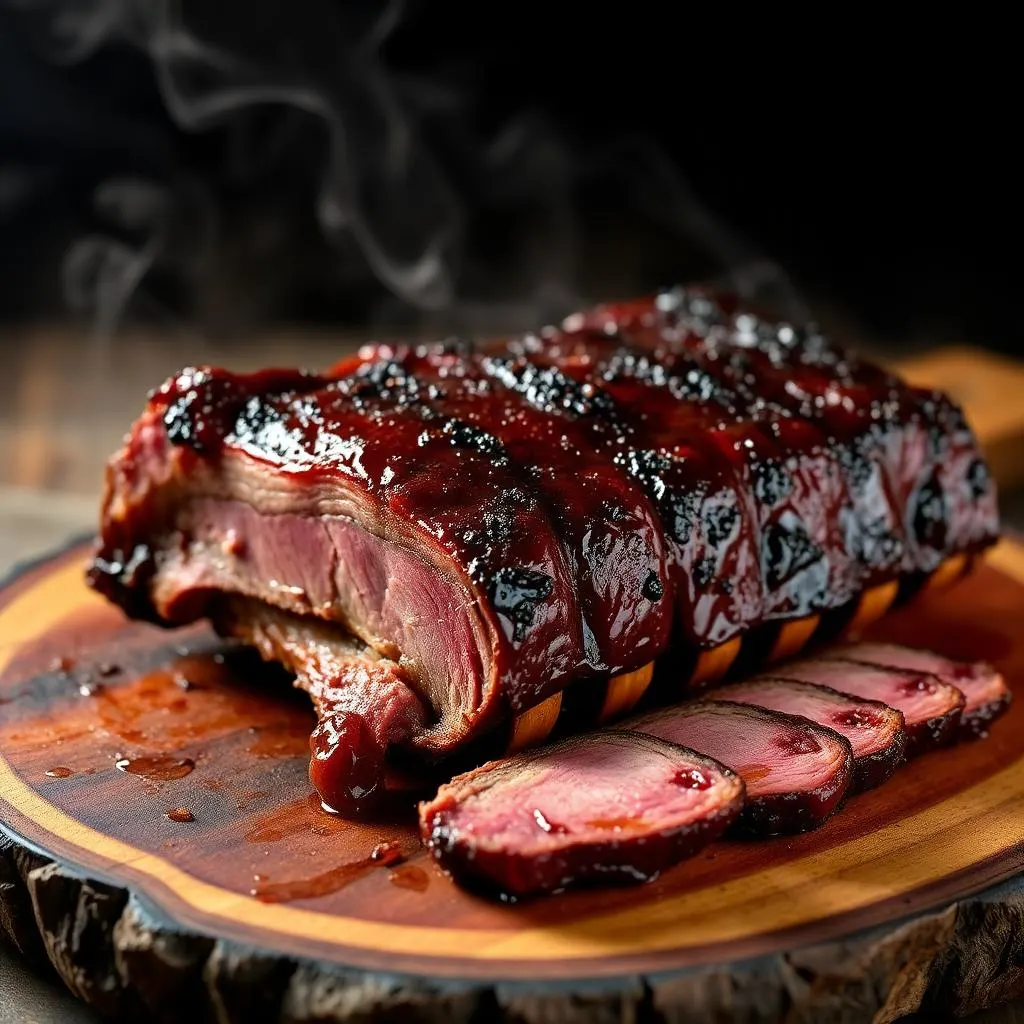
Tamarind & Rum Glazed Smoked Beef Short Ribs
The brisket-killer of the competition world, dressed in a Caribbean coat. Tamarind, dark rum, and a hint of warm spice nod to Guyanese pepperpot. Massive, primal, and lacquered.
Cook Mode
One step at a time, big text, timers, and your screen stays awake. 0/9 steps done.
Ingredients
Tap to tick off · 0/14 gathered
- — MAIN —
- — DRY RUB —
- — TAMARIND-RUM GLAZE —
Method
- 15 min
Begin by thoroughly mixing 2 tbsp ground allspice, 2 tbsp brown sugar, 1 tbsp black pepper, 1 tbsp salt, 1 tsp ground clove, 1 tsp cinnamon, and 1 tsp cayenne in a bowl. This 'pepperpot' inspired rub uses warm spices to complement the beef's richness and the molasses notes of the upcoming glaze. Ensure all sugar clumps are pulverized to avoid blotchy bark; the salt in this rub will act as the primary dry brine agent to break down muscle fibers during the cure phase.
Why it matters
Uniform spice distribution ensures that every bite has a balanced ratio of heat, salt, and aromatic warmth without clumping.
Common mistake
Leaving large lumps of brown sugar which create sticky spots that prevent smoke from penetrating the meat evenly.
- 40°F12h
Take the 4.5 lbs plate of beef short ribs and trim the top fat cap down to 1/8 inch or remove it entirely to expose the meat, as the fat on short ribs is often too thick to render properly during smoking. Do not remove the bottom membrane (pelis) on the bone side, as it holds the heavy meat onto the bone during the long cook. Apply your dry rub generously to all surfaces of the meat, pressing it in firmly. Wrap the ribs tightly in plastic wrap and refrigerate for 12 hours (minimum 4 hours) to allow the salt to penetrate deep into the muscle tissues.
Why it matters
The 12-hour cure allows salt to denature proteins, increasing moisture retention and seasoning the beef all the way to the bone.
Common mistake
Removing the bottom membrane, which causes the meat to fall off the bone prematurely during the smoke.
- 250°F5h
Fire your smoker to a steady 250°F using oak and pimento wood. Place the cold, cured ribs bone-side down on the grates. This initial phase is about the 40-140°F safety window and bark formation; the smoke particles adhere best to the cold, moist surface of the meat. Smoke unwrapped for approximately 5 hours until the internal temperature reaches the 'stall' around 160°F-165°F and the exterior has developed a dark, mahogany crust that does not rub off when touched.
Why it matters
A stable temperature during the first 5 hours allows for the Maillard reaction to create a crunchy, flavorful crust known as bark.
Common mistake
Opening the smoker lid too often, which fluctuates the temperature and extends the time the meat spends in the bacterial danger zone.
- 20 min
While the beef is smoking, prepare the lacquer by combining 0.33 cup tamarind paste, 0.5 cup dark rum, 0.5 cup brown sugar, 0.25 cup soy sauce, 2 tbsp lime juice, 1 minced scotch bonnet, and 1 tbsp grated ginger in a saucepan. Simmer over medium-low heat for 15 minutes. The goal is to reduce the water content until the sauce achieves a syrupy consistency that coats the back of a spoon. The acids in the tamarind and lime will help cut through the intense fat of the short ribs later in the cook.
Why it matters
Proper reduction concentrates the sugars and acidity, ensuring the sauce sticks to the meat rather than running off into the fire.
Common mistake
Boiling the glaze too hard, which can burn the high sugar content and create a bitter, acrid flavor.
- 250°F2h 30m
Once the ribs hit an internal temperature of 165°F and the bark is fully set, lay out a double layer of pink butcher paper. Apply a thin layer of the tamarind-rum glaze to the meat side, then wrap the ribs tightly, tucking the corners to create an airtight seal. This 'Texas Crutch' method with paper instead of foil allows the meat to breathe slightly, preventing the bark from becoming mushy while accelerating the breakdown of collagen during the final push to tenderness.
Why it matters
Wrapping protects the meat from drying out during the stall and uses steam to tenderize the tough connective tissues.
Common mistake
Wrapping the ribs too loosely, which allows steam to escape and dries out the meat.
- 203°F1h
Continue smoking the wrapped ribs until the internal temperature reaches approximately 203°F. However, do not rely on temperature alone; use a probe or toothpick to test the 'feel' of the meat through the paper. It should feel like sliding a hot needle through room-temperature butter with absolutely no resistance. Because short ribs have high fat and connective tissue, they may need to go slightly higher than 203°F to fully render.
Why it matters
Connective tissue (collagen) only converts to gelatin at high temperatures over time; the 'probe tender' feel is the only true sign of doneness.
Common mistake
Pulling the meat based solely on temperature without checking for the physical breakdown of the fibers.
- 250°F30 min
Carefully unwrap the ribs, preserving any juices in the paper. Increase the smoker heat slightly if possible or maintain 250°F. Brush a thick, heavy layer of the remaining tamarind-rum glaze over all meaty surfaces. Leave the ribs uncovered on the grate for 20-30 minutes. This 'sets' the glaze, allowing the sugars to caramelize and the rum to evaporate, leaving behind a tacky, glass-like competition finish that is synonymous with high-end BBQ.
Why it matters
This final set converts a wet sauce into a sticky lacquer that clings to the meat and intensifies the flavor profile.
Common mistake
Skipping this step, which results in a 'wet' rib that lacks the textural contrast of a proper glaze.
- 45 min
Remove the ribs from the smoker and place them on a warm cutting board or in a dry cooler (faux Cambro). Let the meat rest for at least 30 to 60 minutes. During this time, carryover cooking will finish, and the muscle fibers will relax, allowing the internal juices to redistribute. If you slice too early, the high-pressure juices will pour out, leaving you with dry meat regardless of how well it was cooked.
Why it matters
Resting allows for moisture equilibration; the fibers reabsorb the liquid fat and gelatin for a succulent bite.
Common mistake
Slicing the meat immediately due to hunger, which wastes hours of moisture-retention efforts.
- 10 min
Using a long, sharp slicing knife, locate the bones on the underside. Flip the ribs meat-side up and make clean, vertical slices between the bones. Each portion should be a massive, single bone topped with a thick slab of tremulous, glazed beef. Serve with any remaining glaze on the side. Ensure each guest gets a 'bark' heavy end piece if possible, as these contain the highest concentration of the tamarind-rum aromatics.
Why it matters
Proper slicing against the grain (natural in ribs) ensures the most tender mouthfeel and showcases the smoke ring.
Common mistake
Using a dull knife that tears the lacquered bark off the meat instead of slicing through it cleanly.
7 more steps locked
You've seen the ingredients and the first two steps. Pit Members get every step, every temp, every glaze — plus the Cook Monitor and Pitmaster AI.
See Membership OptionsAlready a member? Sign in.
Sauce It
Cooks & Reviews
Guild members can rate this recipe, log their cooks and share photos.
Sign in to continueMember reviews
No reviews yet — be the first to rate this cook.
Ask the Pitmaster about this recipe
Substitutions, scaling, technique, troubleshooting — get answers grounded in this cook.
Sign in to try the AI Pitmaster on Tamarind & Rum Glazed Smoked Beef Short Ribs. New members get 3 free questions.
Sign in to tryComments(0)
Loading comments…