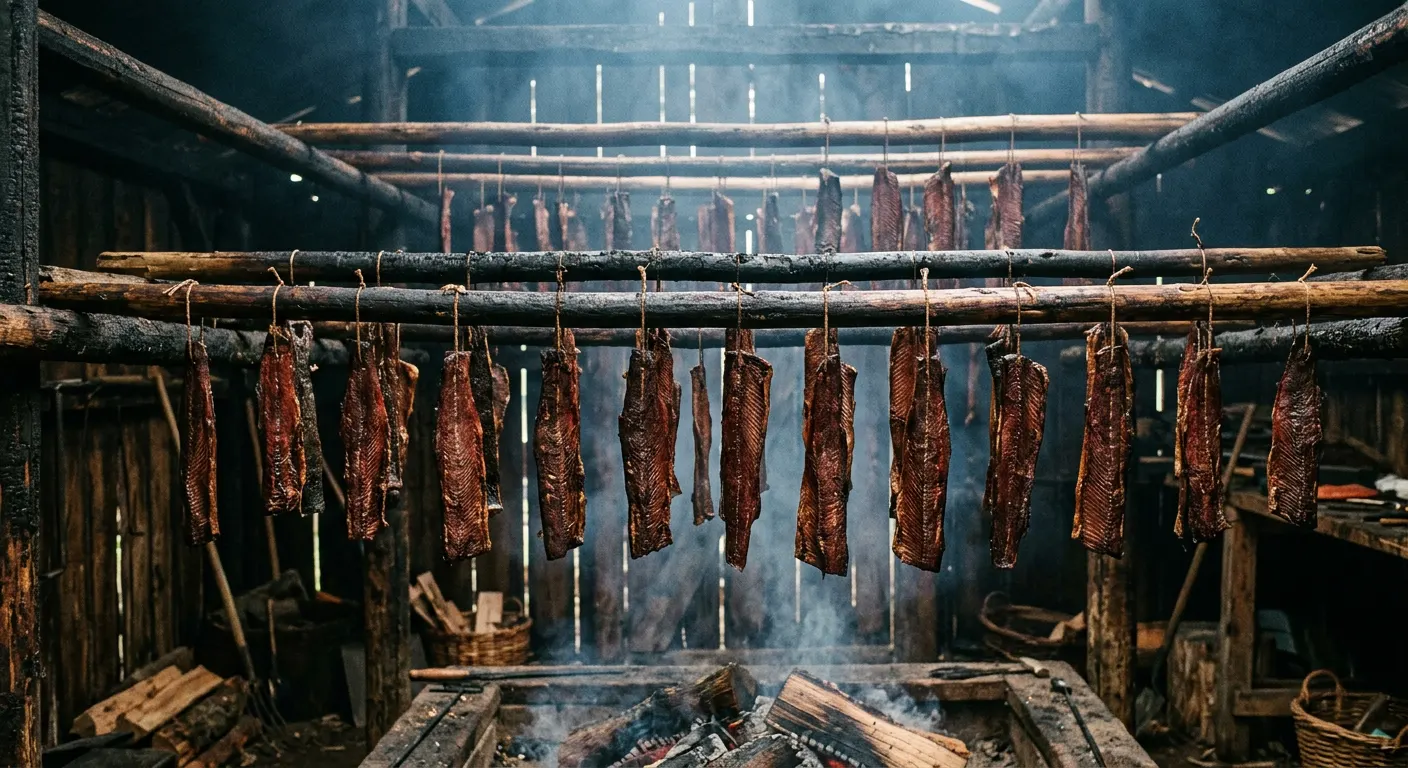
Smokehouse Hard-Smoked Salmon (Hard Cure)
Pacific Northwest (Tlingit / Haida / Coast Salish). This is traditional Pacific Northwest preservation smoking, the hard-cured, long-smoked salmon that nations like the Tlingit, Haida, and Coast Salish made to last through winter, distinct from the soft hot-smoked salmon in the beginner section. The fish is salt-cured, dried to form a hard skin (pellicle), then cool-smoked over alder for many hours until firm and preserved. It carries real food-safety weight and demands patience and temperature control, which is why it lives in the advanced section. A genuine ancestral craft.
Cook Mode
One step at a time, big text, timers, and your screen stays awake. 0/8 steps done.
Ingredients
Tap to tick off · 0/6 gathered
Method
Confirm you understand the risks
This recipe involves a food-safety-critical technique — cold smoking, raw or lightly-smoked fish, or taro (luau) leaf cookery. Each carries real risk if cure ratios, sourcing, temperatures, or cook times are wrong. Before following these steps, please review our food-safety guide and confirm the technique with at least one other reputable source (USDA, FDA, or a published reference).
Sauce It
Cooks & Reviews
Guild members can rate this recipe, log their cooks and share photos.
Sign in to continueMember reviews
No reviews yet — be the first to rate this cook.
Ask the Pitmaster about this recipe
Substitutions, scaling, technique, troubleshooting — get answers grounded in this cook.
Sign in to try the AI Pitmaster on Smokehouse Hard-Smoked Salmon (Hard Cure). New members get 3 free questions.
Sign in to tryComments(0)
Loading comments…