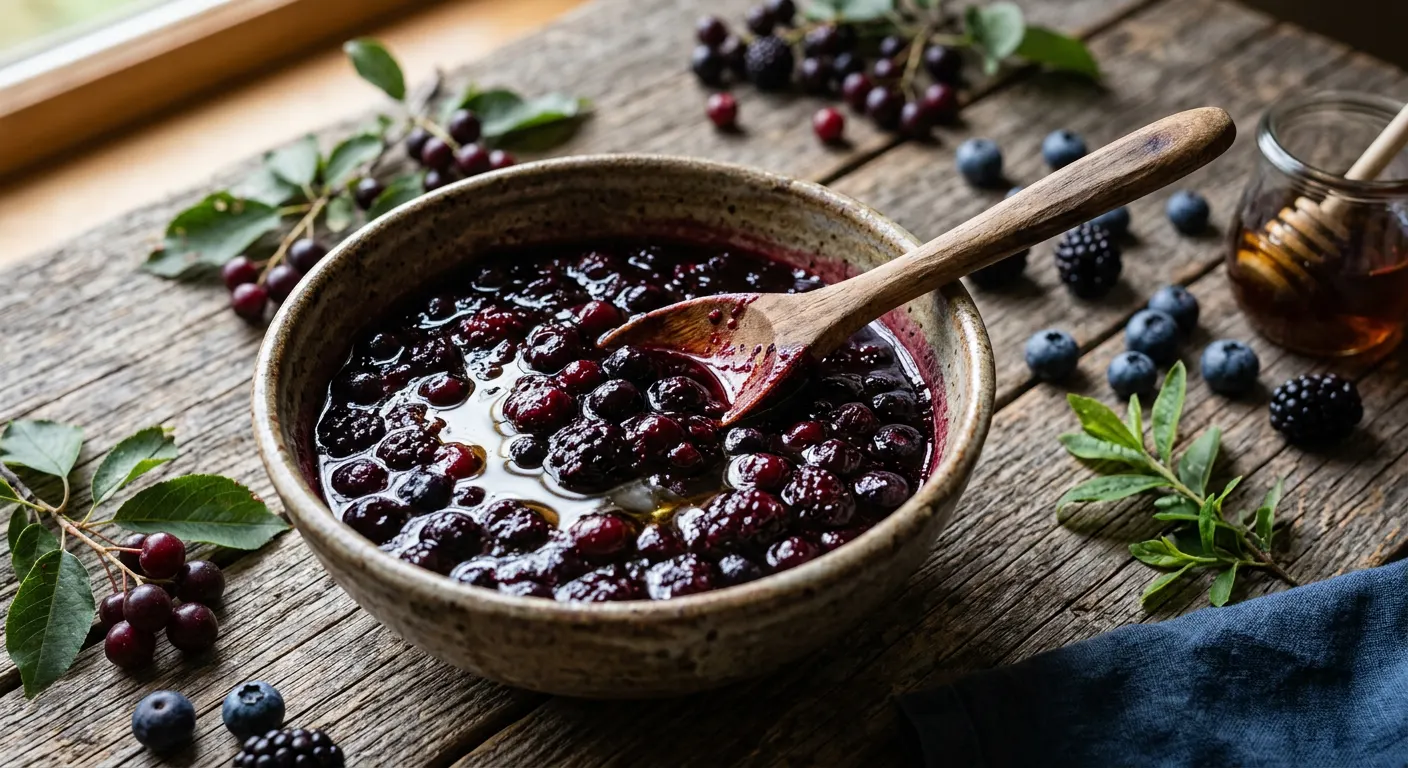
Smoked Wojapi (Berry Sauce)
Great Plains (Lakota / Dakota). Wojapi is a traditional thick berry sauce of the Lakota and Dakota peoples, historically made with chokecherries or whatever berries were gathered, cooked down without the mountains of sugar of a modern jam. Lightly smoking the berries first adds a subtle depth that's genuinely special. It's served alongside meats, over fry bread, or on its own, a versatile, deeply traditional sauce that ties the whole card together. Naturally vegan and gluten-free.
Cook Mode
One step at a time, big text, timers, and your screen stays awake. 0/9 steps done.
Ingredients
Tap to tick off · 0/5 gathered
Method
- 10 min
Begin by washing 6 cups of mixed berries (blueberries, chokecherries, or blackberries) and patting them completely dry. In smoking, moisture on the surface of the food acts as a barrier to smoke; drying the berries ensures the smoke adheres to the skin rather than sliding off in steam. If using larger berries, slice them in half to increase the surface area for smoke absorption and to allow for a more even release of pectin later in the cooking process.
Why it matters
Removing surface moisture prevents the fruit from steaming and allows for better smoke adherence.
Common mistake
Leaving the berries soaking wet, which prevents them from taking on any smoke flavor.
- 250°F15 min
Set your smoker to 250°F using a mild fruitwood like maple or apple. While hardwoods like hickory are great for pork, the delicate cell structure of berries can easily become bitter if exposed to heavy, acrid smoke. Ensure your wood source is producing 'thin blue smoke' rather than thick white billows; this signifies a clean burn that will impart a sweet, earthy depth to the berries without overwhelming their natural acidity.
Why it matters
Mild wood and clean combustion are essential to avoid over-powering the delicate flavor of the fruit.
Common mistake
Using a strong wood like mesquite which makes the fruit taste like an ashtray.
- 250°F37 min
Spread the berries in a single layer in a perforated pan or wire mesh basket to allow 360-degree smoke circulation. Place the tray in the smoker for roughly 30 to 45 minutes until the berries appear glossy, slightly softened, and have just begun to swell. You are not looking to cook them through or char them, but rather to use the heat to gently break down the skins and the smoke to season the exterior.
Why it matters
This step introduces a complex, savory layer to what would otherwise be a standard fruit compote.
Common mistake
Smoking for too long until the berries burst and lose all their juices into the tray.
- 212°F10 min
Transfer the smoked berries and any rendered juices into a heavy-bottomed saucepan and add 0.5 cup of water and a pinch of salt. The salt is a crucial flavor enhancer that suppresses bitterness and makes the berry flavors 'pop.' Bring to a simmer over medium heat and use a potato masher to crush the berries, breaking the skins and releasing the natural pectins and juices into the water.
Why it matters
Mashing facilitates the release of natural thickeners and ensures a consistent sauce texture.
Common mistake
Forgetting the salt, which leads to a flat and one-dimensional flavor profile.
- 20 min
Reduce the heat to low and simmer the mixture gently. During this phase, you are evaporating water to concentrate the sugars and the smoke particulates gathered in the previous step. Continue simmering for 20 minutes until the sauce has thickened enough to coat the back of a spoon. Stir frequently with a wooden spoon to prevent the sugars from scorching on the bottom of the pot, which would introduce a bitter, burnt taste.
Why it matters
Proper reduction is the only way to achieve the traditional thick consistency without over-relying on binders.
Common mistake
Letting the sauce boil vigorously, which can mute the bright berry notes and cause scorching.
- 5 min
Whisk in 2.5 tablespoons of maple syrup or honey, adding one tablespoon at a time and tasting as you go. Traditional Wojapi is a savory-leaning condiment, not a dessert jelly; the sweetener should balance the tartness of the berries rather than masking it. Depending on the ripeness and variety of berries used, you may require less than the full amount listed.
Why it matters
Incremental sweetening ensures you don't overshoot the balance and lose the traditional tart profile.
Common mistake
Adding all the sweetener at once without tasting the base tartness of the fruit first.
- 165°F3 min
If a thicker, jam-like consistency is desired, create a slurry by mixing 1 tablespoon of cornstarch or cattail flour with an equal amount of cold water. Drizzle this into the simmering sauce while whisking constantly. Cook for an additional 2 minutes to cook out the raw starch taste and allow the sauce to clear. Ensure the sauce reaches at least 165°F during this step to properly activate the starch granules.
Why it matters
Heating the starch to the gelatinization point is necessary for the sauce to set properly.
Common mistake
Adding dry starch directly to hot liquid, which creates irreversible lumps.
- 10 min
Remove the pot from the heat and allow the Wojapi to rest for at least 10 minutes before serving. Like any sauce high in pectin and sugar, it will continue to set and firm up as the temperature drops. If serving cold later, remember that the sauce will become significantly thicker once refrigerated, so aim for a slightly looser consistency if planning to serve it chilled.
Why it matters
Resting allows the starches and pectins to fully stabilize for the final texture.
Common mistake
Serving immediately while piping hot and thin, rather than letting the texture develop.
Serve the warm Wojapi alongside smoked game, pork, or over traditional fry bread. For food safety, if not consuming immediately, cool the sauce rapidly and store in a clean glass jar in the refrigerator. Ensure the sauce spends no more than 2 hours in the 'danger zone' (40°F - 140°F) to prevent any bacterial growth, especially since the sugar content is lower than commercial preserves.
Why it matters
Proper cooling and storage are essential for food safety in low-sugar preserves.
Common mistake
Leaving the sauce out on the counter overnight, thinking the sugar will preserve it like a high-sugar jam.
Cooks & Reviews
Guild members can rate this recipe, log their cooks and share photos.
Sign in to continueMember reviews
No reviews yet — be the first to rate this cook.
Ask the Pitmaster about this recipe
Substitutions, scaling, technique, troubleshooting — get answers grounded in this cook.
Sign in to try the AI Pitmaster on Smoked Wojapi (Berry Sauce). New members get 3 free questions.
Sign in to tryComments(0)
Loading comments…