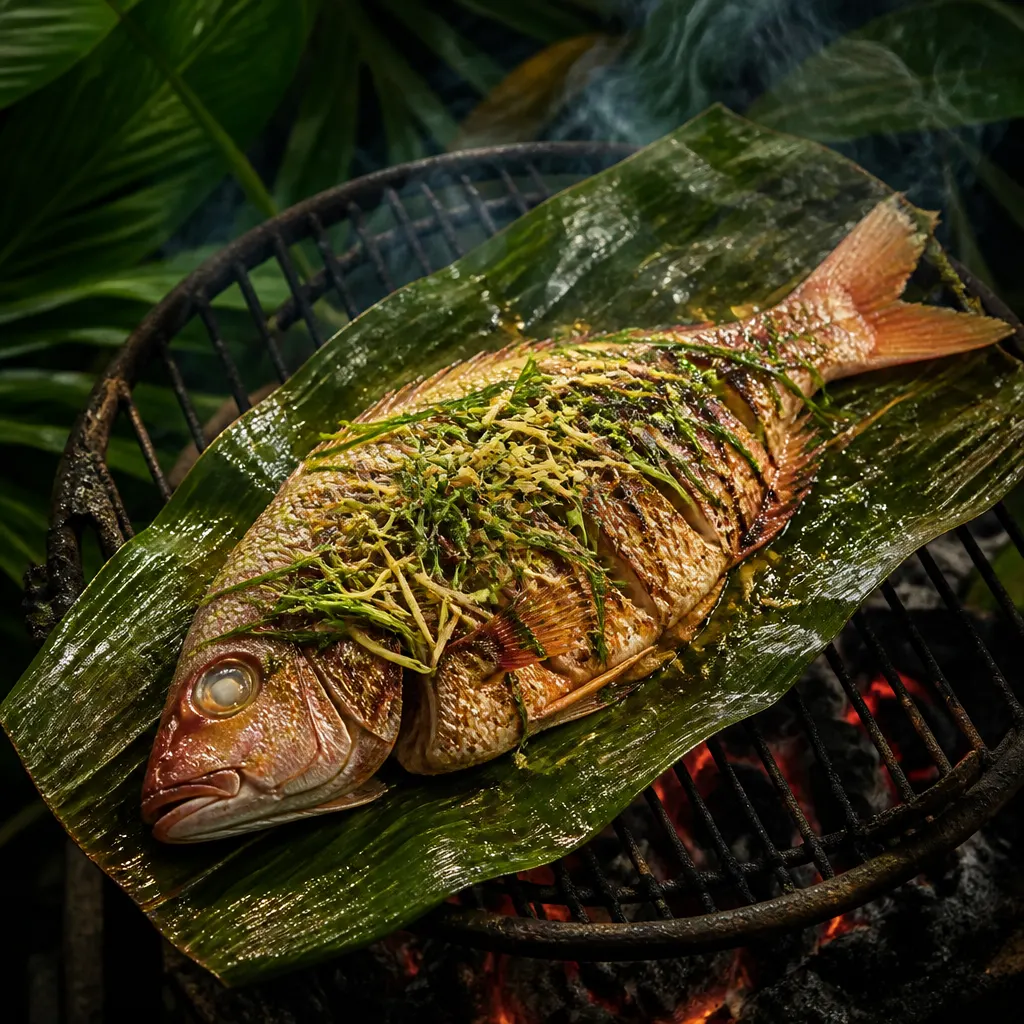
Smoked Whole Opakapaka with Ginger-Scallion
Opakapaka is the Hawaiian pink snapper, a prized island fish with delicate, slightly sweet flesh. Smoking a whole one is a high-wire act — the timing window is narrow and the fish is fragile on the grate — but topped with a sizzling ginger-scallion oil it's a restaurant-tier showpiece.
Cook Mode
One step at a time, big text, timers, and your screen stays awake. 0/7 steps done.
Ingredients
Tap to tick off · 0/8 gathered
- — MAIN —
- — FISH PREP —
- — GINGER-SCALLION OIL —
Method
- 15 min
Begin by making three deep diagonal slits across the thickest part of the 2.5 lbs whole opakapaka on both sides, cutting through the skin down to the bone. In a small bowl, whisk together 2 tbsp soy sauce, 1 tbsp sesame oil, 1 tbsp grated ginger, and 1 tsp sea salt. Rub this marinade thoroughly into the scores, the body cavity, and over the skin, ensuring the salt is evenly distributed for the cure. This preparation allows the seasoning to penetrate the dense musculature near the spine while the scores prevent the skin from tightening and tearing during the cooking process.
Why it matters
Scoring ensures even heat distribution and allows seasonings to reach the bone in thick, whole fish.
Common mistake
Failing to cut deep enough into the scores, which prevents the heat from reaching the thickest parts of the fish simultaneously.
- 38°F1h
Place the seasoned snapper on a wire rack over a sheet tray and refrigerate uncovered for 60 minutes. This resting period acts as a short dry brine, allowing the 1 tsp of salt to denature proteins for moisture retention while the surface air-dries. It is vital to perform this in the refrigerator to keep the fish out of the 40-140°F danger zone, ensuring the flesh remains firm and food-safe before it hits the heat.
Why it matters
The brine equilibrates moisture and seasons through the flesh; skipping it results in dry, bland snapper.
Common mistake
Covering the fish with plastic wrap, which traps moisture and prevents the formation of a tacky surface.
- 15 min
After the hour-long cure, check the skin of the opakapaka; it should feel slightly tacky or sticky to the touch. This thin layer of dried proteins, known as the pellicle, is essential for smoke molecules to adhere to the fish. If the skin still feels wet, pat it gently with a paper towel and let it air-dry for another 15 minutes. Without a proper pellicle, the smoke will slide off the surface rather than penetrating the skin and meat.
Why it matters
The pellicle acts as a 'glue' for smoke particles, ensuring a deep smoky flavor and a beautiful golden-brown color.
Common mistake
Smoking a wet fish, which results in a steamed texture and a gray, unappealing appearance.
- 250°F30 min
Preheat your smoker to a steady 250°F using guava or alder wood. These woods provide a light, fruity smoke profile that complements the delicate, sweet nature of snapper without overpowering it like hickory or mesquite would. Ensure the grates are scrubbed clean and heavily lubricated with oil, or use a fish basket, as the skin of the opakapaka is notoriously fragile and prone to sticking once the proteins set.
Why it matters
Proper wood selection preserves the natural flavor of the seafood while clean grates prevent the presentation from being ruined.
Common mistake
Using heavy hardwoods that mask the refined flavor of high-quality island fish.
- 140°F55 min
Place the fish in the smoker, maintaining the 250°F ambient temperature. Monitor the internal temperature closely using a probe inserted into the thickest part behind the head, avoiding the bone. Smoke until the fish reaches 140°F internally. This usually takes 45 to 60 minutes. Watch for the flesh in the scores to turn from translucent to opaque and for the eyes to turn white, which are visual cues that the collagen is breaking down.
Why it matters
Seafood has a narrow window of doneness; 140°F ensures the fish is safe to eat while remaining juicy.
Common mistake
Cooking by time rather than internal temperature, which leads to overcooked, chalky fish.
- 145°F10 min
Carefully remove the fish from the smoker using two wide spatulas to support the head and tail. Transfer to a warm serving platter and tent loosely with foil. Allow the fish to rest for 5 to 10 minutes. During this time, carryover cooking will bring the final internal temperature to approximately 145°F, and the juices will redistribute from the surface back into the center of the flakes, ensuring every bite is moist.
Why it matters
Resting allows the muscle fibers to relax, preventing the juices from rushing out when the fish is carved.
Common mistake
Tenting too tightly with foil, which steams the skin and destroys the texture you achieved during the smoke.
- 5 min
While the fish rests, combine 4 sliced scallions and 2 tbsp grated ginger in a heat-safe bowl. Heat 0.333 cup neutral oil in a saucepan until it reaches 375°F and begins to shimmer. Arrange the aromatics over the smoked fish and carefully pour the hot oil over them to create a loud sizzle. Finish with a final 1 tsp of soy sauce and a pinch of salt. The rapid heat of the oil flash-fries the ginger and scallions, infusing the smoked skin with fresh, aromatic oils just pulses before serving.
Why it matters
The hot oil finish adds a layer of fat and aromatic complexity that balances the dry heat of the smoker.
Common mistake
Using oil that isn't hot enough, which leaves the ginger tasting raw and the scallions' texture limp and greasy.
Sauce It
Cooks & Reviews
Guild members can rate this recipe, log their cooks and share photos.
Sign in to continueMember reviews
No reviews yet — be the first to rate this cook.
Ask the Pitmaster about this recipe
Substitutions, scaling, technique, troubleshooting — get answers grounded in this cook.
Sign in to try the AI Pitmaster on Smoked Whole Opakapaka with Ginger-Scallion. New members get 3 free questions.
Sign in to tryComments(0)
Loading comments…