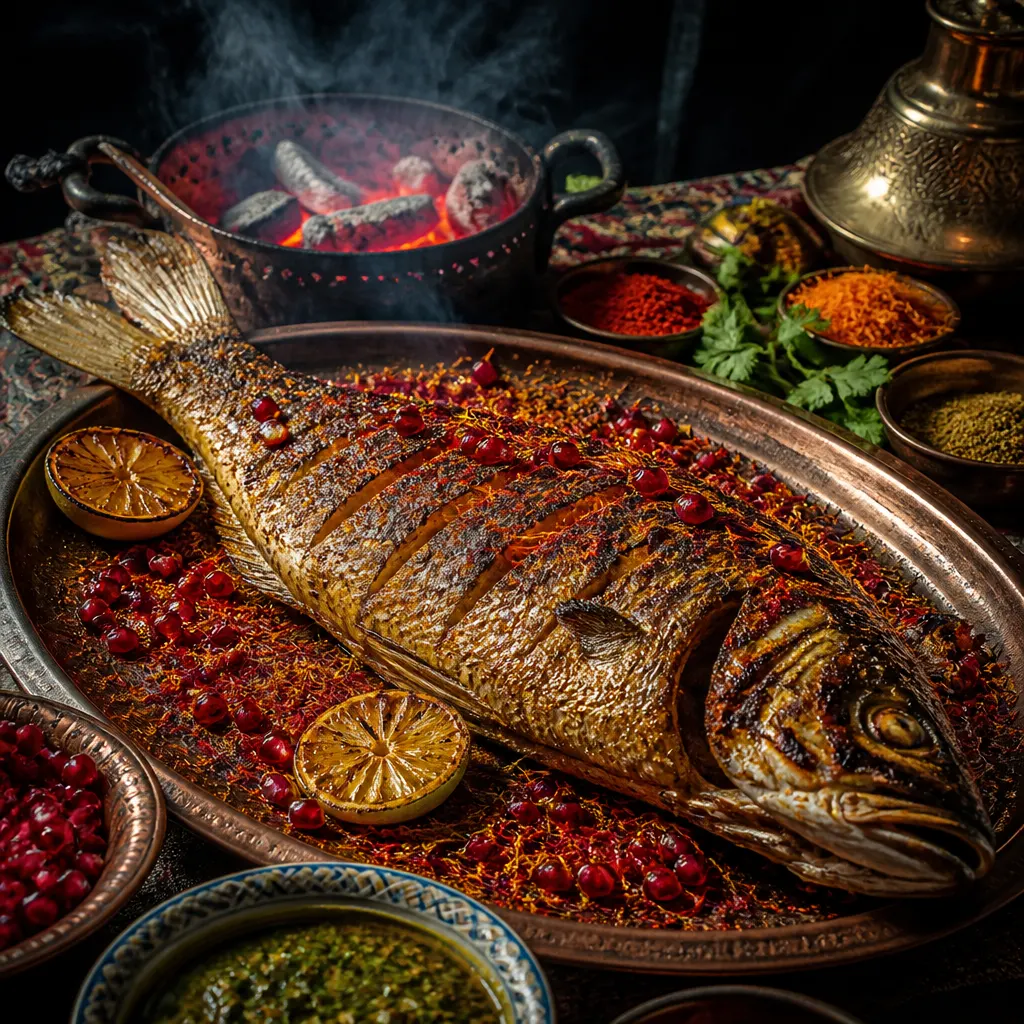
Smoked Whole Grouper with Yemeni Hawaij
A restaurant-tier seafood plate from a tradition most American cooks have never explored — whole firm white fish marinated in hawaij spice and zhug, then gently smoked.
Cook Mode
One step at a time, big text, timers, and your screen stays awake. 0/9 steps done.
Ingredients
Tap to tick off · 0/17 gathered
Method
- 10 min
In a small skillet over medium-low heat, warm 0.25 cup olive oil. Whisk together the 2 tbsp cumin, 2 tbsp coriander, 1 tbsp turmeric, 1 tbsp cardamom, 1 tsp pepper, and 1 tsp cloves, then add 3 tbsp of this total mixture to the oil. Bloom the spices for 30 seconds until fragrant to activate the fat-soluble flavor compounds; this ensures the earthy, warm notes permeate the oil. Remove from heat, cool to room temperature, then whisk in 3 tbsp lemon juice, 6 cloves of grated garlic, and 1 tbsp salt to form a thick, potent marinade paste.
Why it matters
Blooming spices in oil releases essential oils that raw powder cannot deliver, providing a deeper flavor profile that stands up to smoke.
Common mistake
Burning the spices in the pan, which turns the turmeric and cloves bitter and ruins the marinade base.
- 15 min
Pat your 3.5 lb whole grouper (or snapper) extremely dry using paper towels to remove surface moisture that would otherwise steam the skin. Using a sharp fillet knife, make three deep diagonal slashes on each side of the fish, cutting down until you hit the backbone. These scores increase surface area for smoke contact and allow the marinade to penetrate the thickest part of the shoulder, ensuring internal seasoning. Massage the cooled Hawaij paste deeply into the scores and the interior cavity.
Why it matters
Scoring the fish allows heat and flavor to reach the center of the dense flesh simultaneously, preventing an under-seasoned interior.
Common mistake
Leaving the fish wet, which prevents the oil-based marinade from adhering properly to the skin.
- 1h 30m
Place the marinated fish on a wire rack set over a baking sheet and refrigerate for 60 to 120 minutes. This resting period allows the 1 tbsp of salt in the marinade to begin denaturing the proteins in the fish, which helps the flesh retain moisture during the smoke. Since fish is highly perishable, ensure your refrigerator is holding below 40°F to stay out of the danger zone. This step also allows the spices to 'set' so they don't slide off immediately when placed in the smoker.
Why it matters
The salt in the marinade acts as a dry brine, seasoning the fish deeply and improving the finished texture.
Common mistake
Marinating too long (over 4 hours), which can cause the lemon juice to chemically 'cook' the fish and turn the texture mushy.
- 20 min
After the refrigeration period, remove the fish and let it sit uncovered in a cool, breezy spot or under a fan for 20 minutes before smoking. You are looking for the surface of the skin to become tacky and slightly shiny, known as the 'pellicle.' This tacky layer is chemically essential for smoke adhesion; without it, the delicate applewood smoke will roll off the surface rather than bonding to the proteins and fat in the marinade.
Why it matters
A proper pellicle creates a surface that smoke can actually stick to, resulting in a better color and deeper smoke flavor.
Common mistake
Skipping the air-dry step, which results in a 'steamed' appearance rather than a beautiful smoked finish.
- 250°F30 min
Preheat your smoker to a steady 250°F. Use apple or alder wood as your primary fuel; these mild fruitwoods provide a light, sweet profile that won't overwhelm the delicate white meat of the grouper. Set up your smoker for indirect heat with a water pan placed beneath the grates to maintain a high-humidity environment. This prevents the lean fish from drying out in the airflow. Lightly oil the grates or lay down lemon slices to create a non-stick bed for the fish to rest on.
Why it matters
Fish has very little fat to buffer against aggressive smoke, making mild woods and high humidity essential for success.
Common mistake
Using mesquite or hickory, which provides too many phenols for lean seafood and creates an acrid, metallic taste.
- 140°F1h 15m
Place the grouper on the oiled grates and close the lid. Smoke until the thickest part of the shoulder reaches an internal temperature of 140°F. At this temperature, the collagen in the connective tissue has softened enough for the meat to flake, but it remains moist. Visual cues include the turmeric-heavy marinade turning a deep golden-ochre and the skin beginning to pull away slightly from the fins. The process should take approximately 60 to 90 minutes depending on the thickness of the fish.
Why it matters
Monitoring internal temperature is the only way to avoid the 145°F+ range where fish proteins contract sharply and squeeze out all moisture.
Common mistake
Cooking by time alone rather than using a thermometer, leading to a dry, chalky result.
- 10 min
While the fish is smoking, combine 1 bunch cilantro, 1 bunch parsley, 4 green chilies, 6 cloves garlic, 1 tsp cardamom, 1 tsp cumin, and 1 tsp salt in a processor. Pulse while drizzling in 0.5 cup olive oil and 2 tbsp lemon juice. You want a coarse, vibrant green emulsion—not a smooth puree. This sauce provides the heat and brightness that cuts through the earthy, smoked Hawaij crust. Keep the sauce at room temperature to prevent it from shocking the warm fish when applied.
Why it matters
The fresh, cold zhug balances the warm, smoky fish, creating the temperature and flavor contrast central to Yemeni cuisine.
Common mistake
Blending the herbs into a liquid juice, which loses the textural rusticity required for the dish.
- 145°F8 min
Carefully remove the grouper using two large spatulas to support the head and tail, and transfer to a serving platter. Let the fish rest for 5 to 8 minutes. During this time, carryover cooking will bring the internal temperature up to the final food-safe 145°F, and the juices will redistribute throughout the flesh. This brief rest ensures that when you carve into the fish, the moisture stays within the meat rather than running out onto the platter.
Why it matters
Resting allows the muscle fibers to relax, resulting in a more tender and juicy bite.
Common mistake
Moving the fish too aggressively when hot, which can cause the delicate smoked skin to tear and ruin the presentation.
Spoon the vibrant green zhug generously down the length of the fish, allowing the herb-infused oil to seep into the smoked scores. Garnish the platter with fresh lemon wedges. Serve the fish whole at the table, using a spoon to pull the large, moist flakes away from the backbone. The combination of the warm, smoky Hawaij spice and the sharp, spicy zhug creates a restaurant-tier experience that showcases the technical precision of the pitmaster.
Why it matters
Proper presentation honors the craft of the cook and provides the final acidic balance needed to brighten the smoke profile.
Common mistake
Overseasoning with lemon before the guest has a chance to taste the nuances of the wood smoke.
Sauce It
Free Guide
5 Techniques Competition Smokers Use That Home Cooks Don't
Join the Guild email list and we'll send you the free guide — the exact moves that separate backyard cooks from competition pitmasters.
Cooks & Reviews
Guild members can rate this recipe, log their cooks and share photos.
Sign in to continueMember reviews
No reviews yet — be the first to rate this cook.
Ask the Pitmaster about this recipe
Substitutions, scaling, technique, troubleshooting — get answers grounded in this cook.
Sign in to try the AI Pitmaster on Smoked Whole Grouper with Yemeni Hawaij. New members get 3 free questions.
Sign in to tryComments(0)
Loading comments…