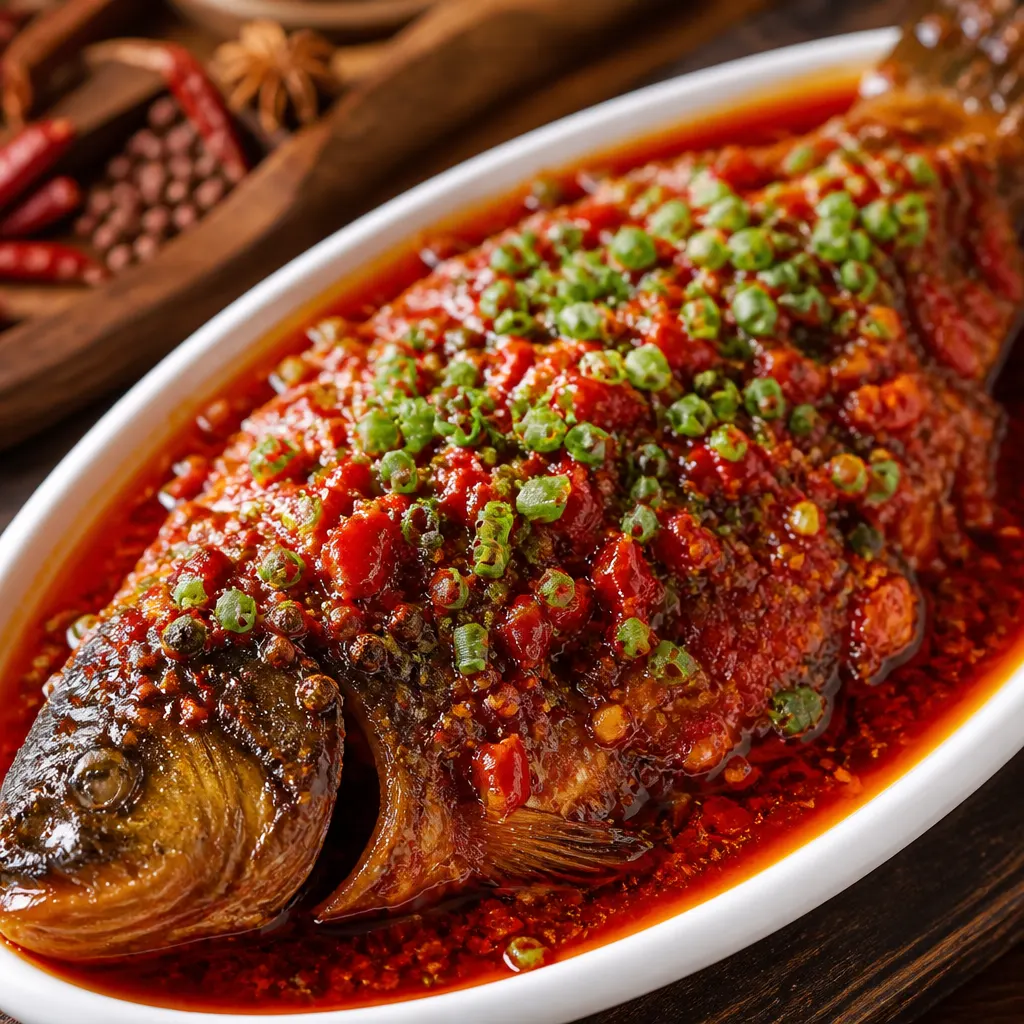
Smoked Whole Fish, Sichuan Chili-Bean Style
This is a smoked take on Sichuan's famous doubanjiang fish, a whole fish in a fiery, fragrant chili-bean sauce loaded with ginger, garlic, and Sichuan pepper. Smoking the fish first builds a depth the braised original lacks, then it finishes in the bold ma-la sauce. It's a two-stage dish that demands a careful hand with a delicate whole fish and a properly built sauce. A restaurant-tier centerpiece with real Sichuan fire.
Cook Mode
One step at a time, big text, timers, and your screen stays awake. 0/8 steps done.
Ingredients
Tap to tick off · 0/15 gathered
Method
- 10 min
Begin with a 2.5 lb whole fish like sea bass, carp, or snapper. Ensure it is scaled and gutted, then dry the skin completely with paper towels. Use a sharp knife to make 3-4 deep diagonal scores on each side, cutting through the flesh down to the backbone. Scoring is essential for whole fish as it allows the heat to reach the dense thermal mass of the spine at the same rate as the thinner belly, ensuring even doneness.
Why it matters
Scoring creates surface area for smoke penetration and prevents the skin from buckling under heat.
Common mistake
Failing to cut deep enough, which results in a raw center near the bone while the surface overcooks.
- 30 min
Whisk together 2 tbsp Shaoxing wine, 1 tbsp grated ginger, and 1 tsp salt. Rub this mixture vigorously into the scores and the interior cavity of the fish. Shaoxing wine is an amino-acid-rich rice wine that neutralizes trimethylamine (the 'fishy' scent) while the salt begins a light cure on the proteins. Let the fish rest at room temperature for 30 minutes; this allows the proteins to tighten and the surface to expel excess moisture.
Why it matters
The alcohol and ginger act as a chemical deodorizer while the salt improves the fish's moisture retention during the smoke.
Common mistake
Over-salting during this phase, which can turn the delicate fish flesh mushy rather than firm.
- 45 min
Pat the marinated fish dry one last time with a lint-free towel. Place it on a wire rack in a cool, breezy area (or under a fan) for 30-45 minutes until the skin feels tacky to the touch. This tacky layer is the 'pellicle.' In the world of smoking, the pellicle is the primary surface that smoke phenols bond to; without it, the smoke will simply roll off the damp skin, leaving you with a pale, unflavored product.
Why it matters
A proper pellicle ensures deep mahogany color and a concentrated smoke flavor profile.
Common mistake
Attempting to smoke a wet fish, which results in 'steaming' rather than smoking.
- 250°F15 min
Stabilize your smoker at 250°F using alder or apple wood. These fruitwoods are low in bitterness and high in sweet esters, which won't overwhelm the subtle fats of the sea bass. Clean your grates thoroughly for a 'hot release' or use a bed of extra scallions to elevate the fish. High-moisture proteins like fish are prone to sticking; a clean, oiled surface is the difference between a beautiful whole fish and one with torn, ruined skin.
Why it matters
Thin-skinned proteins require a clean release surface to maintain the aesthetic integrity of the dish.
Common mistake
Using heavy woods like mesquite or hickory, which leave a bitter, acrid 'campfire' taste on seafood.
- 140°F50 min
Place the fish in the center of the smoker. Monitor the internal temperature at the thickest part of the shoulder (just behind the head). Smoke until the internal temperature reaches 140°F. The flesh should look opaque and the eyes should turn white. Because fish is a lean protein, the window between 'perfect' and 'dry' is narrow; pull the fish when it hits 140°F, as carryover heat will bring it to the food-safe 145°F during the saucing phase.
Why it matters
Monitoring the 140°F internal temp ensures the fish is cooked through while remaining succulent.
Common mistake
Cooking by time rather than internal temperature, leading to dry, stringy fish.
- 5 min
While the fish smokes, heat a wok. Add oil, 3 tbsp Doubanjiang, and 1 tbsp fermented black beans. Stir-fry for 2-3 minutes until the oil turns brilliant red. This is 'blooming'—the process of dissolving fat-soluble flavor compounds from the peppers into the oil. Add 1 head of minced garlic, 2 tbsp grated ginger, and 0.5 tbsp of the ground Sichuan peppercorns. Sauté until the air smells sharp and fragrant, but do not let the garlic brown or turn bitter.
Why it matters
Properly frying the bean paste develops the deep 'umami' base required for authentic Sichuan flavor.
Common mistake
Adding the liquid ingredients before the oil has turned red, which leaves the sauce tasting raw and flat.
- 5 min
Pour in 1 cup stock, 1 tbsp soy sauce, 1 tbsp sugar, and 1 tbsp black vinegar. Bring to a simmer. The sugar balances the salt of the fermented beans, while the black vinegar adds a woody acidity. Whisk in a cornstarch slurry (1 tbsp starch mixed with 1 tbsp water) until the sauce is thick enough to coat a spoon. Stir in the final 0.5 tbsp of Sichuan peppercorns at the very end to ensure the 'ma' (numbing) sensation remains potent.
Why it matters
The sauce must be thick enough to cling to the scored fish, rather than pooling at the bottom of the plate.
Common mistake
Boiling the sauce too long after adding the Sichuan peppercorns, which kills their unique numbing effect.
- 5 min
Carefully transfer the smoked fish to a warm platter. Immediately ladle the hot Sichuan sauce over the fish, ensuring the garlic and beans settle into the score marks. Garnish with 4 sliced scallions and a drizzle of 1 tbsp chili oil. The heat of the sauce provides a final 'sear' to the smoked skin. Serve immediately with rice to capture the contrast between the cool smoke aroma and the fiery, numbing heat of the sauce.
Why it matters
Immediate service ensures the skin remains slightly crisp before the sauce fully softens it.
Common mistake
Letting the fish sit too long before saucing, which causes the internal temperature to drop below the serving threshold.
Sauce It
Cooks & Reviews
Guild members can rate this recipe, log their cooks and share photos.
Sign in to continueMember reviews
No reviews yet — be the first to rate this cook.
Ask the Pitmaster about this recipe
Substitutions, scaling, technique, troubleshooting — get answers grounded in this cook.
Sign in to try the AI Pitmaster on Smoked Whole Fish, Sichuan Chili-Bean Style. New members get 3 free questions.
Sign in to tryComments(0)
Loading comments…