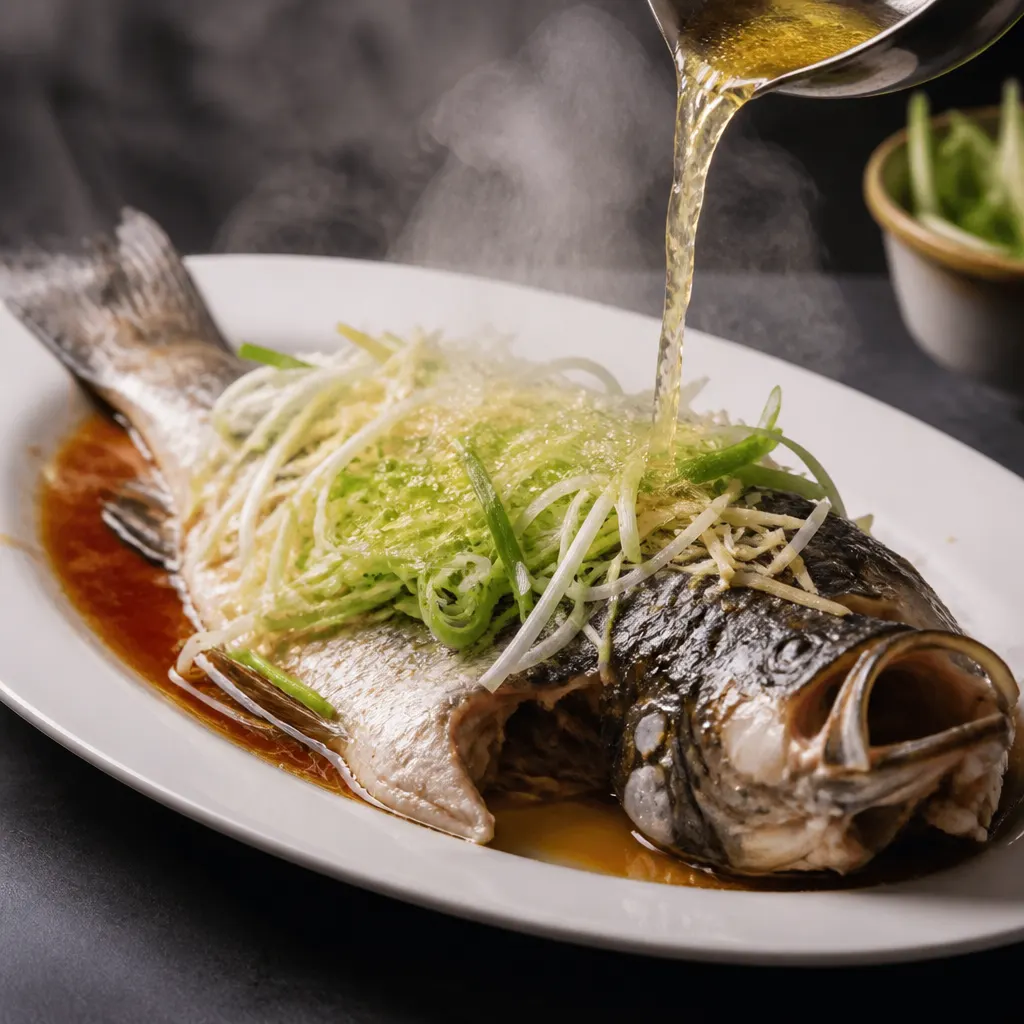
Smoked Whole Fish with Ginger-Scallion Oil
The Cantonese way with a whole fish, steamed and finished with sizzling ginger-scallion oil, is one of the great seafood preparations on earth. This version smokes the fish gently first, adding a layer the steamer can't, then finishes it with that classic flash of hot oil over fresh aromatics. It's clean, elegant, and lets good fish shine. A restaurant-quality plate that's far easier than it looks.
Cook Mode
One step at a time, big text, timers, and your screen stays awake. 0/7 steps done.
Ingredients
Tap to tick off · 0/9 gathered
Method
- 10 min
Begin with a 2.5 lb whole fish, such as sea bass, snapper, or branzino, ensuring it has been scaled and gutted. Using a sharp knife held at a 45-degree angle, make three diagonal cuts about 1/2-inch deep into the thickest part of the flesh on each side. These scores serve a dual purpose: they allow the marinade to penetrate the dense muscle fibers and prevent the skin from buckling or tearing as the protein contracts during the smoke, ensuring an even cook from head to tail.
Why it matters
Scoring the fish creates more surface area for flavor penetration and prevents the skin from curling naturally under heat.
Common mistake
Cutting too shallowly, which fails to reach the thickest part of the backbone and leads to uneven temperature gradients.
- 30 min
In a small bowl, whisk together 2 tbsp soy sauce, 1 tbsp Shaoxing wine, 1 tbsp grated ginger, 1 tsp sesame oil, and 1 tsp salt. Place the fish on a rimmed tray and apply the mixture thoroughly, ensuring you coat the skin, the interior the score marks, and the internal cavity. The Shaoxing wine and ginger act as enzymatic tenderizers while neutralizing any ‘fishy’ odors, common in whole-fish preparations.
Why it matters
The salt and soy sauce begin a light brine process that seasons the flesh deeply while the wine removes unwanted volatile aromas.
Common mistake
Skipping the internal cavity, which leaves the thickest part of the fish unseasoned and bland.
- 20 min
Pat the marinated fish lightly with a paper towel—do not rinse. Let the fish sit uncovered in a cool area or refrigerator for 15-20 minutes until the skin feels slightly tacky to the touch. This creates a 'pellicle,' a thin protein film that acts as a magnet for smoke particles. Without this tacky surface, the smoke will simply bounce off the wet skin, resulting in a mottled appearance and poor flavor adhesion.
Why it matters
The pellicle is essential for smoke to bind to the protein; otherwise, the smoke flavor remains superficial and prone to washing off.
Common mistake
Smoking a 'wet' fish, which results in a steamed texture rather than a smoked flavor profile.
- 250°F15 min
Fire up your smoker to a steady 250°F using mild fruitwoods like apple or alder. These woods provide a sweet, light profile that complements delicate white fish without masking its natural sweetness. To ensure the fish doesn't stick to the grates—a common disaster for skin-on seafood—lightly oil the grates or lay down a bed of additional scallion greens to act as an organic, non-stick elevator for the fish.
Why it matters
Seafood is a sponge for smoke; using heavy woods like hickory or mesquite will produce a bitter, acrid result on delicate fillets.
Common mistake
Neglecting to clean and oil the grates, which causes the skin to tear away when you try to serve it.
- 140°F55 min
Place the fish in the center of the smoker. Monitor the internal temperature closely using a probe inserted into the thickest part of the shoulder, just behind the head, avoiding the bone. Smoke until the internal temperature reaches 140°F. Visually, you are looking for the eyes to turn an opaque, milky white and for the flesh within the scores to flake easily when teased with a fork. This ensures you move the fish out of the 40-140°F danger zone efficiently.
Why it matters
The 140°F target ensures the collagen has broken down just enough for a silky mouthfeel while preventing the lean proteins from drying out.
Common mistake
Cooking by time alone rather than internal temperature, which leads to overcooked, rubbery seafood.
- 5 min
While the fish finishes on the smoker, prepare the 'mountain' of aromatics. Thinly slice 6 whole scallions into fine rounds and grate 3 tbsp of fresh ginger. Once the fish is pulled and placed on a heat-safe platter, pile these ingredients in a concentrated strip along the length of the fish. This mound must be tall and dense to properly receive the hot oil in the next step.
Why it matters
Concentrating the aromatics allows the hot oil to flash-fry them evenly, creating a fragrant infusion rather than just greasy vegetables.
Common mistake
Using dried ginger or old scallions which lack the moisture content required for the sizzling technique.
- 2 min
In a small saucepan, heat 1/3 cup of neutral oil (like grapeseed or canola) until it hits the smoke point—look for a faint wisp of smoke and a shimmering surface. Immediately pour the screaming hot oil directly over the scallions and ginger. It should hiss and crackle; this process instantly blooms the fat-soluble flavor compounds. Drizzle 1 tbsp soy sauce and a pinch of sugar over the top to finish. Serve immediately to capture the contrast between the tender smoked meat and the crisp, aromatic oil.
Why it matters
The thermal shock of the hot oil extracts the essential oils from the ginger and onion, acting as a finishing 'sauce' that ties the smoke flavor to the Asian aromatics.
Common mistake
Using oil that isn't hot enough, which results in the fish sitting in a puddle of grease rather than being perfumed by the aromatics.
Sauce It
Cooks & Reviews
Guild members can rate this recipe, log their cooks and share photos.
Sign in to continueMember reviews
No reviews yet — be the first to rate this cook.
Ask the Pitmaster about this recipe
Substitutions, scaling, technique, troubleshooting — get answers grounded in this cook.
Sign in to try the AI Pitmaster on Smoked Whole Fish with Ginger-Scallion Oil. New members get 3 free questions.
Sign in to tryComments(0)
Loading comments…