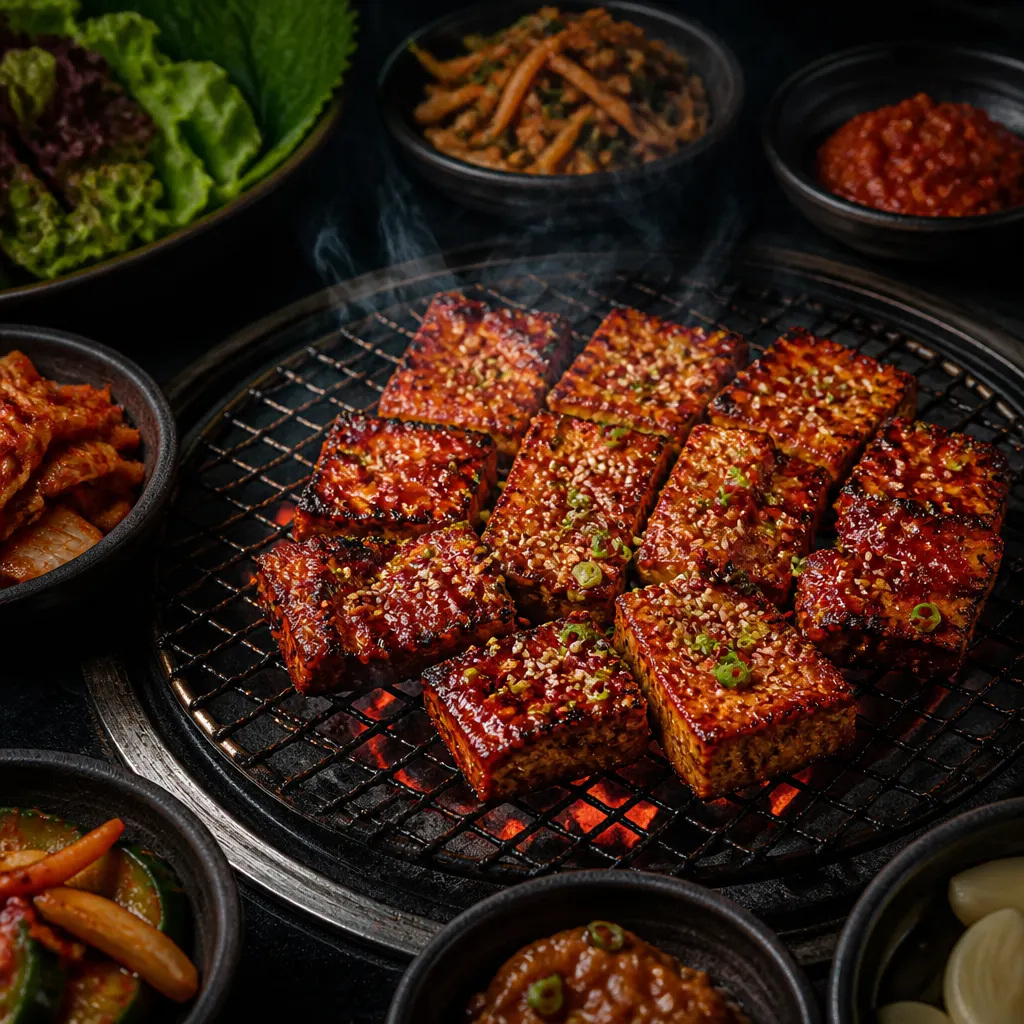
Smoked Tofu with Ssamjang Glaze
Tofu takes smoke better than almost anyone expects, and pressed firm tofu in a savory doenjang-and-gochujang glaze becomes a genuinely satisfying vegetarian centerpiece. The fermented soybean glaze brings the umami punch. Vegan-friendly and seriously flavorful.
Cook Mode
One step at a time, big text, timers, and your screen stays awake. 0/8 steps done.
Ingredients
Tap to tick off · 0/9 gathered
Method
- 1h
Begin by pressing 2 blocks of extra-firm tofu to remove internal water, which is essential for smoke absorption and structural integrity. Wrap the tofu in paper towels or a clean kitchen cloth, place it between two flat surfaces, and apply weight for at least 60 minutes. Once pressed, slice each block in half horizontally to create four uniform slabs; this increased surface-to-volume ratio allows for more efficient smoke penetration and even cooking. Without this step, the tofu remains spongy and will steam from the inside, preventing the glaze from adhering.
Why it matters
Removing excess water creates space within the protein structure for the smoke and savory glaze to penetrate.
Common mistake
Rushing the pressing process, which leads to a soggy interior and a glaze that slides off during the smoke.
- 10 min
In a mixing bowl, combine 2 tbsp doenjang, 1 tbsp gochujang, 1 tbsp soy sauce, 1 tbsp maple syrup, 1 tbsp toasted sesame oil, 3 cloves of grated garlic, and 1 tsp grated ginger. Whisk until the fermented pastes are fully emulsified into a smooth, thick lacquer. The high fat content in the sesame oil serves as a carrier for the smoke’s phenolic compounds, while the sugars in the syrup will undergo caramelization at smoking temperatures. Reserve 2 tablespoons of this mixture in a separate container for the final finish to avoid cross-contamination with the raw-marinating tofu.
Why it matters
The high solid content of fermented pastes creates a 'bark' similar to traditional BBQ rubs but in a wet format.
Common mistake
Failing to reserve a portion of the glaze for finishing, resulting in the use of 'used' marinade for the final garnish.
- 45 min
Generously coat all sides of the four tofu slabs with the ssamjang glaze using a pastry brush, ensuring no bare spots remain. Allow the tofu to rest submerged in the glaze at room temperature for 30 to 60 minutes. While tofu doesn't have the same collagen structure as meat, the salt in the doenjang and soy sauce will begin to season the exterior layers through osmosis, setting the stage for the pellicle to form once it hits the heat.
Why it matters
Ambient marination allows the aromatics like garlic and ginger to bond with the surface before the heat seals the protein.
Common mistake
Marinating for too long (over 4 hours) which can cause the tofu to become overly salty and mushy.
- 250°F20 min
Preheat your smoker to a steady 250°F using apple or cherry wood to produce a 'blue' (thin and transparent) smoke. Fruitwoods provide a milder pH in the smoke that won't turn the delicate tofu bitter compared to heavy hickory. Ensure your grates are scrubbed clean and lightly wiped with high-smoke-point oil. This prevents the proteins from bonding to the metal grates, which would otherwise tear the flavored 'skin' off the tofu when you try to flip or remove it.
Why it matters
Clean grates and steady temps prevent sticking and ensure the subtle fruitwood flavor isn't masked by creosote.
Common mistake
Putting the tofu on before the smoker has stabilized, leading to a bitter, ashy flavor profile.
- 250°F30 min
Place the glazed slabs directly on the grill grates in the indirect heating zone. Close the lid and smoke for 30 minutes undisturbed. During this phase, the heat begins to dehydrate the surface glaze, creating a tacky 'tack' that captures the smoke particles. The target is to see the glaze change from a wet, bright red/brown to a deeper, matte bronze color. Tofu should be kept away from direct flames to avoid burning the sugars in the syrup during this initial setting phase.
Why it matters
This initial set allows the smoke to bind to the fat in the sesame oil and the sugars in the glaze.
Common mistake
Opening the lid too frequently, which fluctuates the temperature and prevents the glaze from setting properly.
- 250°F25 min
Open the lid and apply a second, thin layer of the remaining glaze. Continue smoking for another 25 minutes. You are looking for a tactile cue: the tofu should feel firm and springy when pressed, and the exterior should be visibly darkened. Because tofu contains very little fat of its own, this second basting provides the necessary moisture to prevent the exterior from becoming leathery or excessively tough while it reaches its final texture.
Why it matters
The second baste builds the 'crust' layer and replaces moisture lost during the first half of the cook.
Common mistake
Overcooking past the 60-minute mark, which turns the tofu dry and rubbery rather than firm and meaty.
- 10 min
Remove the tofu slabs from the smoker and place them on a cutting board. Let them rest for 5 to 10 minutes before slicing. While tofu doesn't have the same 'carryover' cooking as a thick steak, resting allows the internal moisture (which has been pushed toward the center by the heat) to redistribute. This ensures that when you slice the slabs, they remain juicy and don't leak moisture, which would otherwise dilute the concentrated glaze on the surface.
Why it matters
Resting prevents the 'weeping' of moisture that can ruin the presentation and the texture of the glaze.
Common mistake
Slicing immediately, which causes the internal steam to escape and results in a drier final bite.
- 5 min
Slice the slabs into 1/2-inch thick strips using a sharp knife to maintain the clean lines of the crust. Arrange the slices to show off the contrast between the dark, smoked glaze and the clean white interior. Garnish with thinly sliced scallions and toasted sesame seeds. This final step adds the necessary textural crunch and fresh, sharp aromatics that cut through the deep, fermented umami of the smoked doenjang. Serve immediately while warm.
Why it matters
Aesthetics and fresh garnishes provide the visual and textural contrast needed for a professional-grade dish.
Common mistake
Using a dull knife that crushes the tofu and smears the glaze across the white interior during slicing.
Cooks & Reviews
Guild members can rate this recipe, log their cooks and share photos.
Sign in to continueMember reviews
No reviews yet — be the first to rate this cook.
Ask the Pitmaster about this recipe
Substitutions, scaling, technique, troubleshooting — get answers grounded in this cook.
Sign in to try the AI Pitmaster on Smoked Tofu with Ssamjang Glaze. New members get 3 free questions.
Sign in to tryComments(0)
Loading comments…