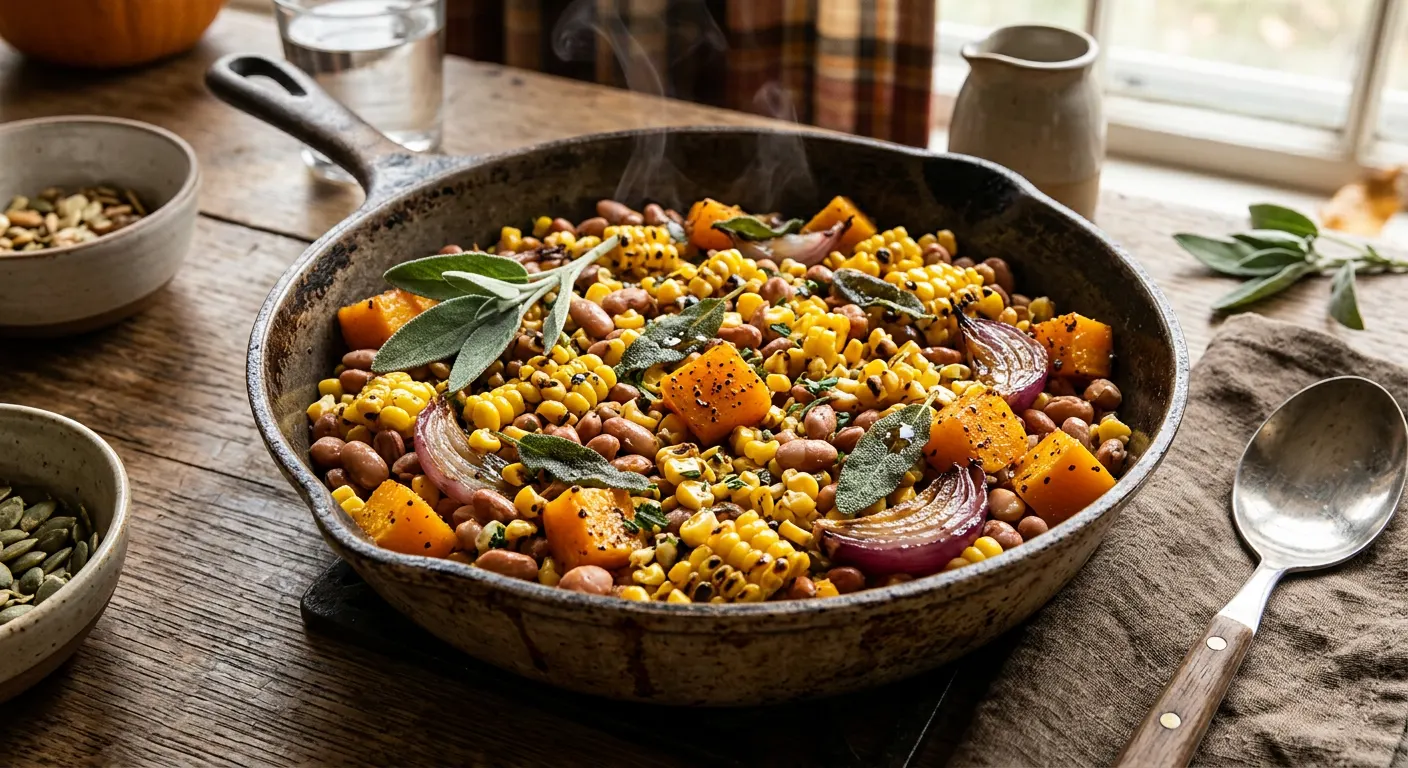
Smoked Three Sisters (Corn, Beans & Squash)
Eastern Woodlands / Haudenosaunee. The Three Sisters, corn, beans, and squash, are the agricultural and spiritual heart of many North American nations, planted together because they support one another in the field. This smoked version honors that pairing on the plate, smoky charred corn, tender squash, and beans brought together with a little maple and sage. It's a genuinely Indigenous vegetarian centerpiece, not a side, and a beautiful way to put plant traditions at the center of a smoke.
Cook Mode
One step at a time, big text, timers, and your screen stays awake. 0/6 steps done.
Ingredients
Tap to tick off · 0/8 gathered
Method
- 15 min
Begin by peeling and cubing 1 whole winter squash into uniform 1-inch chunks to ensure even cooking. Cut 1 whole onion into thick wedges, keeping the root end intact where possible to prevent them from falling through the grates. In a large mixing bowl, toss the squash and onions with 2 tbsp of oil or rendered fat, 1 tbsp of dried sage, and 1 tsp of coarse salt. The fat is essential here as it acts as a binder for the smoke particles and the sage, while the salt begins to draw out surface moisture to create a tackier surface for smoke adhesion.
Why it matters
Uniform sizing and a fat-based coating ensure that all pieces reach tenderness at the same time while maximizing smoke deposition.
Common mistake
Cutting squash chunks too large, which results in a raw, crunchy interior while the exterior overcooks.
- 275°F30 min
Preheat your smoker to a steady 275°F using maple or apple wood; these fruitwoods provide a mild, sweet smoke that complements the natural sugars in the corn and squash without overpowering the delicate sage. Ensure your smoke is 'thin and blue' before adding food—white, billowy smoke indicates incomplete combustion and will leave a bitter, creosote flavor on the high-moisture surfaces of the vegetables.
Why it matters
Vegetables absorb smoke flavor much more aggressively than meat due to their high water content, making clean combustion critical.
Common mistake
Adding vegetables to the smoker before it has reached a stable temperature, leading to a heavy, acrid soot coating.
- 275°F1h 15m
Spread the seasoned squash and onions in a single layer on a mesh smoking tray or perforated pan to maximize airflow. Place the tray on the grates and lay the 3 husked ears of corn directly onto the smoker rack beside the tray. Smoke at 275°F for 60 to 75 minutes. The corn is placed directly on the rack to allow the heat to caramelize the natural sugars (Maillard reaction) while the squash begins its transformation from dense starch to a tender, fork-crushable texture.
Why it matters
Direct grate contact for the corn mimics traditional fire-roasting, providing depth of flavor and texture.
Common mistake
Overcrowding the tray, which causes the vegetables to steam rather than roast and smoke.
- 165°F10 min
Remove the corn once the kernels appear plump and slightly golden. Stand each cob upright in a bowl and shear the kernels off with a sharp knife; the bowl catches the 'corn milk' which adds richness. In a large cast-iron skillet or heavy pan, combine these fresh kernels with the smoked squash, onions, and 2 cups of cooked or rinsed beans (cranberry, pinto, or tepary). If using canned beans, ensure they reach an internal temperature of at least 165°F during the final phase to move through the food safety danger zone rapidly.
Why it matters
Combining the ingredients late in the process prevents the beans from becoming mushy and allows the corn to retain its juice.
Common mistake
Adding unrinsed canned beans, which introduces metallic-tasting canning liquid into the delicate dish.
- 275°F20 min
Drizzle 1 tbsp of maple syrup over the mixture in the skillet and toss gently to coat. Return the open skillet to the smoker for a final 15 to 20 minutes. This 'set' period allows the maple syrup to dehydrate slightly into a tacky glaze, binding the earthy sage and savory smoke together. The heat will also ensure the beans are fully integrated and reach a safe serving temperature while picking up the final notes of maple wood smoke.
Why it matters
The sugars in the maple syrup need this final heat exposure to caramelize and lose their raw, cloying edge.
Common mistake
Adding the maple syrup too early, which can cause the sugars to burn and turn bitter over a long cook.
- 10 min
Remove the skillet from the smoker and let it rest for 5 to 10 minutes before serving. This rest allows the starches in the squash and the glaze to thicken slightly, ensuring the dish isn't watery when plated. Taste a piece of squash and corn together; the flavor should be a balance of wood-smoke, earthy herb, and sweetness. Adjust with a final pinch of salt if needed to brighten the indigenous flavors. Serve warm as a centralized showpiece dish.
Why it matters
A short rest allows the temperature to stabilize, preventing the maple glaze from running to the bottom of the dish.
Common mistake
Serving immediately, which often results in a 'thin' sauce rather than a glazed, cohesive vegetable medley.
Cooks & Reviews
Guild members can rate this recipe, log their cooks and share photos.
Sign in to continueMember reviews
No reviews yet — be the first to rate this cook.
Ask the Pitmaster about this recipe
Substitutions, scaling, technique, troubleshooting — get answers grounded in this cook.
Sign in to try the AI Pitmaster on Smoked Three Sisters (Corn, Beans & Squash). New members get 3 free questions.
Sign in to tryComments(0)
Loading comments…