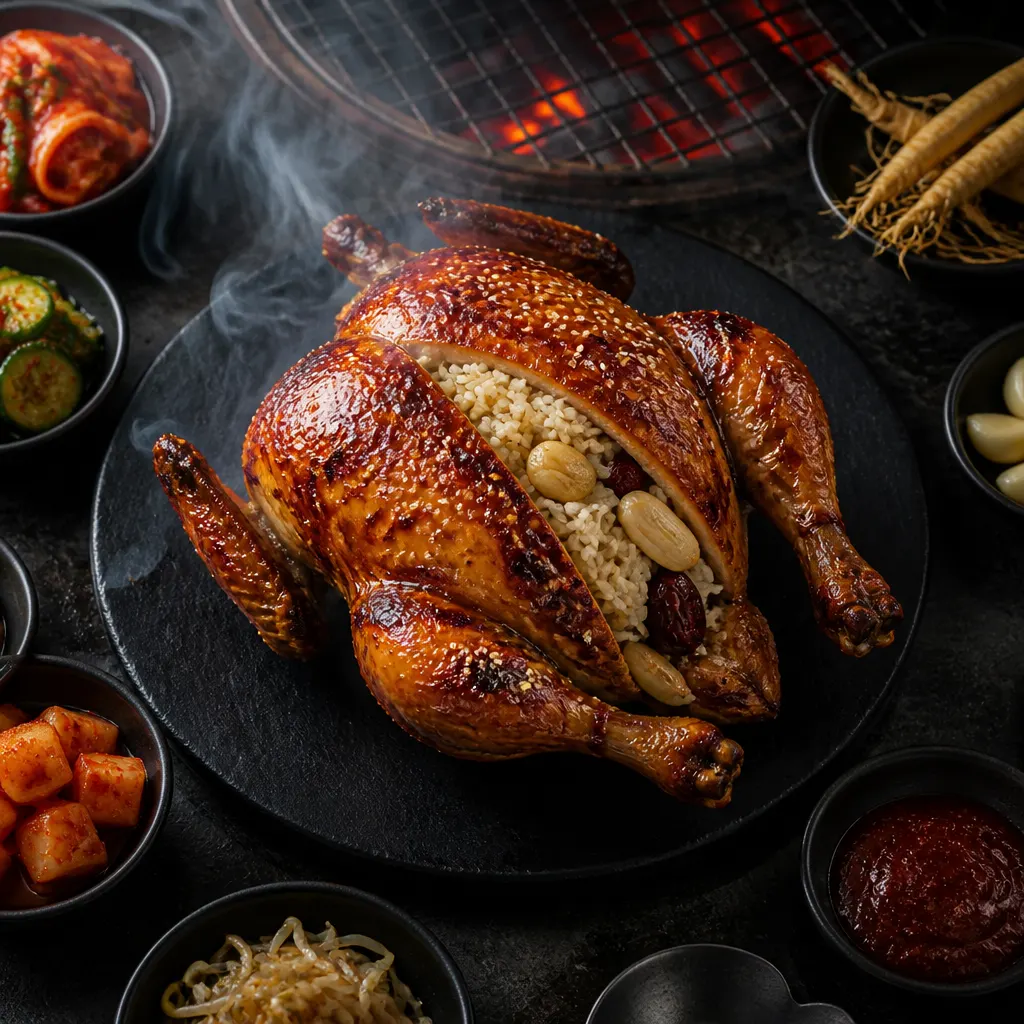
Smoked Stuffed Whole Chicken (Samgyetang-Style)
A clever take on Korea's restorative ginseng chicken soup — a whole young chicken stuffed with glutinous rice, garlic, jujubes, and ginseng, reimagined as a smoked stuffed bird. Adapted respectfully: samgyetang is traditionally a simmered healing soup eaten on the hottest days of summer; this smoked version honors the aromatic stuffing while reinterpreting the cooking method.
Cook Mode
One step at a time, big text, timers, and your screen stays awake. 0/8 steps done.
Ingredients
Tap to tick off · 0/10 gathered
Method
- 1h
Begin by soaking 1.0 cup of glutinous (sweet) rice in cold water for at least 1 hour. This step is non-negotiable for this advanced method: because we are smoking the bird at 275°F rather than boiling it in soup, the rice must be fully pre-hydrated to ensure it softens using only the bird's internal humidity. After soaking, drain the rice thoroughly and toss in a bowl with 6 cloves of garlic, 4 dried jujubes, 1 small piece of ginseng root (or 1 tsp powder), 2 inches of sliced ginger, and 1.0 tsp of salt. This creates a concentrated aromatic core that seasons the bird from the inside out.
Why it matters
The pre-soak ensures the rice transitions from a hard grain to a soft, porridge-like consistency without the presence of boiling liquid.
Common mistake
Using long-grain white rice instead of glutinous rice, which will remain hard and chalky regardless of cook time.
- 15 min
Take your 3.5 lb whole young chicken and pat the skin and interior cavity extremely dry with paper towels. Pack the rice and aromatic mixture into the main cavity, filling it only 75% full; glutinous rice expands significantly as it absorbs rendered fat and ginseng essence. Use butcher's twine to truss the legs tightly and cross them over the cavity opening. If the skin is loose, use a metal skewer or additional twine to stitch the opening shut. This seal creates a pressurized steam chamber inside the bird, which is the only way to cook the rice to 165°F safely.
Why it matters
A tight seal prevents the rice from drying out and ensures it reaches a food-safe internal temperature through conductive heat.
Common mistake
Overpacking the bird, which leads to raw, crunchy rice at the very center of the stuffing.
- 2h
Brush the exterior of the bird with 1.0 tbsp of toasted sesame oil. This acts as your binder for the rub and provides the traditional nutty fat profile of samgyetang. In a small bowl, combine 2.0 tbsp of salt and 1.0 tbsp of white pepper. Coat the skin meticulously, focusing on the leg joints and under the wings. Place the bird on a wire rack over a sheet pan and refrigerate uncovered for at least 2 hours. This is the 'open-air cure' phase which draws moisture out of the skin to facilitate a better smoke-skin texture later.
Why it matters
The salt and sesame oil combination seasons the meat while the dry-refrigeration creates a pellicle for smoke adhesion.
Common mistake
Covering the bird during the cure, which traps moisture and results in rubbery, steamed skin.
- 275°F30 min
Preheat your smoker to a stable 275°F using apple or oak wood. At this temperature, we are above the 'danger zone' (40-140°F) relatively quickly, which is critical for a stuffed bird. Ensure you have a clean, blue smoke; heavy white smoke will turn the delicate ginseng and sesame notes bitter. Place a water pan in the smoker to maintain a humid environment, which assists in the heat transfer through the chicken breast into the dense rice stuffing.
Why it matters
A 275°F target provides enough heat to render chicken fat for skin crispness while being low enough to let smoke penetrate.
Common mistake
Starting the cook with 'dirty' smoke that overpowers the subtle aromatics of the medicinal ginseng.
- 275°F2h 30m
Place the bird breast-side up on the grates. Close the lid and resist the urge to peek for the first 90 minutes. Monitor the exterior color; we are looking for a deep mahogany gold. If the wings or breast tips begin to darken too quickly before the stuffing reaches temp, loosely tent those areas with aluminum foil. This prevents the delicate skin from scorching while the thermal mass of the rice stuffing continues to climb toward safety. Total smoke time will range from 150 to 180 minutes depending on the density of your stuffing.
Why it matters
Consistent heat is required to drive energy through the meat and into the starch-heavy center of the bird.
Common mistake
Ignoring the skin color and allowing the sugar in the sesame oil to burn before the interior is safe.
- 165°F
Using an instant-read thermometer, verify three distinct temperatures. First, the thickest part of the breast must be 165°F. Second, the inner thigh should be 175°F to ensure the dark meat's connective tissue has broken down. Finally, and most importantly, insert the probe into the dead center of the glutinous rice stuffing. This MUST reach 165°F. Because the rice is in contact with raw poultry juices during the cook, it is not safe to consume until it reaches the same pasteurization temperature as the meat.
Why it matters
The stuffing acts as a heat sink; failing to verify its internal temperature poses a significant salmonella risk.
Common mistake
Pulling the bird based on meat temperature alone while the stuffing is still in the bacterial danger zone.
- 20 min
Move the bird to a warm platter. Do not tent tightly with foil, as this will trap steam and soften the skin we worked to crisp; a loose 'hat' of foil is sufficient to retain heat. Let the bird rest for 15-20 minutes. During this time, carryover cooking will finish the rice hydration, and the muscle fibers will relax, allowing the juices—now infused with ginseng and ginger—to redistribute throughout the meat. The rice will continue to soak up the concentrated chicken fat at the bottom of the cavity.
Why it matters
Resting prevents the juices from purging onto the board, ensuring the meat is moist and the rice is flavorful.
Common mistake
Slicing immediately, which causes the liquid inside the rice to run out, leaving the stuffing dry.
To serve, cut the twine and remove the skewers. Use a spoon to scoop the aromatic, smoky rice into small bowls—this is the 'heart' of the dish. Carve the chicken into traditional pieces. In Korean tradition, provide a small side dish of extra salt and white pepper for dipping the meat. Ensure each guest gets a piece of the jujube and some of the ginseng-infused rice to experience the 'Samgyetang' restorative profile. The skin should be bite-through and the rice should have a rich, sticky, savory mouthfeel.
Why it matters
Proper service ensures the contrast between the smoky exterior and the medicinal, herbal interior is highlighted.
Common mistake
Discarding the jujubes and ginseng, which are essential for the authentic samgyetang flavor profile.
Sauce It
Cooks & Reviews
Guild members can rate this recipe, log their cooks and share photos.
Sign in to continueMember reviews
No reviews yet — be the first to rate this cook.
Ask the Pitmaster about this recipe
Substitutions, scaling, technique, troubleshooting — get answers grounded in this cook.
Sign in to try the AI Pitmaster on Smoked Stuffed Whole Chicken (Samgyetang-Style). New members get 3 free questions.
Sign in to tryComments(0)
Loading comments…