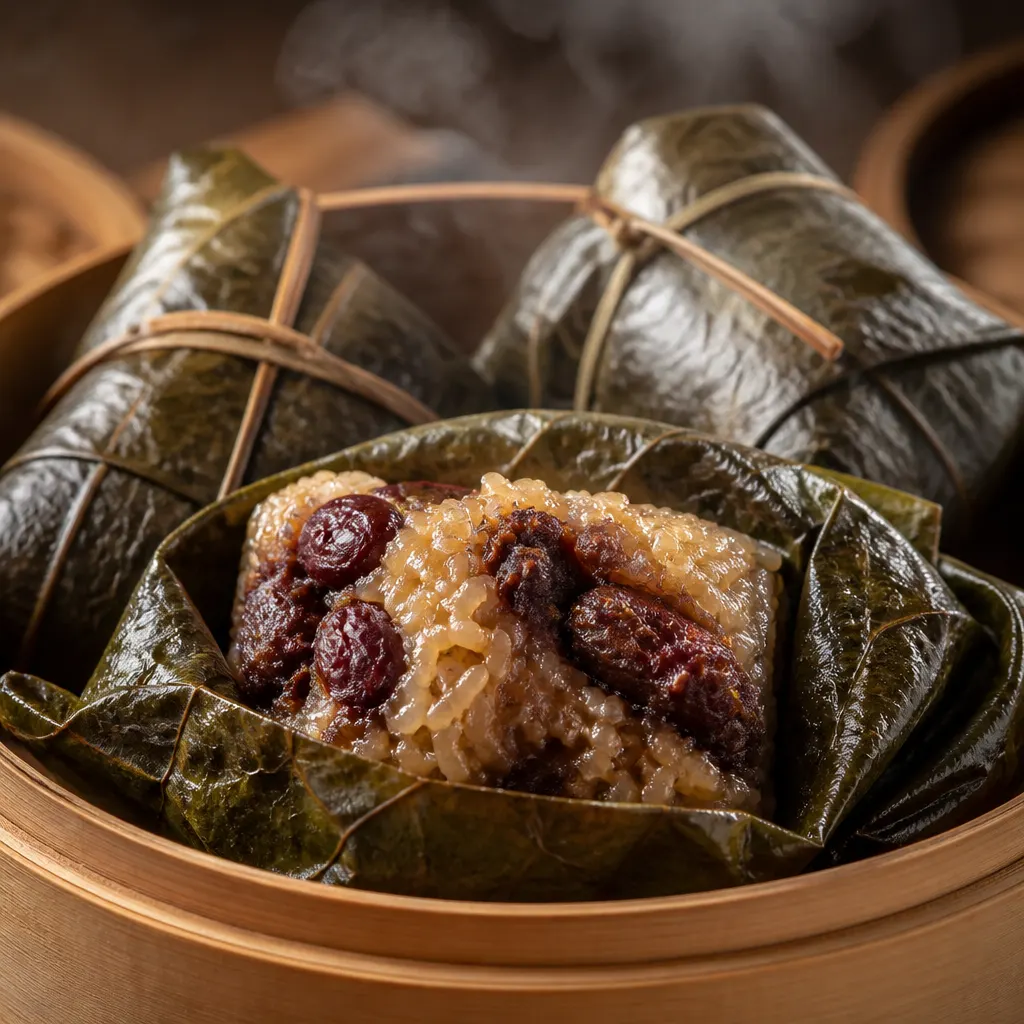
Smoked Sweet Sticky Rice in Lotus Leaf
Lotus-leaf-wrapped sticky rice is a dim sum classic, and a sweet version stuffed with red bean paste and dates, then smoked in the leaf, makes a gently smoky, fragrant dessert. The lotus leaf perfumes the rice with a distinctive tea-like aroma while the smoke adds depth. It's a fun, hands-on parcel project that ends a Chinese smoke feast on a soft, sweet, aromatic note. Vegetarian and naturally gluten-free.
Cook Mode
One step at a time, big text, timers, and your screen stays awake. 0/9 steps done.
Ingredients
Tap to tick off · 0/7 gathered
Method
- 1h
Place 6 dried lotus leaves in a large heat-proof bowl or clean sink and submerge them completely in hot water. Let them soak for 30 to 60 minutes until they transition from brittle to a pliable, leather-like texture. If the leaves remain stiff, they will crack during the folding process, causing the rice to dry out and the smoke to become acrid rather than fragrant. Once softened, gently pat each leaf dry with a clean kitchen towel to remove surface moisture, which prevents the exterior of the rice from becoming gummy or waterlogged.
Why it matters
Hydrating the leaf ensures it acts as a permeable membrane that protects the rice while allowing smoke and tea-like aromatics to pass through.
Common mistake
Using leaves that are still stiff, which leads to structural failure and unevenly cooked rice.
- 10 min
In a large mixing bowl, take your 2 cups of glutinous rice (which must be pre-soaked for 2 hours and drained) and combine it with 2 tbsp brown sugar, 1 tbsp neutral oil, and 1 pinch of salt. Use a spatula to thoroughly toss the grains until every single kernel is coated in a thin film of oil and sugar. This oil barrier is the secret to 'pearl' rice; it prevents the starch from bonding into a solid gluey mass and ensures the rice releases easily from the lotus leaf after smoking.
Why it matters
The oil prevents the rice from sticking to the leaf and creates a distinct, glossy grain texture.
Common mistake
Neglecting to coat the rice evenly, resulting in a solid block of rice that won't absorb smoke flavor.
- 15 min
Lay one softened lotus leaf flat with the ribbed side facing up. Place approximately 3 tablespoons of the seasoned rice in the center, shaping it into a small rectangle. Add a 1 tbsp dollop of sweetened red bean paste in the center and sprinkle a portion of the 6 chopped dried dates over the paste. Cover the filling with another 2-3 tablespoons of rice to seal the sweets inside. By centering the sugar-heavy red bean paste, you protect it from direct heat, allowing it to soften and perfume the rice from the inside out.
Why it matters
Layering the filling in the center creates a flavor gradient and protects the delicate paste from scorching.
Common mistake
Overfilling the parcels, which prevents the rice in the center from reaching the gelatinization temperature.
- 10 min
Fold the bottom of the leaf up over the rice, tuck in the sides, and roll toward the top to create a tight, rectangular parcel. Secure each bundle with kitchen twine. The tie should be snug but not restrictive; remember that glutinous rice expands as it hydrates and cooks. If tied too tightly, the rice will become dense and hard; if too loose, the steam escapes and the rice stays crunchy. The goal is a firm, protected package that mimics a small pressure cooker.
Why it matters
The parcel must be tight enough to trap steam but loose enough to accommodate the natural expansion of the starch.
Common mistake
Tying the twine too tight, which results in a hard, undercooked center.
- 275°F20 min
Preheat your smoker to a stable 275°F using mild fruit woods like apple or cherry. Do not use heavy woods like hickory or mesquite, as they will overwhelm the floral notes of the lotus. It is vital to ensure your water pan is full and steaming before adding the food. Because rice requires moisture to gelatinize, the smoker must function as a 'smoke-roaster' where the humidity prevents the lotus leaf from drying out and turning brittle during the cook.
Why it matters
High humidity in the cook chamber is the only way to ensure the rice fully hydrates without boiling it.
Common mistake
Running the smoker dry, which results in a scorched, 'hay-like' flavor from the leaves.
- 275°F55 min
Place the parcels directly on the grates, seam-side down. Close the lid and maintain a steady 275°F for 45 to 55 minutes. During this time, the smoke will penetrate the porous lotus leaf, while the moisture trapped inside the leaf steams the rice. You are looking for the leaves to darken to a deep olive or brownish hue. Because this is a high-starch item, ensure the smoker stays out of the 40-140°F danger zone quickly to prevent any bacterial growth in the warm, moist rice.
Why it matters
This step utilizes the leaf as a flavor-infusing vessel that protects the rice from drying out in the indirect heat.
Common mistake
Opening the lid frequently, which lets out the steam necessary for the rice to cook.
- 195°F
Gently squeeze a parcel with tongs; it should feel plump and yielding, similar to a soft sponge. If it feels hard or grainy, it needs more time. While internal temperature isn't a standard metric for this dish, the rice is safely cooked and textures are ideal when the internal temperature of the rice core reaches 190°F-200°F. At this point, the starches have fully broken down into a sticky, translucent state.
Why it matters
Visual and tactile cues are the only way to ensure the starch has fully gelatinized into the 'sticky' texture.
Common mistake
Pulling the parcels too early, leaving the rice grains crunchy and opaque in the center.
- 10 min
Remove the parcels from the smoker and let them rest undisturbed for 10 minutes. This is a critical carryover step where the remaining steam inside the leaf finishes the hydration of the outermost rice grains. It also allows the tea-like oils from the lotus leaf to settle into the rice, deepening the aromatic profile. If you cut them open immediately, the steam escapes too fast and the rice can become slightly tough.
Why it matters
Resting allows the moisture to redistribute, ensuring the edges of the rice are as tender as the center.
Common mistake
Slicing into the leaf immediately and losing the concentrated aromatic steam.
Serve the parcels whole on a platter and provide shears or a sharp knife for guests to cut the twine. When the leaf is peeled back, the rice should be mahogany-tinted from the smoke and sugar, with the red bean paste visible in the center. Remind guests that the rice and dates are the prize—the lotus leaf is a flavor delivery tool and is too fibrous to be eaten. The result should be a balance of earthy smoke, floral tea, and clean sweetness.
Why it matters
The theatrical opening of the parcel releases the most intense burst of wood smoke and lotus aroma for the diner.
Common mistake
Discarding the flavorful 'pot liquor' or juices inside the leaf which should be eaten with the rice.
Cooks & Reviews
Guild members can rate this recipe, log their cooks and share photos.
Sign in to continueMember reviews
No reviews yet — be the first to rate this cook.
Ask the Pitmaster about this recipe
Substitutions, scaling, technique, troubleshooting — get answers grounded in this cook.
Sign in to try the AI Pitmaster on Smoked Sweet Sticky Rice in Lotus Leaf. New members get 3 free questions.
Sign in to tryComments(0)
Loading comments…