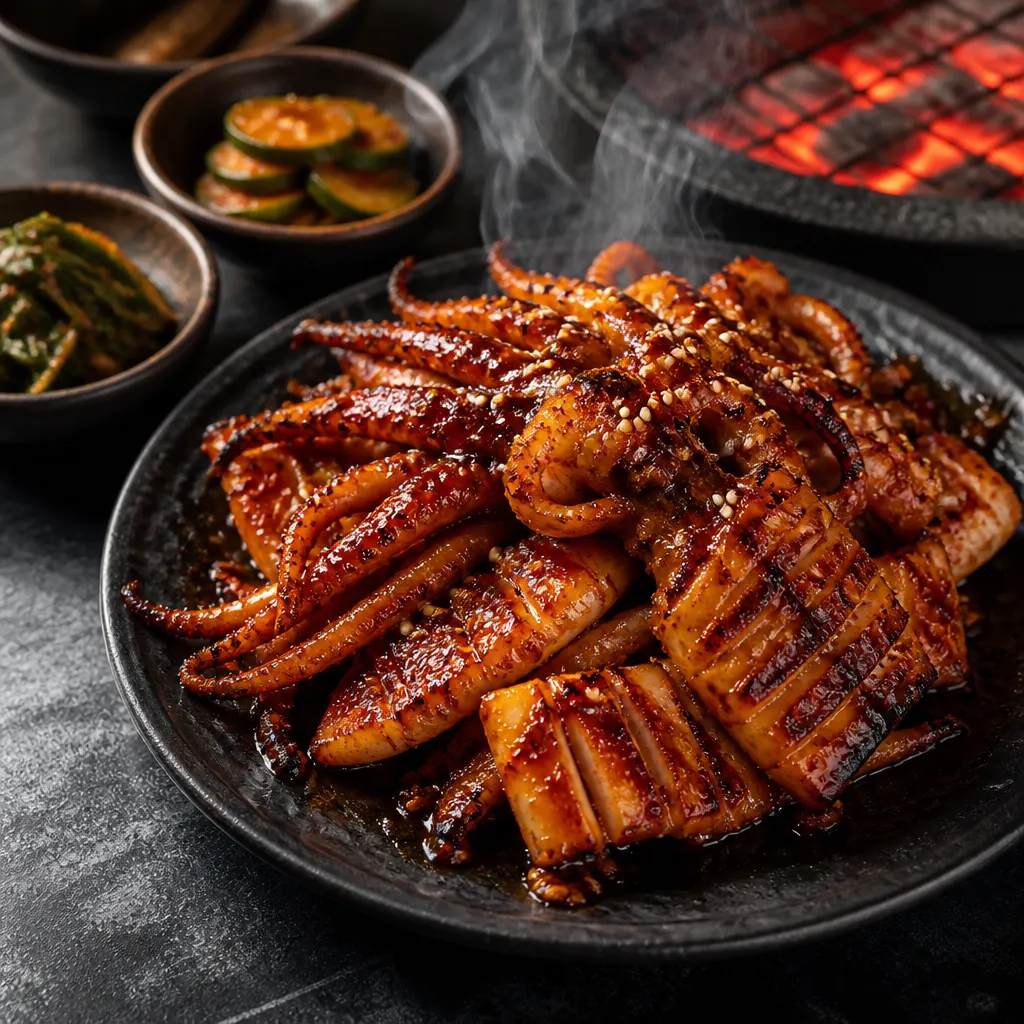
Smoked Spicy Korean Squid (Ojingeo)
Ojingeo bokkeum is the fiery stir-fried squid found at Korean street stalls, and smoking the squid first gives it a depth the quick stir-fry can't reach. Scored squid bodies take on the gochujang marinade and char beautifully.
Cook Mode
One step at a time, big text, timers, and your screen stays awake. 0/7 steps done.
Ingredients
Tap to tick off · 0/9 gathered
Method
- 10 min
In a medium glass or stainless steel mixing bowl, whisk together 3 tbsp gochujang, 1 tbsp gochugaru, 2 tbsp soy sauce, 1 tbsp brown sugar, 1 tbsp toasted sesame oil, 4 cloves of grated garlic, and 1 tbsp grated ginger. Whisk vigorously until the brown sugar is completely dissolved and the paste is uniform. This combination creates a high-sugar, high-protein coating that will facilitate rapid caramelization and smoke adhesion through the Maillard reaction. Ensure the mixture is smooth to prevent clumped spices from burning during the final char phase.
Why it matters
A well-emulsified marinade ensures that every square inch of the squid is protected by fats and sugars, preventing the lean protein from drying out.
Common mistake
Using coarse garlic or ginger chunks which will fall off or burn, rather than a fine grate that melts into the sauce.
- 30 min
Take 1.5 lbs of cleaned squid bodies and use a sharp paring knife to score a shallow crosshatch pattern (1/8-inch deep) on one side of the mantle. This increases the surface area for smoke absorption and creates 'channels' for the marinade to pool. Submerge the scored bodies and tentacles into the marinade, ensuring total coverage. Limit the marination time to exactly 30 minutes at room temperature; the salt and enzymes in the soy sauce and gochujang will begin to break down the delicate cephalopod proteins if left longer, resulting in an unpleasant, mushy texture.
Why it matters
Scoring allows the squid to curl during cooking, which traps smoke and heat in the interior while providing the classic 'ojingeo' aesthetic.
Common mistake
Marinating for several hours or overnight, which chemically 'overcooks' tender seafood and makes it rubbery.
- 275°F15 min
Preheat your smoker to 275°F using light fruit woods such as apple or alder. Avoid heavy woods like hickory or mesquite, which will overwhelm the delicate sweetness of the squid. Clean the grates thoroughly and apply a light coating of high-smoke-point oil. Because squid is extremely lean and cooks quickly, the goal is to stabilize the temperature at 275°F to ensure we stay out of the 40-140°F danger zone rapidly while still allowing 20 minutes of smoke exposure.
Why it matters
A clean, oiled grate is essential for lean seafood to prevent the skin from tearing during the transition from the smoker to the sear.
Common mistake
Using cold grates, which causes the proteins to bond to the metal and leads to sticking.
- 275°F25 min
Place the marinated squid bodies and tentacles directly onto the grates, scored-side up. Arrange them so they are not touching to allow maximum smoke circulation. Smoke for 20 to 25 minutes. During this phase, the smoke particles will stick to the wet marinade, and the heat will begin to set the proteins. Keep the lid closed; every time you open it, you lose the humidity required to keep the squid supple. Watch for the marinade to tighten and the squid to begin curling into tubes.
Why it matters
The low-temperature smoke phase deposits flavor compounds that cannot be achieved through traditional high-heat stir-frying.
Common mistake
Opening the lid frequently to check progress, which drops the temperature and prevents the smoke from setting properly.
- 140°F3 min
Once the squid reaches an internal temperature of 135°F and appears matte-white (opaque) rather than translucent, move it to the hottest part of the grill or a preheated cast iron pan. Sear for 60 to 90 seconds per side until the sugar in the marinade caramelizes into dark, charred spots. Pull the squid immediately when it hits 140°F internal temperature. At this point, the squid is food-safe and perfectly tender; any further and the collagen will tighten, resulting in a rubbery texture.
Why it matters
The high-heat finish creates the 'bokkeum' (stir-fry) char profile while ensuring the seafood reaches a safe final temperature.
Common mistake
Overcooking the squid past 145°F, which turns the tender flesh into the texture of a pencil eraser.
- 3 min
Transfer the charred squid to a warm plate and let it rest for 2 to 3 minutes before slicing. This brief rest allows the internal juices to redistribute, ensuring the marinade stays on the meat rather than running off on the cutting board. After the rest, slice the bodies into 1-inch wide rings or strips. This ensures the squid is easy to eat and maximizes the surface-to-sauce ratio in every bite.
Why it matters
Resting prevents the moisture from purging, keeping the delicate seafood succulent.
Common mistake
Slicing immediately, which causes the hot marinade to slide off the surface of the squid.
Plate the sliced squid and tentacles immediately. Garnish generously with thinly sliced scallions and toasted sesame seeds. The fresh bite of the scallions cuts through the rich, smoky gochujang, and the sesame seeds add a necessary textural crunch. Serve with steamed white rice to absorb the spicy residual oils from the marinade and provide a neutral base for the intense smoky heat.
Why it matters
Garnishing provides the final layer of texture and visual appeal essential for Korean street-food presentation.
Common mistake
Omitting the sesame seeds, which results in a lack of textural contrast against the soft squid.
Sauce It
Cooks & Reviews
Guild members can rate this recipe, log their cooks and share photos.
Sign in to continueMember reviews
No reviews yet — be the first to rate this cook.
Ask the Pitmaster about this recipe
Substitutions, scaling, technique, troubleshooting — get answers grounded in this cook.
Sign in to try the AI Pitmaster on Smoked Spicy Korean Squid (Ojingeo). New members get 3 free questions.
Sign in to tryComments(0)
Loading comments…