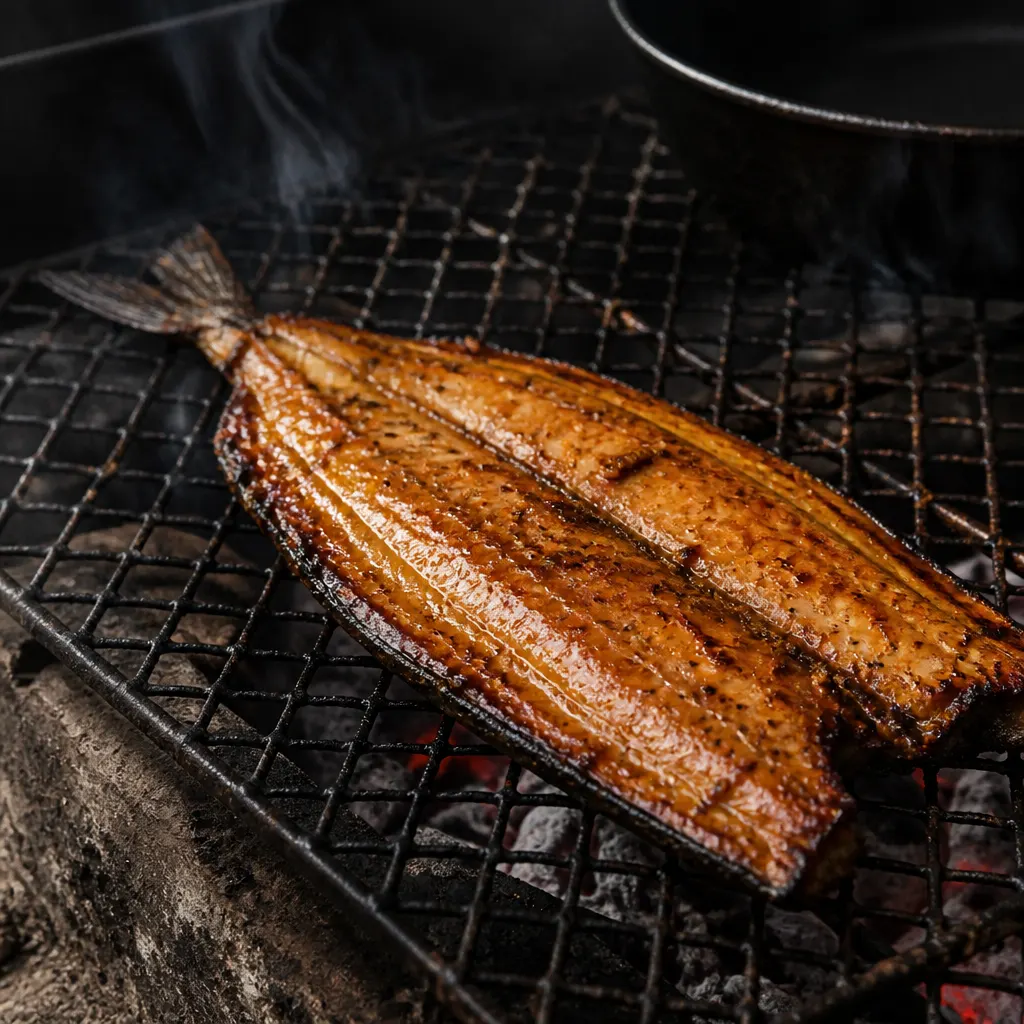
Smoked Snoek with Apricot Glaze
A Cape Town institution — firm oily fish brushed with an apricot-and-garlic glaze and smoked until it flakes. Works beautifully with mackerel or kingfish if snoek is unavailable.
Cook Mode
One step at a time, big text, timers, and your screen stays awake. 0/8 steps done.
Ingredients
Tap to tick off · 0/7 gathered
Method
- 15 min
Lay your 2 lbs of butterflied oily fish (snoek, mackerel, or kingfish) skin-side down on a flat tray. Evenly distribute 1 tsp of salt and black pepper to taste across the entire surface of the flesh. Because these are high-fat fish, the salt is crucial for denaturing proteins and drawing out excess surface moisture, which prevents a mushy texture after smoking. Allow the fish to sit for 15 minutes to allow the salt to penetrate the muscle fibers.
Why it matters
Salt draws out moisture and seasons the oily flesh through to the skin, preventing a bland and watery finished product.
Common mistake
Skipping the salting step, which results in a lack of structural integrity and flavor depth in the fish.
- 10 min
In a small bowl, whisk together 0.33 cup apricot jam, 3 tbsp melted butter, 3 cloves of grated garlic, and 2 tbsp lemon juice until the mixture is a cohesive, smooth syrup. In South African braai tradition, the acidity of the lemon and the sweetness of the apricot are essential to cut through the heavy lipids (fats) inherent in snoek. The sugar in the jam will also provide the necessary substrate for Maillard browning and smoke adhesion.
Why it matters
The combination of fat-soluble garlic and water-soluble sugars creates a flavor delivery system that penetrates the meat as it cooks.
Common mistake
Using cold butter, which will cause the jam to clump and prevent an even application across the fish.
- 30 min
Brush exactly half of the apricot mixture over the flesh side of the salted fish. Leave the fish uncovered in a cool, breezy area for 30 minutes to develop a 'pellicle'—a tacky, thin skin on the surface of the meat. This biological 'glue' is what the smoke particles actually stick to; without a proper pellicle, the smoke will simply roll off the oily surface of the fish rather than flavoring it.
Why it matters
The pellicle provides a surface for smoke phenols to adhere to, ensuring a deep smoky profile.
Common mistake
Rushing the process and putting wet fish into the smoker, which leads to a patchy, gray appearance rather than a golden-brown finish.
- 225°F20 min
While the fish dries, stabilize your smoker at 225°F using oak or alder wood. These woods provide a medium-to-strong smoke profile that can stand up to the robust flavor of oily fish without being overpowering. Ensure you have a clean-burning fire with thin, blue smoke (TBS); heavy white smoke will turn the apricot glaze bitter and leave a creosote aftertaste on the delicate seafood.
Why it matters
Maintaining a steady 225°F ensures the fish cooks gently enough to reach safe temps without the fats rendering out too quickly and drying the meat.
Common mistake
Using too much wood, which creates thick white smoke that produces a bitter, metallic flavor on the fish.
- 225°F1h 15m
Place the fish directly on the grates skin-side down. The skin acts as a protective shield against the heat, preventing the flesh from scorching. Close the lid and smoke at 225°F. Every 30 minutes, brush the remaining apricot glaze over the fish to build a thick, tacky bark. Keep the fish in the smoker until the internal temperature reaches 145°F, which typically takes 60 to 90 minutes depending on the thickness of the fillet.
Why it matters
Progressive basting builds layers of flavor and prevents the surface from drying out under the airflow of the smoker.
Common mistake
Opening the lid too frequently, which causes temperature swings and extends the cook time into the 'danger zone'.
- 145°F5 min
Use an instant-read thermometer to check the thickest part of the fish. For food safety and optimal texture, we are targeting 145°F. The flesh should change from translucent to opaque and flake easily when pressed with a fork along the natural fat lines. Remove the fish immediately once 145°F is hit, as oily fish like snoek can quickly become dry and 'sawdust-like' if it reaches 155°F or higher.
Why it matters
Reaching 145°F ensures the destruction of any foodborne pathogens while retaining the moist, buttery mouthfeel of the fish.
Common mistake
Judging doneness solely by color; always use a thermometer to prevent serving undercooked or over-dried seafood.
- 5 min
Transfer the fish to a warm platter and let it rest for 5 minutes. During this period, the proteins relax and reabsorb juices that were pushed to the center during cooking. Because of the high fat content, the carryover cooking will be minimal, but the rest is essential for the glaze to fully 'set' and become a sticky lacquer that won't run off when the fish is portioned.
Why it matters
Resting allows the internal moisture to redistribute, ensuring every bite is as juicy as the center.
Common mistake
Cutting into the fish immediately, which causes the internal juices to run out, leaving the meat dry.
Serve the fish whole on a board in the center of the table. Traditionally, guests flake pieces of the warm fish directly off the skin using a fork or their hands. Pair with crusty bread and butter to soak up the apricot-garlic drippings. Ensure the fish is served immediately while the fats are still in a liquid state for the best flavor experience.
Why it matters
Sharing the fish from a central board honors the communal spirit of the South African braai.
Common mistake
Discarding the skin too early, which contains a high concentration of flavorful fats and oils.
Sauce It
Cooks & Reviews
Guild members can rate this recipe, log their cooks and share photos.
Sign in to continueMember reviews
No reviews yet — be the first to rate this cook.
Ask the Pitmaster about this recipe
Substitutions, scaling, technique, troubleshooting — get answers grounded in this cook.
Sign in to try the AI Pitmaster on Smoked Snoek with Apricot Glaze. New members get 3 free questions.
Sign in to tryComments(0)
Loading comments…