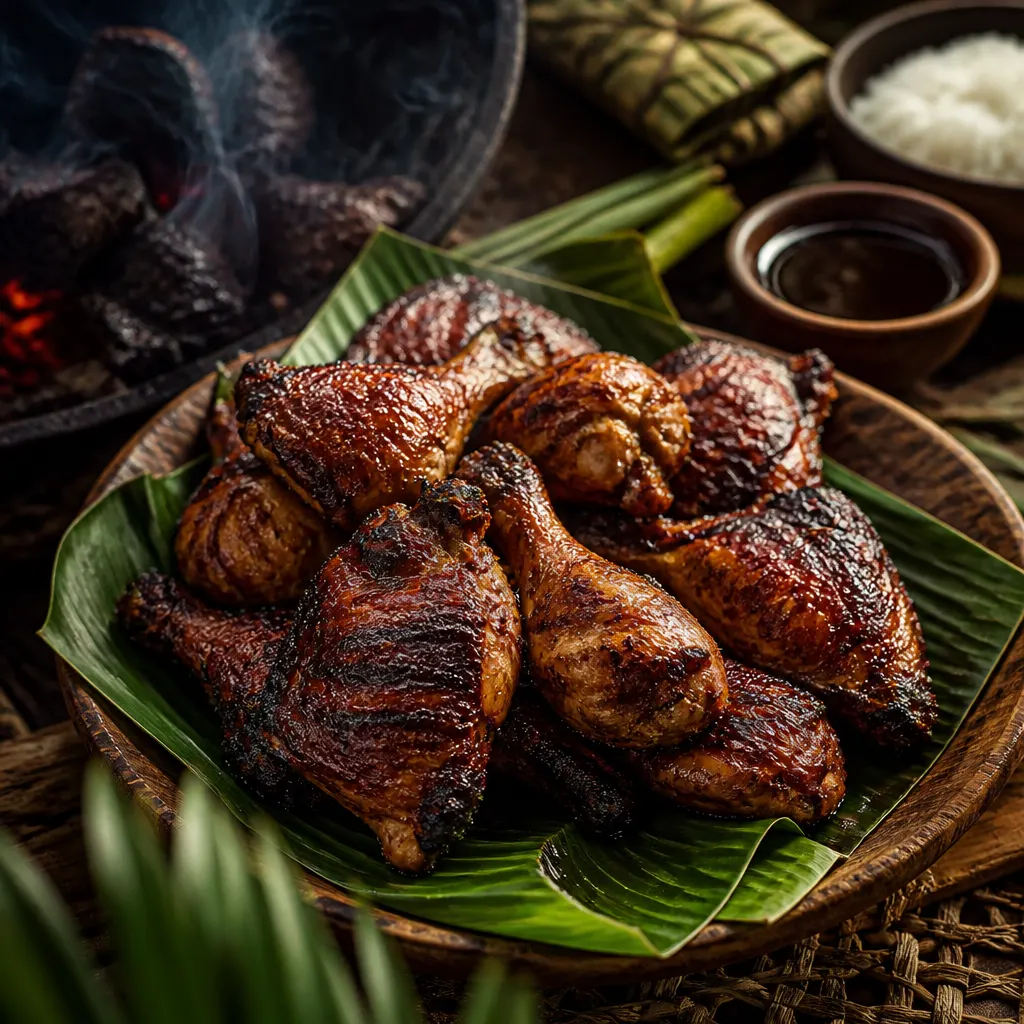
Smoked Shoyu Chicken
Shoyu chicken is Hawaiian comfort food (shoyu is the local word for soy sauce). It's normally braised, but smoking it first gives the dish a depth the stovetop version never has. Sweet, salty, garlicky, with a little ginger warmth. everyday-easy and endlessly crowd-pleasing.
Cook Mode
One step at a time, big text, timers, and your screen stays awake. 0/9 steps done.
Ingredients
Tap to tick off · 0/8 gathered
- — MAIN —
- — SHOYU MARINADE —
Method
- 10 min
In a large mixing bowl, whisk together 0.75 cup soy sauce, 0.333 cup brown sugar, 0.25 cup water, 2 tbsp grated ginger, 5 smashed cloves of garlic, 2 chopped scallions, and 1 tsp sesame oil until the sugar crystals are completely dissolved. It is vital to measure out and reserve 0.5 cup of this clean marinade into a separate container now. This reserved portion will become your food-safe glaze later, ensuring you don't contaminate your final sauce with raw poultry pathogens.
Why it matters
Reserving clean marinade ensures a food-safe glaze and prevents cross-contamination from the raw chicken.
Common mistake
Using marinade that has touched raw meat to glaze the finished product without boiling it first.
- 24h
Place 3.5 lbs of bone-in chicken thighs and drumsticks into a heavy-duty vacuum seal bag or a gallon-sized zip-top bag and pour in the remaining (non-reserved) marinade. Seal the bag tightly, ensuring all air is removed so the liquid is in direct contact with every surface of the meat. Place the bag in the freezer for at least 24 hours; as ice crystals form, they will rupture the muscle fibers, allowing the soy and ginger to penetrate deep into the bone once thawed.
Why it matters
Freezing the meat in the marinade uses ice crystal formation to pull flavor deeper into the tissue than standard soaking.
Common mistake
Using a weak bag that leaks during the freezing process or failing to remove the air pockets.
- 2h
Transfer the frozen chicken to the refrigerator 24 hours before your cook to thaw safely. Once thawed, remove the chicken from the bag, discard the liquid, and pat the skin partially dry with paper towels. Arrange the pieces on a wire rack over a baking sheet and return to the fridge for 2 hours. This air-drying creates a 'pellicle,' a slightly tacky surface that allows the guava smoke to adhere better to the soy-stained skin for a deeper color.
Why it matters
The pellicle acts as a biological 'glue' for smoke particles, preventing a muddy or washed-out appearance.
Common mistake
Smoking wet chicken straight from the marinade, which results in rubbery skin and poor smoke adhesion.
- 275°F30 min
Preheat your smoker to a steady 275°F using guava wood for traditional Hawaiian flavor, or apple wood as a high-quality fruitwood substitute. Clean your grates thoroughly and wait for the exhaust to transition from thick white 'dirty' smoke to a thin, translucent blue tint. Removing the chicken from the fridge 20 minutes prior to this step helps narrow the temperature gap, ensuring the meat doesn't spend too much time in the 40-140°F danger zone.
Why it matters
Clean blue smoke provides a sweet aroma, whereas thick white smoke deposits bitter creosote on the sugar-rich marinade.
Common mistake
Loading the meat while the fire is still producing heavy, acrid white smoke.
- 275°F1h 15m
Place the chicken on the grates with at least 1 inch of clearance between each piece to ensure even airflow and heat convection. Close the lid and smoke for approximately 75 minutes. During this time, the sugars in the soy sauce will begin to caramelize, and the guava smoke will darken the skin to a deep mahogany. Use a high-quality meat probe to monitor the thickest part of the thigh, aiming for an initial target of 165°F.
Why it matters
Maintaining a steady 275°F ensures the fat in the thighs renders properly while the skin crisps slightly.
Common mistake
Opening the lid frequently to check the chicken, which causes temperature swings and stalls the cook.
- 165°F15 min
While the chicken smokes, take the 0.5 cup of reserved clean marinade and simmer it in a small saucepan over medium-low heat. Reduce the liquid by half until it achieves a syrupy viscosity that coats the back of a spoon. Once the chicken hits an internal temperature of 165°F, use a silicone brush to paint the reduction onto each piece. The high sugar content will set quickly in the 275°F environment, creating a professional, glossy competition-style finish.
Why it matters
Reducing the glaze concentrates the umami and sugar, providing the 'kick' of flavor needed to cut through the smoke.
Common mistake
Boiling the glaze too hard or too long, which results in a bitter, burnt sugar taste.
- 175°F15 min
Continue smoking until the internal temperature reaches 175°F. For dark meat poultry, this higher temperature is necessary to break down tough connective tissues and collagen, resulting in a 'bite-through' texture rather than a rubbery one. Remove the chicken promptly once 175°F is registered on your instant-read thermometer, as the temp will continue to rise slightly during the rest phase due to carryover heat.
Why it matters
Dark meat is safer and has a better texture when cooked to 175°F compared to white meat which dries out at that temp.
Common mistake
Pulling the chicken at 165°F, which leaves the thigh meat stringy and pink near the bone.
- 10 min
Transfer the glazed chicken to a warm platter and let it sit uncovered for 10 minutes. This pause allows the internal pressure of the meat to equalize and the juices to redistribute from the center back toward the surface. If you cut into the chicken immediately, the moisture will purge onto the plate, leaving the meat dry despite the high internal temperature.
Why it matters
Resting prevents juice loss, ensuring the first bite is succulent and the glaze stays tacky on the skin.
Common mistake
Tenting too tightly with foil, which steams the skin and ruins the glossy texture of the glaze.
- 5 min
Serve the chicken over a generous bed of steamed white rice, which will soak up any remaining glaze. Drizzle any leftover reduction from the saucepan directly over the meat. For an authentic Hawaiian presentation, garnish with fresh scallions. Ensure the chicken is served while still above 140°F to maintain the best mouthfeel of the fat and glaze.
Why it matters
The rice acts as a palate for the sweet and salty sauce, balancing the intensity of the shoyu.
Common mistake
Serving the chicken cold, which causes the sesame oil and rendered fats to congeal unpleasantly.
Sauce It
Cooks & Reviews
Guild members can rate this recipe, log their cooks and share photos.
Sign in to continueMember reviews
No reviews yet — be the first to rate this cook.
Ask the Pitmaster about this recipe
Substitutions, scaling, technique, troubleshooting — get answers grounded in this cook.
Sign in to try the AI Pitmaster on Smoked Shoyu Chicken. New members get 3 free questions.
Sign in to tryComments(0)
Loading comments…