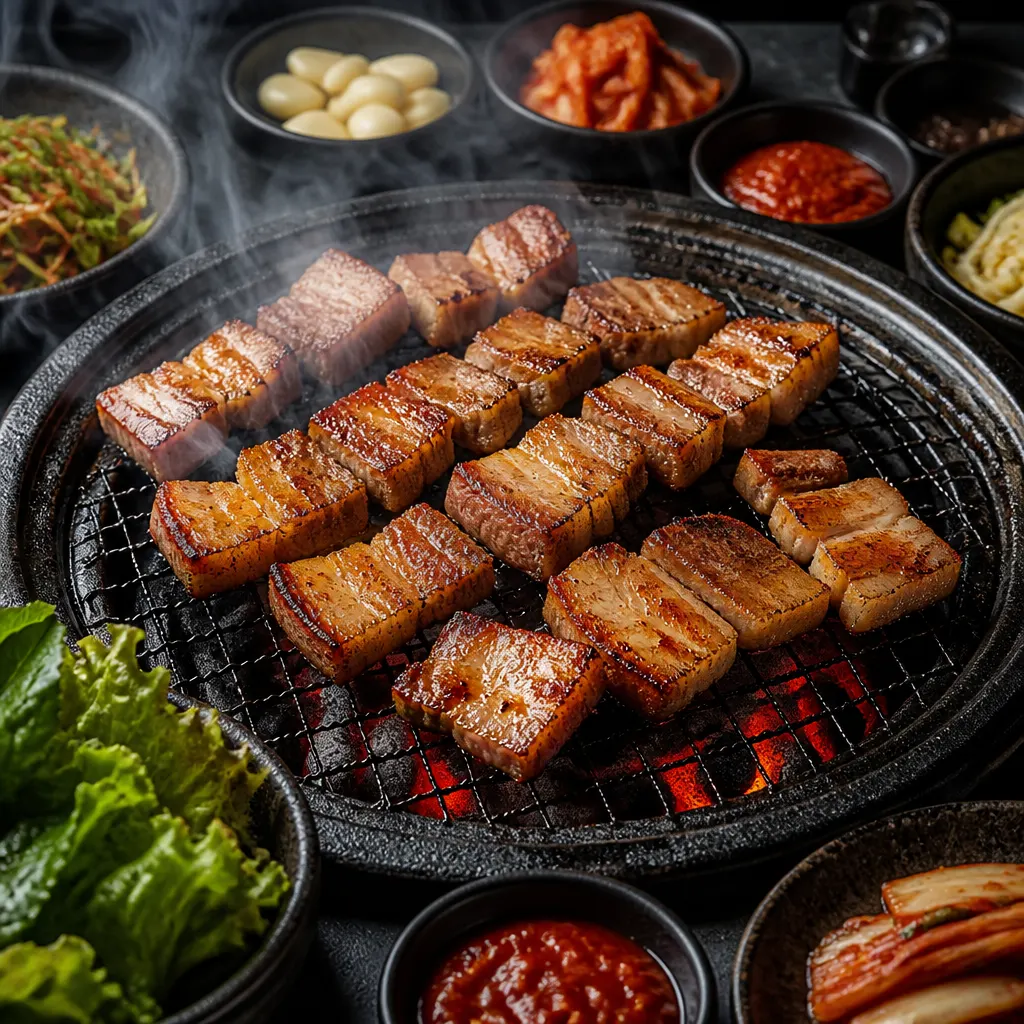
Smoked Samgyeopsal (Pork Belly)
Korea's beloved grilled pork belly — traditionally unseasoned, with the ritual built around grilling thick slices at the table and wrapping in lettuce with garlic, ssamjang, and kimchi. Smoking thick-cut belly slow renders the fat beautifully before a final crisping sear.
Cook Mode
One step at a time, big text, timers, and your screen stays awake. 0/7 steps done.
Ingredients
Tap to tick off · 0/7 gathered
Method
- 20 min
Begin with 2.5 lbs of thick-cut pork belly slices, ensuring they are at least 1/2 inch thick to withstand the two-stage cooking process. Lay the slices flat on a wire rack over a rimmed sheet pan and apply 1 tbsp of coarse salt evenly across all sides. This salt isn't just for flavor; it draws moisture to the surface to dissolve the grains before reabsorbing into the muscle fibers, effectively dry-brining the pork to ensure the interior remains seasoned and juicy during the fat-rendering phase.
Why it matters
The brine equilibrates moisture and seasons through the flesh; skipping it gives you dry, bland pork.
Common mistake
Using table salt instead of coarse salt, which leads to over-salting the exterior.
- 10 min
While the meat brines, construct the ssamjang by mixing 2 tbsp doenjang, 1 tbsp gochujang, 1 tsp sesame oil, and one clove of minced garlic until the mixture is uniform and shiny. The fermentation in the doenjang provides the deep umami base required to cut through the heavy lipids of the belly. Ensure the garlic is minced into a paste-like consistency to avoid biting into raw chunks, allowing the oils to meld into the fermented bean paste.
Why it matters
A well-emulsified sauce provides a consistent flavor profile that balances the salt, sweet, and funk essential to Korean BBQ.
Common mistake
Using only gochujang, which makes the sauce too sweet and spicy without the necessary savory depth of doenjang.
- 250°F30 min
Set your smoker to a stable 250°F using indirect heat. Select apple or cherry wood chunks; fruitwoods provide a light, sweet smoke profile that enhances the natural sweetness of the pork fat without the bitter creosote risk of heavier woods like hickory. Ensure your grates are scrubbed clean and lightly oiled. This step is critical because Samgyeopsal lacks a heavy spice rub to act as a barrier, making the meat prone to sticking to dirty grates.
Why it matters
Proper fire management ensures a clean blue smoke that seasons the meat rather than coating it in soot.
Common mistake
Failing to use an indirect setup, which causes pork fat to drip onto coals and create bitter, acrid flare-ups.
- 165°F2h
Arrange the salted pork belly slices on the grates, ensuring at least one inch of space between each piece for maximum airflow. Smoke until the internal temperature reaches 165°F and the fat begins to transition from opaque white to a translucent, golden hue. At this stage, you are looking for the 'wiggle'—the meat should be tender and the fat soft to the touch, indicating that the connective tissues have begun to break down and the fat has successfully rendered.
Why it matters
Smoking to this temperature safely bypasses the 40-140°F danger zone while preparing the texture for the final sear.
Common mistake
Pulling the meat too early before the fat has softened, resulting in a rubbery, chewy bite.
- 200°F5 min
Transfer the par-cooked belly to a screaming-hot cast iron skillet or the direct-heat side of your grill. Sear for 1-2 minutes per side until the edges are dark mahogany and the surface is bubbling and crisp. This high-heat finish triggers the Maillard reaction, creating complex flavor compounds and a crunchy texture that contrasts the soft, smoked interior. Watch closely; the high fat content means the meat can go from perfectly charred to burnt in seconds.
Why it matters
The sear provides the essential crisp texture that defines authentic samgyeopsal.
Common mistake
Crowding the pan during the sear, which drops the temperature and steams the meat instead of crisping it.
- 205°F5 min
Place the seared strips on a cutting board and allow them to rest. During this time, carryover cooking will finish the rendering process and allow the internal juices—liquefied fats and moisture—to redistribute through the muscle fibers. If you cut immediately, the hot fat will run out, leaving the pork dry and the crust soggy. The internal temperature will likely peak around 200-205°F during this rest.
Why it matters
A brief rest prevents the loss of rendered fat and maintains the integrity of the crisp exterior.
Common mistake
Resting for too long, which causes the rendered fat to congeal and lose its silky mouthfeel.
Using sharp kitchen shears, cut the long strips into 1-inch bite-sized squares. Arrange on a platter alongside cleaned lettuce and perilla leaves, sliced raw garlic, green chilis, kimchi, and the ssamjang. Instruct guests to assemble 'Ssam' (wraps) by layering a leaf, a small amount of steamed rice, a piece of pork, and the aromatics. This communal style ensures every bite is balanced between the hot, rich pork and the cold, crisp, acidic accompaniments.
Why it matters
Proper portioning and the addition of acidic elements like kimchi are necessary to cut the richness of the belly.
Common mistake
Slicing the meat too thin, which causes it to lose its textural contrast inside the wrap.
Sauce It
Cooks & Reviews
Guild members can rate this recipe, log their cooks and share photos.
Sign in to continueMember reviews
No reviews yet — be the first to rate this cook.
Ask the Pitmaster about this recipe
Substitutions, scaling, technique, troubleshooting — get answers grounded in this cook.
Sign in to try the AI Pitmaster on Smoked Samgyeopsal (Pork Belly). New members get 3 free questions.
Sign in to tryComments(0)
Loading comments…