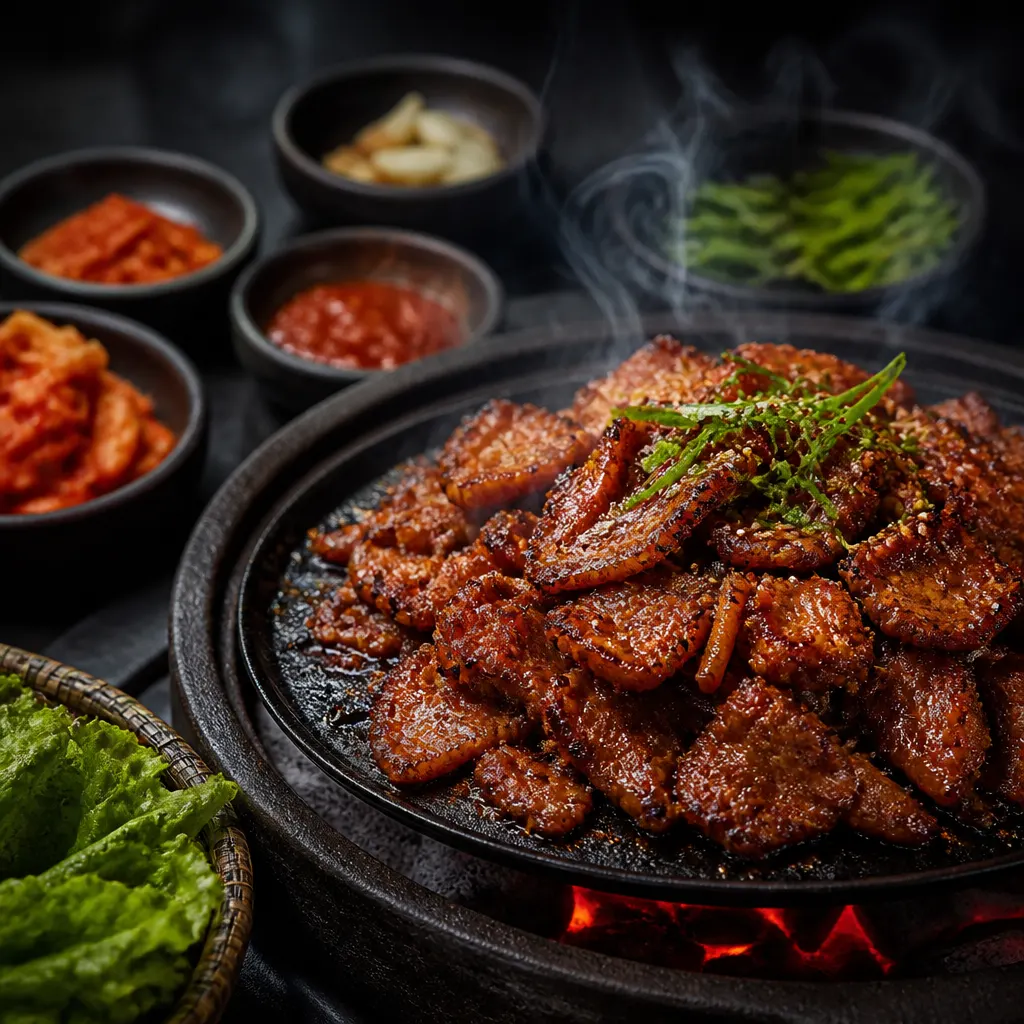
Smoked Pork Bulgogi
Korea's everyday favorite — thin pork slices in a gochujang-and-garlic marinade that's sweet, savory, and gently fiery. Smoking dwaeji bulgogi adds a layer the fast stir-fry version never has. Pile it into lettuce wraps with rice and ssamjang.
Cook Mode
One step at a time, big text, timers, and your screen stays awake. 0/8 steps done.
Ingredients
Tap to tick off · 0/10 gathered
Method
- 15 min
Mix 3 tbsp Gochujang, 2 tbsp soy sauce, 2 tbsp brown sugar, and 1 tbsp Gochugaru in a large bowl. Incorporate 2 tbsp toasted sesame oil, 6 cloves of grated garlic, 1 tbsp grated ginger, and 0.5 grated onion plus 3 chopped scallions. The grated onion contains proteolytic enzymes that tenderize the dense 2 lbs of pork shoulder, while the sugars and oil create a tacky surface for smoke to latch onto. Whisk until the gochujang is fully emulsified and the sugar is dissolved to ensure consistent caramelization later.
Why it matters
Enzymatic tenderization from the onion and garlic is essential for making tough pork shoulder thin-slice friendly.
Common mistake
Leaving gochujang clumps which lead to bitter, burnt spots on the meat.
- 40°F12h
Work the 1/4 inch thin slices of pork shoulder into the marinade one by one. It is critical to coat every surface area of the 2 lbs of meat to prevent 'shingling,' where slices stick together and stay gray/unseasoned. Cover and refrigerate for 4 to 12 hours. During this phase, salt and enzymes migrate into the protein fibers, seasoning the meat deeply rather than just sitting on the surface.
Why it matters
Time-sensitive curing allows the marinade to move past the surface and break down connective tissue.
Common mistake
Dumping the meat in as a single cold block, resulting in unevenly seasoned and pale pork.
- 30 min
Remove the pork from the refrigerator and lay the slices out on a perforated grill tray or mesh mat. Let them sit in a cool, ventilated area or in front of a fan for 20-30 minutes until the marinade looks shiny and feels tacky to the touch. This 'pellicle' is a protein film that acts as a magnet for smoke particles; without it, the smoke will roll off the moist meat instead of' adhering to it.
Why it matters
The pellicle ensures the smoke flavor is absorbed into the marinade glaze rather than just washing off.
Common mistake
Putting wet, freshly marinated meat directly into the smoker, which leads to a localized 'steam' effect and poor smoke penetration.
- 275°F20 min
Preheat your smoker to a steady 275°F using apple or cherry wood. These fruitwoods provide a mild, sweet smoke profile that complements the gochujang without overpowering the delicate sesame and ginger notes. Ensure your fire is burning clean with 'blue smoke'—white, billowy smoke will turn the sugars in the marinade bitter. Position your perforated tray in the center of the cook chamber for maximum air circulation around each slice.
Why it matters
Stable temps and clean smoke are required to prevent the high sugar content in the marinade from scorching.
Common mistake
Using heavy woods like mesquite which can turn this thin-sliced dish acrid quickly.
- 145°F50 min
Smoke the pork slices for approximately 45-50 minutes. You are looking for a transition from bright red to a deep, mahogany glaze. Because these are thin slices, we are moving quickly through the 40-140°F danger zone to ensure food safety while allowing enough time for the fat in the shoulder to render. Monitor the internal temperature of the thickest slices until they hit 145°F, and look for the scallions to soften into the glaze.
Why it matters
Reaching 145°F ensures the pork is safe while the temperature remains low enough to keep the sugars from burning.
Common mistake
Overcooking past 150°F during the smoke phase, which leaves the meat too dry for the final sear.
- 2 min
If your smoker has a searing zone or you have a hot grill ready, flash-sear the slices for 30 seconds per side. This 'fire meat' (bulgogi) technique uses high heat to trigger the Maillard reaction on the sugars and gochujang, creating the signature charred edges. This step is about texture and aroma, transforming the tacky marinade into a crisp, caramelized bark.
Why it matters
The high-heat finish provides the essential 'wok-hei' or char flavor that defines authentic Korean BBQ.
Common mistake
Walking away during the sear; the high sugar content will turn to carbon in seconds.
- 10 min
Transfer the charred pork to a warm plate and tent loosely with foil. Let the meat rest for 5 to 10 minutes. During this time, carryover cooking will slightly increase the temperature, and the muscle fibers will relax, reabsorbing the moisture. This ensures that when the guest bites into the lettuce wrap, the juices stay in the meat rather than running out onto the plate.
Why it matters
Resting prevents the thin slices from becoming tough and dry immediately after the heat is removed.
Common mistake
Slicing or serving immediately, which causes the valuable umami-rich juices to be lost.
Serve the smoked bulgogi family-style with cold, crisp lettuce leaves, steamed rice, and ssamjang. Educate your guests on the 'ssam' technique: layering meat and rice into a leaf to create a temperature and texture contrast. The smoky, warm pork should be the star, set against the refreshingly cold greens. Ensure the meat is piled high to retain its communal heat during the meal.
Why it matters
The contrast between the hot, smoky pork and cold greens is the hallmark of the bulgogi experience.
Common mistake
Serving without enough greens, which causes the rich, spicy pork to become palate-fatiguing.
Sauce It
Cooks & Reviews
Guild members can rate this recipe, log their cooks and share photos.
Sign in to continueMember reviews
No reviews yet — be the first to rate this cook.
Ask the Pitmaster about this recipe
Substitutions, scaling, technique, troubleshooting — get answers grounded in this cook.
Sign in to try the AI Pitmaster on Smoked Pork Bulgogi. New members get 3 free questions.
Sign in to tryComments(0)
Loading comments…