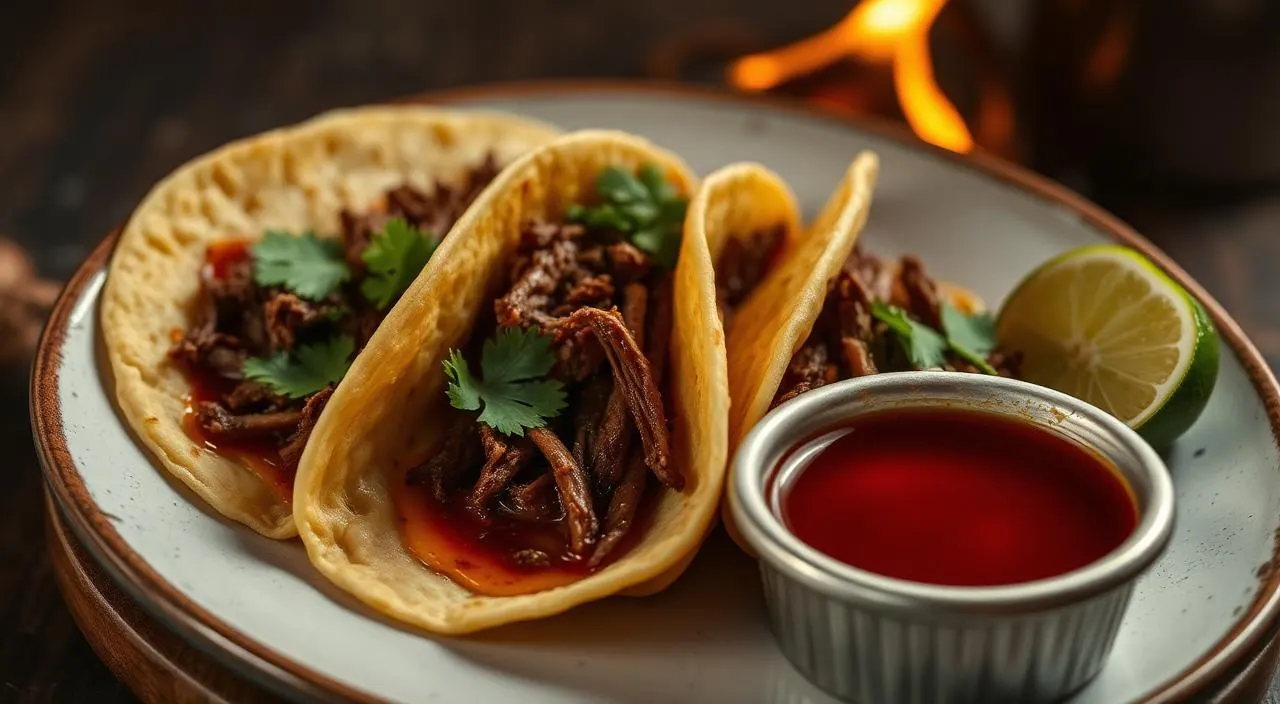
Smoked Picanha Birria Tacos
Brazilian cut meets Mexican technique. The picanha gets a full smoke then goes into a guajillo-and-árbol consommé for a braise that creates the dipping broth. The drippings go back into the consommé. Nothing gets wasted.
Cook Mode
One step at a time, big text, timers, and your screen stays awake. 0/8 steps done.
Ingredients
Tap to tick off · 0/19 gathered
- — SMOKED PICANHA —
- — BIRRIA CONSOMMÉ —
- — TACOS —
Method
- 15 min
Begin by prepping the 3 lb picanha (sirloin cap). Using a sharp knife, score the thick fat cap in a 1-inch crosshatch pattern, cutting just through the fat to the meat's surface but not into the muscle. This increases the surface area for salt penetration and allows the fat to render effectively during the initial smoke. Combine 2 tbsp coarse salt and 1 tbsp black pepper, then season the entire roast aggressively on all sides. The coarse salt is essential for creating the osmotic pressure needed to draw moisture out and then pull the seasoning deep into the fibers.
Why it matters
Scoring the fat cap prevents the meat from curling and ensures the seasoning reaches the muscle through the protective fat layer.
Common mistake
Cutting too deep into the meat which causes moisture to escape during the initial smoke phase.
- 250°F2h 30m
Preheat your smoker to 250°F using oak pellets for a robust, traditional flavor profile. Place the picanha directly on the grates fat-cap-up. This orientation allows the rendering fat to baste the meat as it heats. Smoke the beef until it reaches an internal temperature of 165°F. This typically takes 120 to 150 minutes. At this stage, you are looking for a mahogany-colored bark and ensuring the meat passes through the 40-140°F danger zone efficiently to prevent bacterial growth while absorbing maximum nitric oxide for a smoke ring.
Why it matters
The 165°F target ensures the bark is set and the meat has absorbed enough smoke before it is submerged in liquid.
Common mistake
Using a 'dirty' smoldering fire which deposits bitter creosote on the fat cap instead of clean blue smoke.
- 25 min
While the beef smokes, heat a dry skillet over medium-high heat. Toast 4 dried guajillo chiles and 3 dried árbol chiles for 30 seconds per side until fragrant but not burnt. Transfer to a bowl and cover with 1 cup of boiling water for 20 minutes. The guajillo provides color and earthiness, while the árbol provides heat. Softening the skins is mandatory for a smooth consommé; unhydrated skins will leave a gritty, 'plastic' texture in the final dipping broth.
Why it matters
Toasting wakes up the volatile oils in the chiles, providing a much deeper flavor than raw dried peppers.
Common mistake
Burning the chiles, which introduces a lasting bitterness that the beef broth cannot mask.
- 10 min
In a blender, combine the softened chiles and their soaking liquid with 6 cloves garlic, 1 chopped white onion, 2 halved roma tomatoes, 2 cups beef broth, 1 tsp cumin, 1 tsp oregano, and 0.5 tsp cinnamon. Blend on high until completely liquefied. Crucially, pass this mixture through a fine-mesh strainer into a bowl, discarding the pulp. This ensures the 'consommé' is a true sipping broth rather than a thick sauce, allowing the beef fat to separate cleanly later for frying.
Why it matters
A strained broth allows for better fat separation, which is the key to that signature red 'liquid gold' used for the tortillas.
Common mistake
Skipping the straining step, resulting in a chunky sauce that makes the tacos soggy instead of crispy.
- 250°F3h
Once the picanha hits 165°F, transfer it to a large Dutch oven. Pour the strained consommé over the meat until it reaches halfway up the sides. Cover tightly with a lid or double foil. Maintaining a tight seal is vital to create a high-humidity environment that breaks down the collagen in the sirloin cap. Return the pot to the smoker or an oven. The liquid will now begin to braise the meat, softening the fibers that the dry smoke would otherwise toughen.
Why it matters
Braising converts tough connective collagen into gelatin, changing the picanha from a steak texture to a shreddable taco filling.
Common mistake
Using a loose-fitting lid, which allows the braising liquid to evaporate and may lead to scorched meat.
- 205°F1h
Continue cooking until the internal temperature reaches 203°F-205°F. At this point, use a meat probe to check for 'probe tenderness'—it should feel like pushing a needle through room-temperature butter. The fat cap should be completely translucent and gelatinous. This temperature range is the sweet spot where the muscle fibers separate easily but haven't yet turned to mush. Ensure the internal temp stays above 140°F during the entire transition to ensure food safety.
Why it matters
Specific internal temperatures are required to ensure the chemical breakdown of the beef's structure is complete.
Common mistake
Pulling the meat too early (at 190°F) because it 'looks' done, resulting in rubbery beef that won't shred.
- 20 min
Remove the Dutch oven from the heat but keep it covered for 20 minutes. This rest allows the muscle fibers to reabsorb some of the seasoned consommé, preventing the beef from drying out the moment you shred it. Once rested, lift the beef out. Use a spoon to skim the red oil (seasoned beef fat) off the top of the liquid and reserve it in a small bowl. This fat is necessary for the Maillard reaction on the griddle to produce the 'quesabirria' crust.
Why it matters
Resting prevents the 'steam-off' effect where all the internal moisture evaporates as soon as you shred the hot meat.
Common mistake
Discarding the surface fat, which is the most flavorful part of the entire cook.
- 15 min
Shred the beef and season with more salt if needed. Dip a corn tortilla into the reserved red fat, then place it on a medium-high griddle. Add Oaxacan cheese and the shredded picanha. Fold and fry for 2 minutes per side until the shell is crispy and stained deep orange. Serve with ramekins of the hot, strained consommé topped with fresh cilantro and diced onion. The tacos must be served immediately to maintain the contrast between the crispy shell and the succulent, braised meat.
Why it matters
The dipping fat acts as a heat conductor on the griddle, frying the tortilla in the beef's own essence.
Common mistake
Overcrowding the griddle, which drops the temperature and steams the tortillas instead of frying them.
Sauce It
Cooks & Reviews
Guild members can rate this recipe, log their cooks and share photos.
Sign in to continueMember reviews
No reviews yet — be the first to rate this cook.
Ask the Pitmaster about this recipe
Substitutions, scaling, technique, troubleshooting — get answers grounded in this cook.
Sign in to try the AI Pitmaster on Smoked Picanha Birria Tacos. New members get 3 free questions.
Sign in to tryComments(0)
Loading comments…