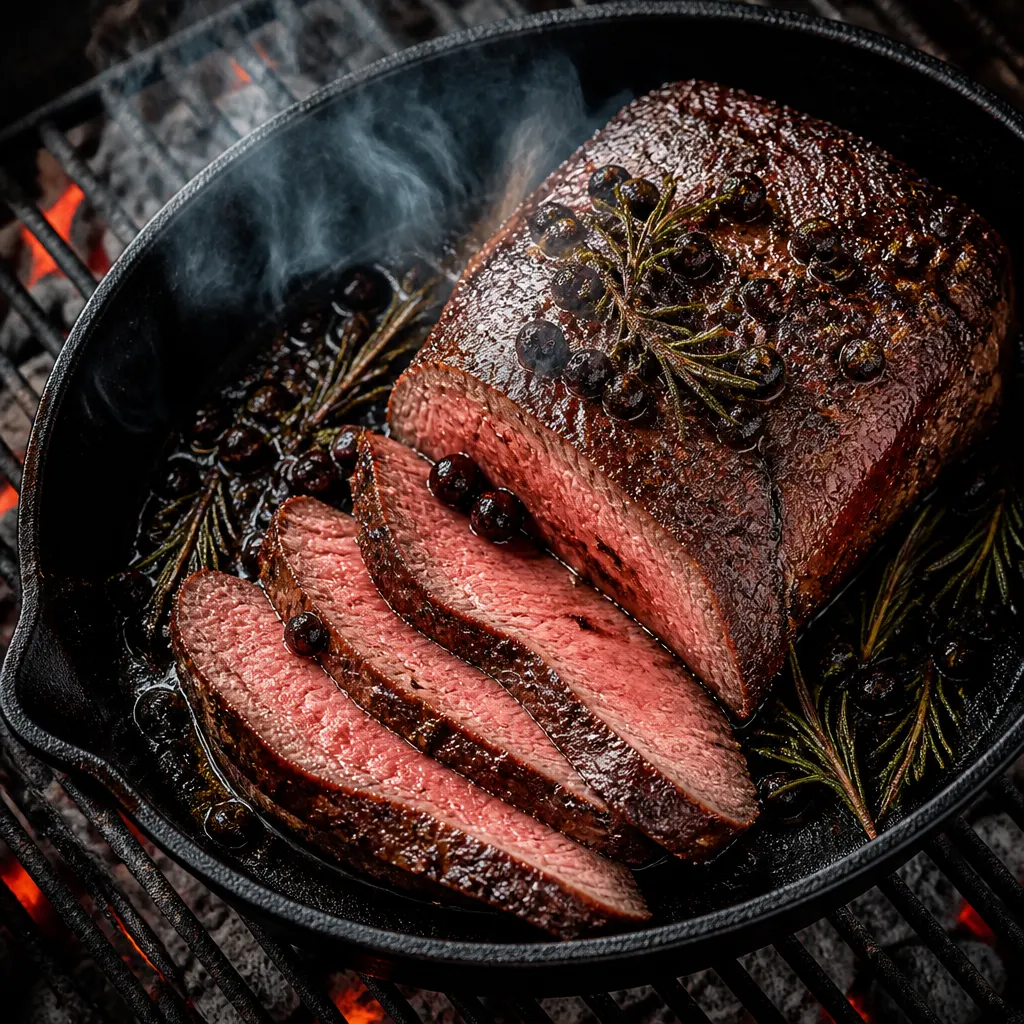
Smoked Ostrich Fillet with Red Wine & Juniper
Ostrich is one of South Africa's signature meats, farmed for over a century around Oudtshoorn in the Klein Karoo. Deep red, ultra-lean, eats like the finest beef but dries out in a heartbeat — pull early at medium-rare.
Cook Mode
One step at a time, big text, timers, and your screen stays awake. 0/7 steps done.
Ingredients
Tap to tick off · 0/11 gathered
Method
- 15 min
In a heavy-duty vacuum-seal bag or non-reactive bowl, whisk together 1.0 cup dry red wine, 0.25 cup olive oil, 4 crushed garlic cloves, 2.0 tbsp crushed juniper berries, 2.0 rosemary sprigs, 1.0 tbsp brown sugar, 1.0 tbsp salt, and 1.0 tsp coarse black pepper. Using a mortar and pestle to crush the juniper and garlic is non-negotiable; this mechanical action releases essential oils and creates a paste that deeply seasons the 2.0 lbs of ostrich fillets. The acidity in the wine helps relax the tight muscle fibers of this ultra-lean game bird, while the sugar encourages a more robust Maillard reaction during the eventual sear.
Why it matters
The marinade provides the only fat and moisture buffer for this exceptionally lean protein.
Common mistake
Neglecting to crush the juniper berries, which results in a faint, floral flavor rather than deep, piney aromatics.
- 12h
Submerge the fillets completely in the marinade and refrigerate for 8 to 12 hours, turning once halfway through to ensure the salt and aromatics penetrate all sides. After the marination period, remove the meat and pat it meticulously dry with paper towels; moisture on the surface is the enemy of smoke adhesion and crust formation. Once dry, let the fillets sit on a wire rack at room temperature for 45 to 60 minutes to take the chill off, which helps the internal temperature rise faster through the 40–140°F danger zone once it hits the smoker.
Why it matters
Surface moisture causes the meat to steam rather than smoke, preventing the formation of a proper crust.
Common mistake
Placing ice-cold meat directly into the smoker, which leads to uneven cooking and a 'grey ring' under the surface.
- 225°F30 min
Preheat your smoker to a steady 225°F using oak as your primary fuel and a small piece of fruit wood, such as cherry or apple, for an accent. Pre-warm your wood chunks on the firebox for 5 minutes before adding them to ensure a clean, blue-smoke burn rather than thick, white, acrid smoke. This combination of wood provides a robust backbone that stands up to the gamey notes of the ostrich while adding a slight sweetness and mahogany color to the exterior.
Why it matters
Clean smoke management prevents the bitter creosote flavor that easily ruins delicate, lean proteins.
Common mistake
Using mesquite or too much hickory, which will completely overwhelm the natural flavor of the ostrich.
- 120°F1h 15m
Place the fillets on the indirect side of the grate, ensuring ample space between the pieces for the air to circulate. Insert a digital probe into the thickest part of the largest fillet and smoke until the internal temperature reaches 115–120°F. Because ostrich lacks intramuscular fat, it transitions from perfect to overdone in a matter of minutes; monitor the temp closely as it will likely take 60 to 90 minutes. This gentle rise in temperature ensures edge-to-edge pink doneness without the aggressive temperature gradient of high-heat roasting.
Why it matters
Gentle heat prevents the lean proteins from contracting too quickly and squeezing out essential moisture.
Common mistake
Relying on time rather than internal temperature, leading to dry, rubbery meat.
- 125°F5 min
Remove the meat when it hits 120°F and set aside while you crank your heat source to 600°F+. Once the pan or grill is screaming hot, add butter and sear each fillet for only 60–90 seconds per side. Use a spoon to continuously baste the meat with the melting butter as it sears; this adds a final layer of richness that mimics the fat ostrich lacks. Pull the fillets the moment the internal temperature hits 125°F to ensure a final finish in the medium-rare range after carryover.
Why it matters
The high-heat sear triggers the Maillard reaction for a deep, savory crust without overcooking the center.
Common mistake
Searing for too long at a lower temperature, which overcooks the interior while chasing a crust.
- 130°F10 min
Transfer the seared fillets to a warm plate and let them rest for at least 10 minutes. During this phase, the internal juices that were pushed to the center by the heat of the sear will redistribute back through the fibers, ensuring the meat stays succulent when sliced. Total carryover cooking should bring the final internal temperature to approximately 130°F, the sweet spot for ostrich texture and flavor.
Why it matters
Cutting immediately after the sear causes all the juices to run out, leaving the lean meat dry.
Common mistake
Tenting the meat too tightly with foil, which steams the crust and ruins the texture you just built.
- 5 min
Identify the direction of the muscle fibers and slice the fillets thinly against the grain. This shortens the fibers and provides a much more tender mouthfeel. Arrange the slices on a platter and finish with a generous sprinkle of flaky salt to brighten the earthy juniper and smoke notes. Serve immediately alongside a red wine reduction or the remaining herb butter from the searing pan.
Why it matters
Slicing against the grain is mandatory for lean game meats to ensure they remain easy to chew.
Common mistake
Slicing with the grain, which creates a stringy and tough eating experience regardless of how well it was cooked.
5 more steps locked
You've seen the ingredients and the first two steps. Pit Members get every step, every temp, every glaze — plus the Cook Monitor and Pitmaster AI.
See Membership OptionsAlready a member? Sign in.
Cooks & Reviews
Guild members can rate this recipe, log their cooks and share photos.
Sign in to continueMember reviews
No reviews yet — be the first to rate this cook.
Ask the Pitmaster about this recipe
Substitutions, scaling, technique, troubleshooting — get answers grounded in this cook.
Sign in to try the AI Pitmaster on Smoked Ostrich Fillet with Red Wine & Juniper. New members get 3 free questions.
Sign in to tryComments(0)
Loading comments…