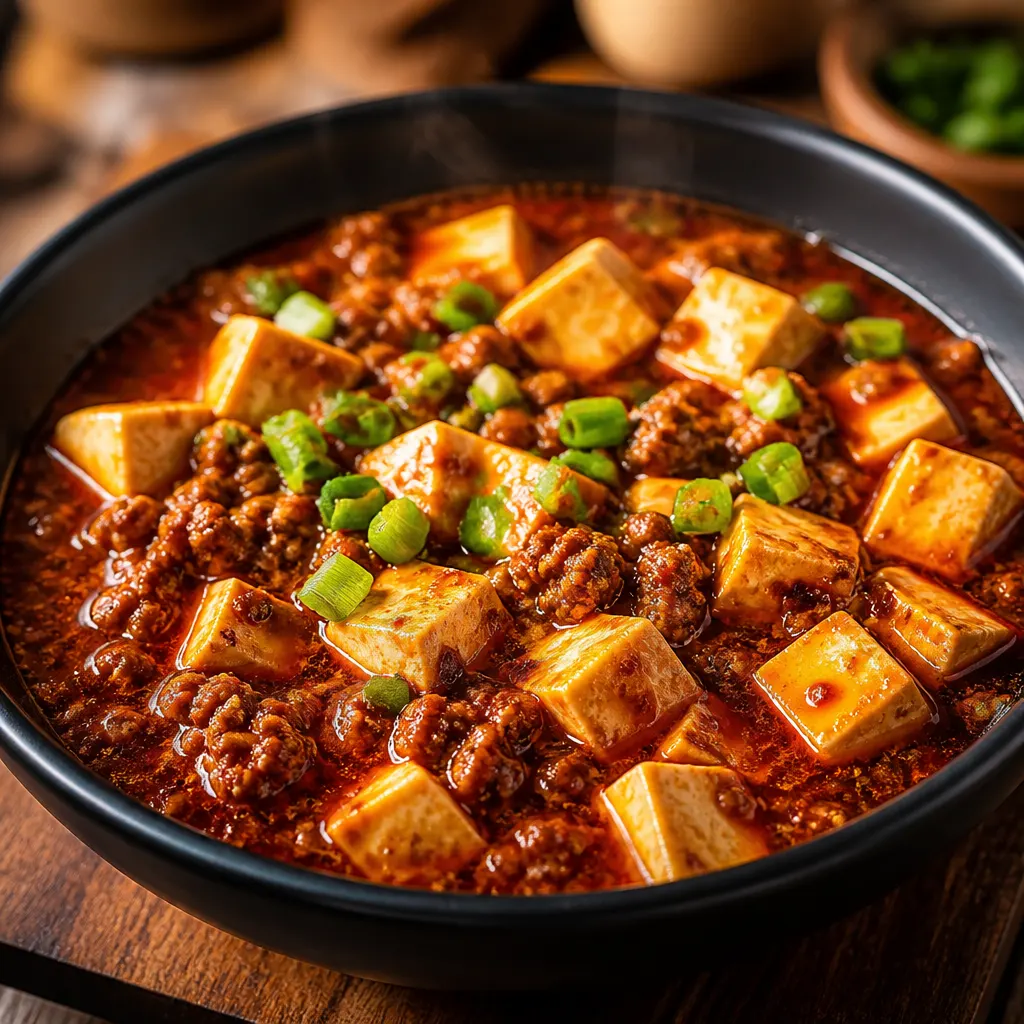
Smoked Mapo Tofu
Mapo tofu is Sichuan's most famous dish, silky tofu in a fiery, numbing sauce of doubanjiang (fermented chili-bean paste), Sichuan peppercorns, and ground pork. Smoking the tofu before it goes into the sauce gives it a firmer texture and a smoky backbone that stands up to all that spice. It delivers the signature ma-la (numbing-spicy) punch with an extra dimension. A bold, genuinely Sichuan way to bring smoke to an everyday.
Cook Mode
One step at a time, big text, timers, and your screen stays awake. 0/7 steps done.
Ingredients
Tap to tick off · 0/12 gathered
Method
- 15 min
Begin by draining two blocks of soft or medium tofu and cutting them into 1-inch cubes. Place the cubes on a clean kitchen towel or paper towels for 15 minutes to remove excess exterior moisture. This prep is vital for texture; if the tofu is too wet, the smoke will not adhere, and the cubes will remain too fragile for the wok. Handling the tofu with care at this stage prevents the structural failure common with soft varieties.
Why it matters
Removing surface moisture is the only way to ensure the smoke penetrates the protein rather than just steaming it.
Common mistake
Using extra-firm tofu, which lacks the silky mouthfeel required for authentic Mapo Tofu.
- 225°F35 min
Preheat your smoker to 225°F using apple wood pellets for a mild, fruity smoke profile that won't overwhelm the fermented bean notes. Arrange the 2 blocks of cubed tofu in a single layer on a greased perforated rack or fine mesh tray to ensure they don't fall through the grates. Smoke for 35 minutes until the tofu develops a pale golden hue and a slightly tacky surface. This step firms the protein's exterior, allowing it to withstand the 'Ma-La' braising process without disintegrating.
Why it matters
The low and slow smoke creates a 'skin' on the tofu that provides a unique texture contrast and a smoky backbone to the spice.
Common mistake
Smoking for too long, which can make the tofu rubbery and overly bitter.
- 5 min
While the tofu is smoking, place 1 tbsp of whole Sichuan peppercorns in a dry skillet over medium heat. Toast for 2-3 minutes, tossing constantly, until they are highly fragrant and slightly darkened. Immediately grind them into a fine powder using a mortar and pestle or spice grinder and set aside. Freshly toasting and grinding the peppercorns is non-negotiable for achieving the signature numbing sensation known as 'Ma'.
Why it matters
Pre-ground Sichuan pepper loses its aromatic oils and numbing potency almost immediately.
Common mistake
Burning the peppercorns, which introduces a harsh, acrid bitterness to the entire dish.
- 160°F10 min
In a wok or deep skillet over high heat, add 8 oz of ground pork, breaking it into small crumbles. Fry the meat in its own rendered fat until it is fully browned and slightly crispy, ensuring it reaches an internal safety temperature of 160°F. Add 2 tbsp of Doubanjiang and 1 tbsp of chopped fermented black beans. Stir-fry for 2 minutes specifically to 'fry the paste' until the oil turns a bright, translucent red and the raw fermented smell softens into a deep savory aroma.
Why it matters
Frying the Doubanjiang in fat is a classic Sichuan technique that unlocks fat-soluble flavors and color.
Common mistake
Adding liquid before the bean paste has properly fried, resulting in a thin, one-dimensional sauce.
- 212°F3 min
Reduce the heat to medium and stir in 3 cloves of minced garlic, 1 tbsp of grated ginger, and exactly half of your freshly ground Sichuan pepper. Sauté for 30 seconds until fragrant, being careful not to burn the garlic. Pour in 1 cup of stock (chicken or vegetable) and 1 tbsp of soy sauce to deglaze the pan. Bring the mixture to a slow, controlled simmer, creating the flavorful medium that will soon house the smoked tofu.
Why it matters
The hot liquid incorporates all the browned bits (fond) and creates a cohesive sauce base.
Common mistake
Boiling the sauce too vigorously, which can cause the delicate aromatics to dissipate.
- 5 min
Carefully slide the warm, smoked tofu cubes from the smoker rack into the simmering sauce. Use a gentle folding motion with the back of a ladle or spatula to coat the cubes without breaking them. Let the tofu simmer gently in the sauce for 5 minutes. This allows the porous, smoked exterior of the tofu to absorb the spicy red oil and the salt from the fermented beans, ensuring flavor reaches the center of every cube.
Why it matters
Braising bridges the gap between the clean smoke flavor and the intense Sichuan spice profile.
Common mistake
Aggressive stirring that shatters the tofu into unappealing mush.
- 2 min
Re-stir your cornstarch slurry (1 tbsp cornstarch mixed with 1 tbsp water) and slowly drizzle it into the pan while gently moving the tofu. The sauce should transform into a thick, glossy lacquer that clings to the meat and tofu. Once thickened, remove from heat and finish with 3 sliced scallions, the remaining Sichuan pepper, and a 1 tbsp drizzle of chili oil. This final addition of raw pepper and oil provides the 'punch' that characterizes competition-grade Mapo Tofu.
Why it matters
The slurry binds the oil and water components of the sauce, creating the correct mouthfeel.
Common mistake
Adding the slurry all at once, which can create gelatinous clumps in the sauce.
Sauce It
Cooks & Reviews
Guild members can rate this recipe, log their cooks and share photos.
Sign in to continueMember reviews
No reviews yet — be the first to rate this cook.
Ask the Pitmaster about this recipe
Substitutions, scaling, technique, troubleshooting — get answers grounded in this cook.
Sign in to try the AI Pitmaster on Smoked Mapo Tofu. New members get 3 free questions.
Sign in to tryComments(0)
Loading comments…