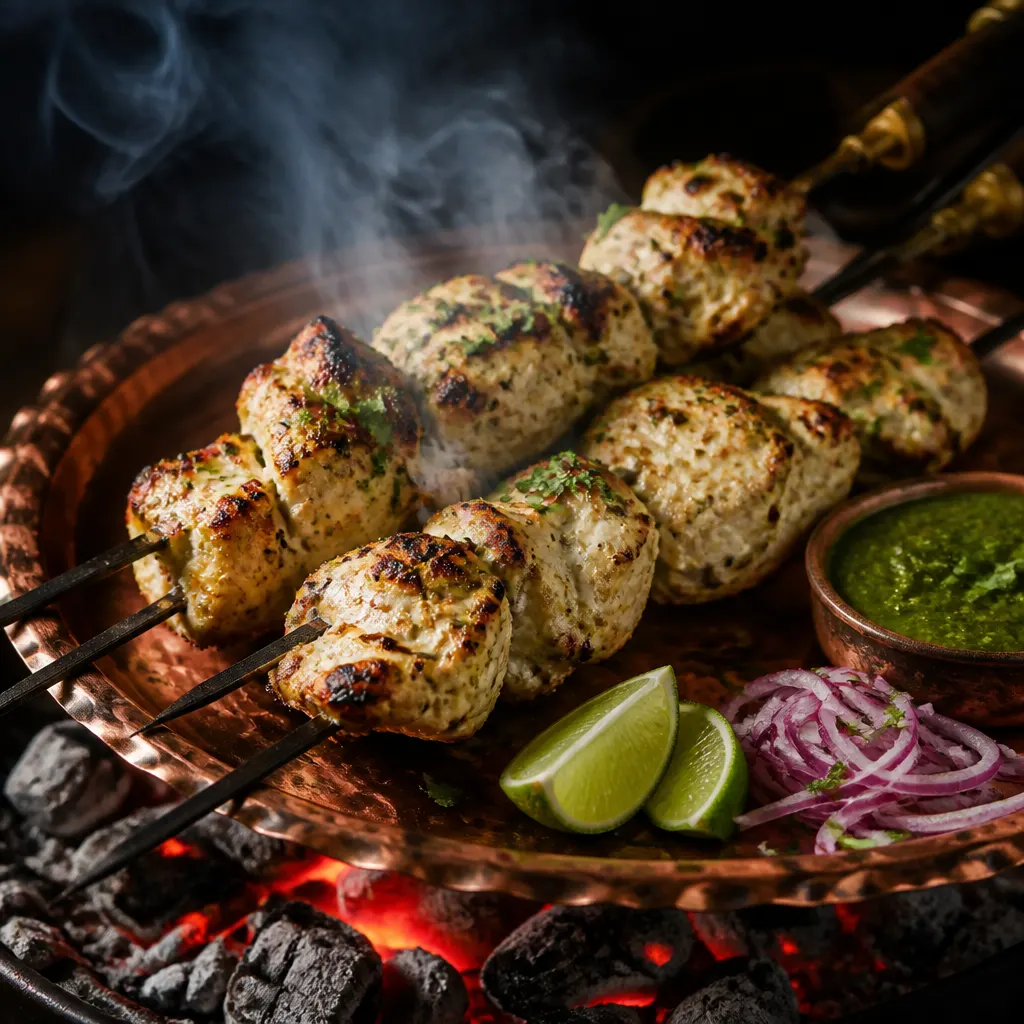
Smoked Malai Chicken Tikka
If tandoori is the loud cousin, malai is the smooth one. Smoked chicken thigh chunks in a rich cream, cashew, cardamom marinade. The dish that proves Indian smoke can be quiet and luxurious.
Cook Mode
One step at a time, big text, timers, and your screen stays awake. 0/7 steps done.
Ingredients
Tap to tick off · 0/11 gathered
Method
- 10 min
In a large non-reactive mixing bowl, whisk together 0.5 cup heavy cream, 0.25 cup thick yogurt, and 0.25 cup cashew paste until the texture is silky and homogenized. Whisk in 1 tbsp ginger-garlic paste, 1 tsp white pepper, 1 tsp ground green cardamom, 1 tsp garam masala, and 1 tsp salt. We use white pepper specifically to maintain the 'Malai' (cream) aesthetic, avoiding the black specks that would disrupt the pearly, luxurious visual of the finished dish.
Why it matters
The cashew paste and yogurt create a thick, fat-heavy suspension that protects the delicate chicken proteins from drying out during the smoke.
Common mistake
Using thin, watery yogurt which causes the marinade to slide off the meat rather than forming a thick coating.
- 6h
Add 2 lbs of boneless chicken thighs, cut into uniform 1.5-inch chunks, to the marinade. Stir in 1 tbsp of finely grated parmesan or aged cheese; this modern pitmaster secret acts as a protein binder, helping the dairy-based marinade 'set' on the meat surface rather than dripping into the fire. Ensure every piece is fully submerged, ensuring no surface area is exposed to air, which prevents premature oxidation of the spices.
Why it matters
The fat and salt in the marinade need time to penetrate the muscle fibers to ensure the chicken is seasoned to the core, not just on the surface.
Common mistake
Rushing the marination time, which results in a dish that looks flavorful but tastes like plain chicken once you bite past the crust.
- 275°F30 min
Preheat your smoker to a steady 275°F using apple wood as your primary fuel source. Apple wood provides a mild, fruity smoke profile that harmonizes with the floral notes of the green cardamom without masking the creamy base. Ensure your fire is burning clean with blue smoke; heavy, white 'dirty' smoke will turn the white Malai coating gray and bitter.
Why it matters
Clean combustion is critical for light-colored meats and dairy marinades which absorb off-flavors more readily than heavy red meats.
Common mistake
Using heavy woods like hickory or oak which completely overpower the delicate cardamom and cream flavors.
- 15 min
Thread the marinated chicken chunks onto metal or pre-soaked wooden skewers, leaving a tiny 1/8-inch gap between pieces. Do not shake off the excess marinade; you want a thick, visible layer of the cream mixture on each piece. Keeping the pieces slightly separated allows the 275°F air to circulate 360 degrees around the meat, ensuring the marinade sets evenly into a 'custard-like' bark.
Why it matters
Crowding the skewers leads to 'steaming' rather than smoking, which prevents the marinade from ever truly setting and creates a mushy texture.
Common mistake
Squeezing the meat too tightly together, resulting in raw, pale spots where the chunks touch.
- 165°F55 min
Place the skewers in the indirect heat zone of the smoker. Close the lid and monitor the color; you are looking for the dairy and cashew sugars to caramelize into a pale, golden-blonde hue. At the 45-minute mark, use an instant-read thermometer to check for an internal temperature of 165°F. This step keeps the chicken safely out of the 40-140°F danger zone efficiently while rendering the thigh fat into a succulent texture.
Why it matters
The 275°F temperature is high enough to set the dairy coating before it can drip off, but low enough to prevent the cashew paste from scorching.
Common mistake
Pulling the chicken too early based on color alone; thighs need to hit a full 165°F to ensure the connective tissue is softened.
- 5 min
Transfer the finished skewers to a warm platter—do not tent them tightly with foil, as the trapped steam will soften the beautiful creamy crust you just developed. Let the chicken rest for 5 minutes. During this time, carryover cooking will finish the internal temperature rise, and the muscle fibers will relax, reabsorbing the internal juices so they don't run out when the first bite is taken.
Why it matters
Resting allows the fats in the Malai coating to firm up, ensuring the sauce stays on the meat rather than on the plate.
Common mistake
Cutting into the chicken immediately, which causes the internal juices to purge and leaves the meat dry.
- 5 min
Garnish the skewers with a chiffonade of fresh mint and provide fresh lime wedges on the side. Instruct the guests to squeeze the lime immediately before eating. The acidity of the lime is the 'bright' note that cuts through the heavy 0.5 cup of cream and cashew fats, refreshing the palate for the next bite. Serve accompanied by warm naan to soak up any remaining cardamom-scented juices.
Why it matters
Acid is the most overlooked element in BBQ; it provides the necessary contrast to the richness of the Malai marinade.
Common mistake
Skipping the lime, which leaves the dish feeling heavy and one-dimensional on the palate.
Sauce It
Cooks & Reviews
Guild members can rate this recipe, log their cooks and share photos.
Sign in to continueMember reviews
No reviews yet — be the first to rate this cook.
Ask the Pitmaster about this recipe
Substitutions, scaling, technique, troubleshooting — get answers grounded in this cook.
Sign in to try the AI Pitmaster on Smoked Malai Chicken Tikka. New members get 3 free questions.
Sign in to tryComments(0)
Loading comments…