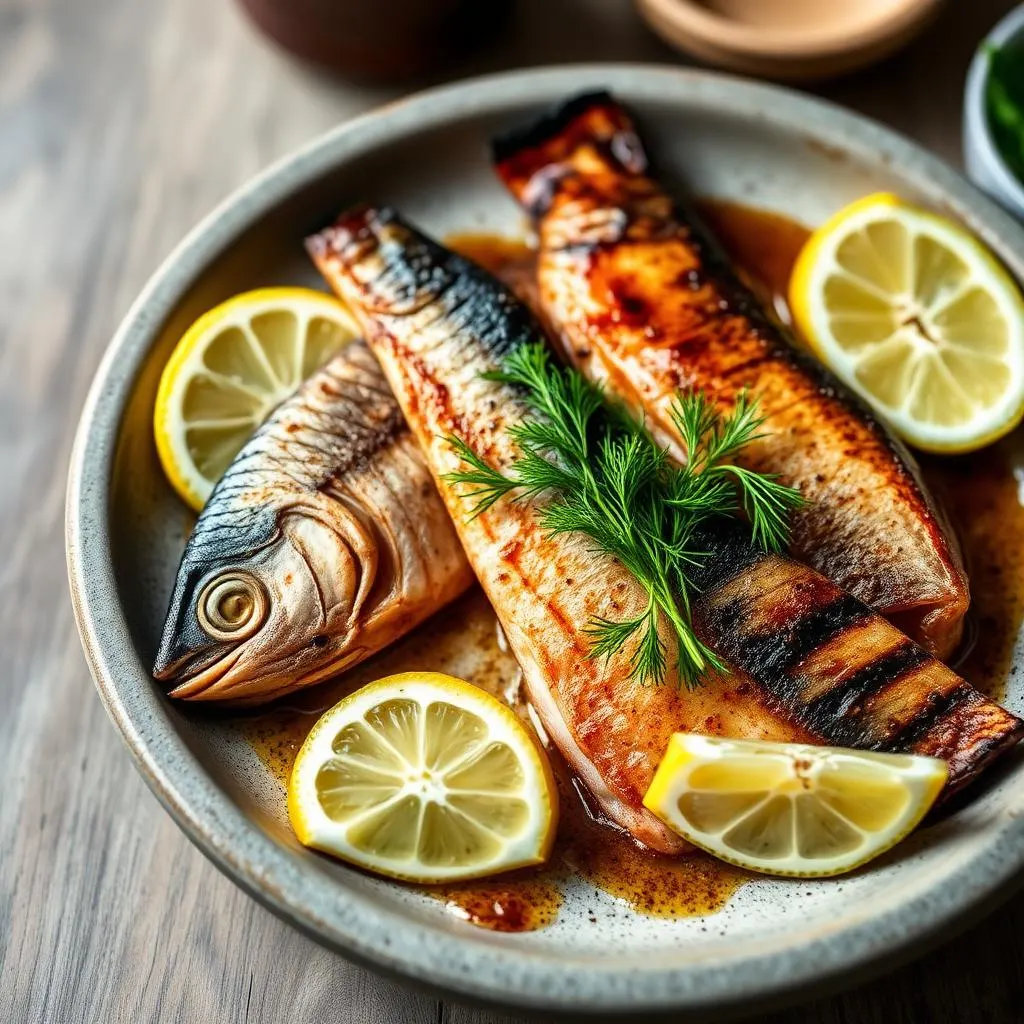
Smoked Mackerel
The most forgiving fish you can put in a smoker. Oily, smoke-hungry, stays moist even if timing drifts. Quick brine, under an hour of smoke, a North Sea staple.
Cook Mode
One step at a time, big text, timers, and your screen stays awake. 0/8 steps done.
Ingredients
Tap to tick off · 0/5 gathered
- — MAIN —
- — BRINE —
Method
- 10 min
Begin by whisking together 4 cups of water, 0.25 cup kosher salt, 2 tbsp brown sugar, and 1 tsp white pepper in a non-reactive pitcher or bowl. Whisk vigorously until the granules are completely dissolved; this creates a saline solution that uses osmotic pressure to season the fish to its core. Ensure the brine is chilled to below 40°F before adding the fish to avoid the 'danger zone' where bacterial growth accelerates. This ratio provides enough salinity to denature the proteins without curing the fish into a hard, salty jerky.
Why it matters
The brine equilibrates moisture and seasons through the flesh; skipping it gives you dry, bland salmon.
Common mistake
Using warm brine which partially cooks the exterior of the delicate fish and introduces food safety risks.
- 1h
Submerge the 4 skin-on mackerel fillets in the brine solution, making sure they are fully covered. Because mackerel is an oily fish, the salt needs approximately 60 minutes to penetrate the fat and reach the center of the fillet. Keep the container in the refrigerator to maintain a food-safe temperature. If the fillets float, use a small plate as a weight to keep them submerged; any exposed flesh will not be seasoned or protected from the dry heat of the smoker.
Why it matters
A precise brine time ensures the salt-to-protein ratio is high enough to retain moisture during the cook without becoming unpalatable.
Common mistake
Leaving the fish in the brine for too long, which results in mushy, over-salted flesh.
- 45 min
Remove the fillets from the brine and rinse them under cold running water to remove excess surface salt and sugar. Pat both the skin and flesh completely dry with paper towels, then place them skin-side down on a wire cooling rack set over a tray. Position a fan to blow air across the fish for 30 to 45 minutes until a 'pellicle' forms—a shiny, tacky coating on the surface. This protein skin is essentially 'glue' for smoke particles; without it, the smoke will not adhere and you won't get that iconic mahogany color.
Why it matters
The pellicle provides a surface for the smoke to latch onto, resulting in a beautiful mahogany color and better flavor adhesion.
Common mistake
Smoking a wet fish, which leads to 'steaming' and a gray, unappealing exterior with no smoke flavor.
- 200°F20 min
Preheat your smoker to a steady 200°F using alder or oak wood. Mackerel is highly absorbent and benefits from these traditional North Sea woods which provide a clean, slightly sweet smoke profile that complements the fish's natural oils. Ensure your grates are clean and lightly oiled to prevent the delicate skin from tearing when you try to remove the fish later. Maintaining a clean fire is essential here, as 'dirty' blue or white smoke will impart a bitter, acrid taste to the fatty flesh.
Why it matters
Setting a low, stable temperature prevents the fat from rendering out too quickly, keeping the fish moist.
Common mistake
Using a heavy wood like hickory or mesquite which can easily overpower the flavor of seafood.
- 200°F55 min
Place the fillets directly on the grates, skin-side down, in the center of the smoker. Close the lid and maintain your 200°F target temperature. During the 45-60 minute window, the smoke's phenolic compounds will dissolve into the fish's surface fats. You are looking for a visual transition from translucent silver-pink to a rich, opaque golden-brown. Do not flip the fish; the skin protects the bottom while the top absorbs the smoke. Check for doneness when the fat begins to bubble slightly on the surface.
Why it matters
Fat-soluble smoke compounds dissolve directly into the mackerel's oils, creating an intense depth of flavor.
Common mistake
Opening the smoker lid frequently to 'peek', which fluctuates the internal temperature and stalls the cooking process.
- 145°F
Use an instant-read thermometer to check the thickest part of the fillet for an internal temperature of 145°F. This is the FDA recommended temperature for fish, ensuring any pathogens are destroyed while the meat remains flaky and succulent. The flesh should flake easily under a fork but still look slightly moist in the very center of the thickest part. If white albumin (protein) starts oozing out in large amounts, the fish is being overcooked and should be removed immediately.
Why it matters
Reaching 145°F guarantees food safety while preserving the structural integrity of the delicate fillet.
Common mistake
Relying on time alone rather than internal temperature, leading to dry, overcooked fish.
- 10 min
Transfer the smoked fillets to a warm plate and let them rest for 5 to 10 minutes. This allows the internal juices, which have been pushed to the surface by the heat, to redistribute back into the fibers of the meat. Carryover cooking will occur, potentially raising the temperature by 2-3 degrees, which is why we pull the fish precisely at 145°F. Skipping the rest will result in the moisture leaking out the moment you cut or flake the fish.
Why it matters
Resting allows the muscle fibers to relax and reabsorb moisture, preventing a dry result.
Common mistake
Cutting into the fish immediately after removal from the heat, which causes all the flavorful oils to run out.
Serve the fillets warm for a classic meal, or refrigerate them if you intend to make a pâté. To store, wrap the cooled fillets tightly in plastic wrap to exclude air, which prevents the oils from oxidizing and turning fishy. Smoked mackerel is a powerhouse of flavor when flaked into salads or mixed with cream cheese and lemon. Use within 3 days for peak quality, as the smoke flavor will continue to intensify and eventually become too sharp over time.
Why it matters
Proper storage preserves the integrity of the smoke profile and prevents the fats from becoming rancid.
Common mistake
Storing smoked fish in a loose container, which allows the strong smoke aroma to permeate everything else in the refrigerator.
Sauce It
Cooks & Reviews
Guild members can rate this recipe, log their cooks and share photos.
Sign in to continueMember reviews
No reviews yet — be the first to rate this cook.
Ask the Pitmaster about this recipe
Substitutions, scaling, technique, troubleshooting — get answers grounded in this cook.
Sign in to try the AI Pitmaster on Smoked Mackerel. New members get 3 free questions.
Sign in to tryComments(0)
Loading comments…