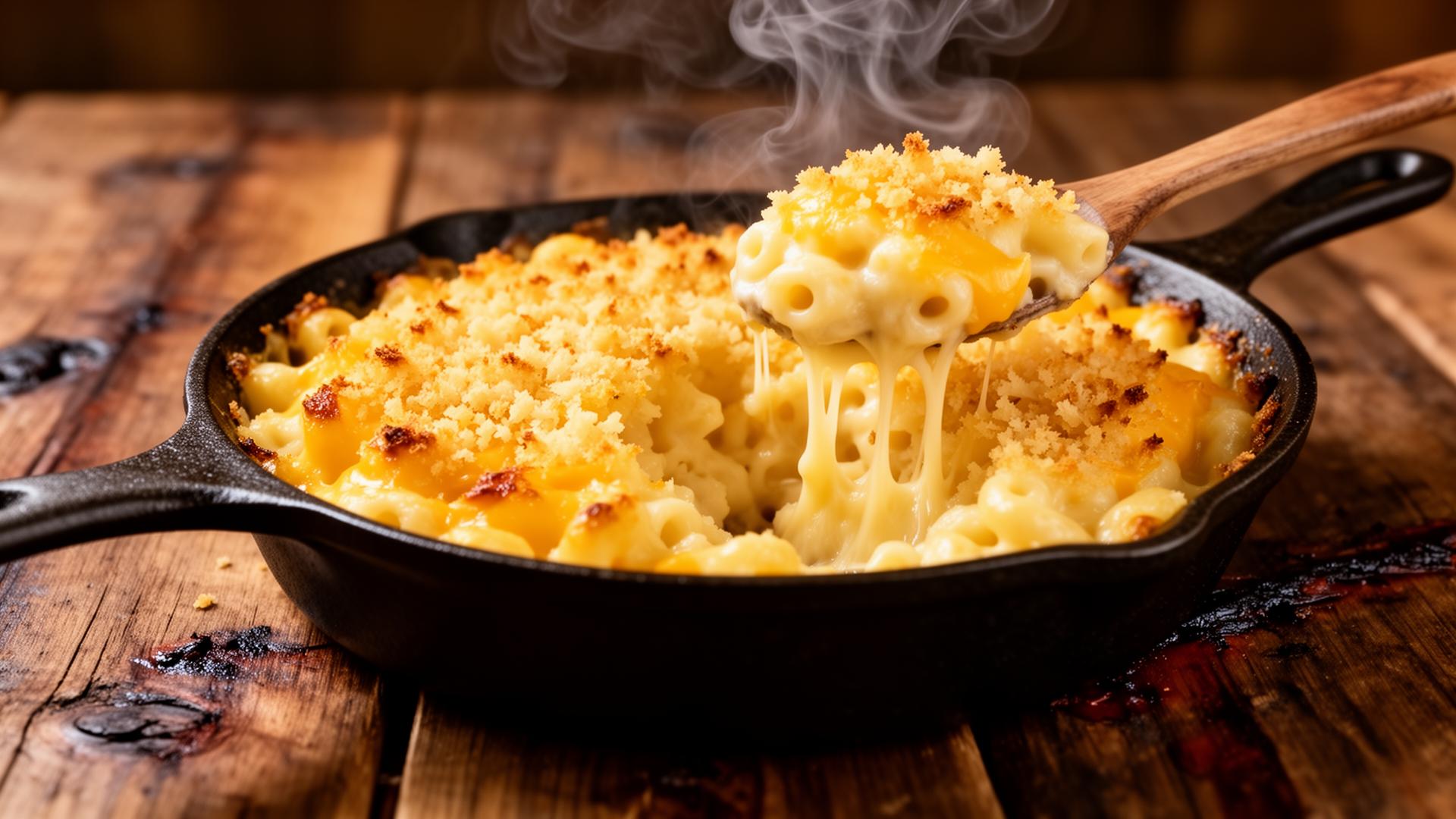
Smoked Mac and Cheese
Three-cheese cast iron mac kissed with smoke and a crackling panko crust. The side that steals the plate.
Cook Mode
One step at a time, big text, timers, and your screen stays awake. 0/8 steps done.
Ingredients
Tap to tick off · 0/7 gathered
Method
- 15 min
In a large pot of heavily salted water, cook the 1.0 lb of Cavatappi pasta for approximately 2 minutes less than the package instructions for 'al dente'. This ensures the pasta maintains a firm structure and prevents it from turning into mush during the extended smoke. Drain the pasta thoroughly in a colander and set aside; the residual heat will keep the starches active for better sauce adhesion.
Why it matters
Under-cooking the pasta now accounts for the moisture absorption that occurs during the secondary cooking phase in the smoker.
Common mistake
Boiling the pasta to full tenderness at this stage, which results in a soggy, overcooked texture in the final dish.
- 225°F30 min
Fire up your smoker to a consistent 225°F using Hickory wood. Ensure you have reached the 'thin blue smoke' stage rather than heavy white billows; dairy-heavy dishes like mac and cheese act as a sponge for smoke and can easily become bitter if the fire is not burning clean. Preheating early allows the temperature to stabilize before the cast iron hits the grates.
Why it matters
Stable temperatures prevent the cheese sauce from breaking or separating into a greasy mess.
Common mistake
Placing the food in the smoker before the temperature has stabilized and the wood has fully combusted.
- 10 min
In a large saucepan over medium-low heat, combine 2.0 cups of heavy cream and 1.0 cup of whole milk. Whisk constantly until the mixture reaches approximately 150°F—it should be steaming and show small bubbles around the perimeter, but never reaching a boil. Tempering the dairy ensures that when the cheese is added, the emulsion remains stable and the proteins do not seize.
Why it matters
Gradual heating prevents the dairy from curdling and creates the foundation for a professional-grade silkiness.
Common mistake
Letting the milk-cream mixture reach a rolling boil, which can change the flavor profile and compromise the sauce texture.
- 10 min
Remove the dairy pan from the heat source and begin adding 2.0 cups of shredded sharp cheddar, 1.0 cup of Gruyere, and 1.0 cup of smoked gouda. Add the cheese in small handfuls, whisking each batch until completely melted before adding the next. This off-heat method prevents the cheese oils from separating, resulting in a perfectly homogeneous, thick sauce that coats the back of a spoon.
Why it matters
Gentle melting preserves the integrity of the fats and proteins for a creamy mouthfeel.
Common mistake
Adding all the cheese at once, which causes clumping and an uneven, grainy sauce.
- 5 min
Place the par-boiled Cavatappi into a seasoned 12-inch cast iron skillet. Pour the warm cheese sauce over the pasta and fold gently with a large spoon until every spiral is fully submerged and the distribution is even. The mixture should look slightly loose or 'soupy'—this is intentional, as the pasta will continue to hydrate and the sauce will reduce slightly under the heat of the smoker.
Why it matters
Cast iron provides superior heat retention and distribution, ensuring the bottom of the mac and cheese stays as warm as the top.
Common mistake
Using a skillet that is too small, leading to overflow and uneven smoke penetration.
- 5 min
Evenly distribute 1.0 cup of Panko breadcrumbs across the top of the cheese-coated pasta. Gently press the crumbs down so they make contact with the sauce. This layer serves two purposes: it provides a necessary crunch to contrast the soft pasta and acts as a sacrificial layer that absorbs the most intense smoke flavor while protecting the dairy from drying out.
Why it matters
A dedicated topping layer creates textural layers that define high-quality pitmaster-style sides.
Common mistake
Leaving the top uncovered, which can result in the top layer of noodles becoming hard and leathery.
- 225°F2h
Place the skillet in the center of the smoker grates. Smoke at 225°F for 90 to 120 minutes. Keep the lid closed as much as possible to maintain the 40-140°F safety window and allow the Hickory notes to penetrate. You are looking for the cheese sauce to bubble at the edges and the Panko to transition to a deep, toasted golden brown through Maillard browning and wood-smoke staining.
Why it matters
The long, slow cook allows the smoke to circulate into the pasta spirals while the heat slowly tightens the sauce.
Common mistake
Repeatedly opening the smoker lid, which causes temperature swings and doubles the necessary cook time.
- 10 min
Carefully remove the cast iron from the smoker. Allow the dish to rest for 10 minutes before serving. During this time, the sauce will thicken further as it cools slightly, transitioning from a liquid state to a coating that clings to the pasta. This is also a critical safety period to let the cast iron dissipate its extreme heat before it reaches the table.
Why it matters
Resting allows the starches and fats to settle, preventing the sauce from running to the bottom of the bowl when served.
Common mistake
Serving immediately, which can result in a thin, watery sauce and potential burns from the hot cast iron.
Cooks & Reviews
Guild members can rate this recipe, log their cooks and share photos.
Sign in to continueMember reviews
No reviews yet — be the first to rate this cook.
Ask the Pitmaster about this recipe
Substitutions, scaling, technique, troubleshooting — get answers grounded in this cook.
Sign in to try the AI Pitmaster on Smoked Mac and Cheese. New members get 3 free questions.
Sign in to tryComments(0)
Loading comments…