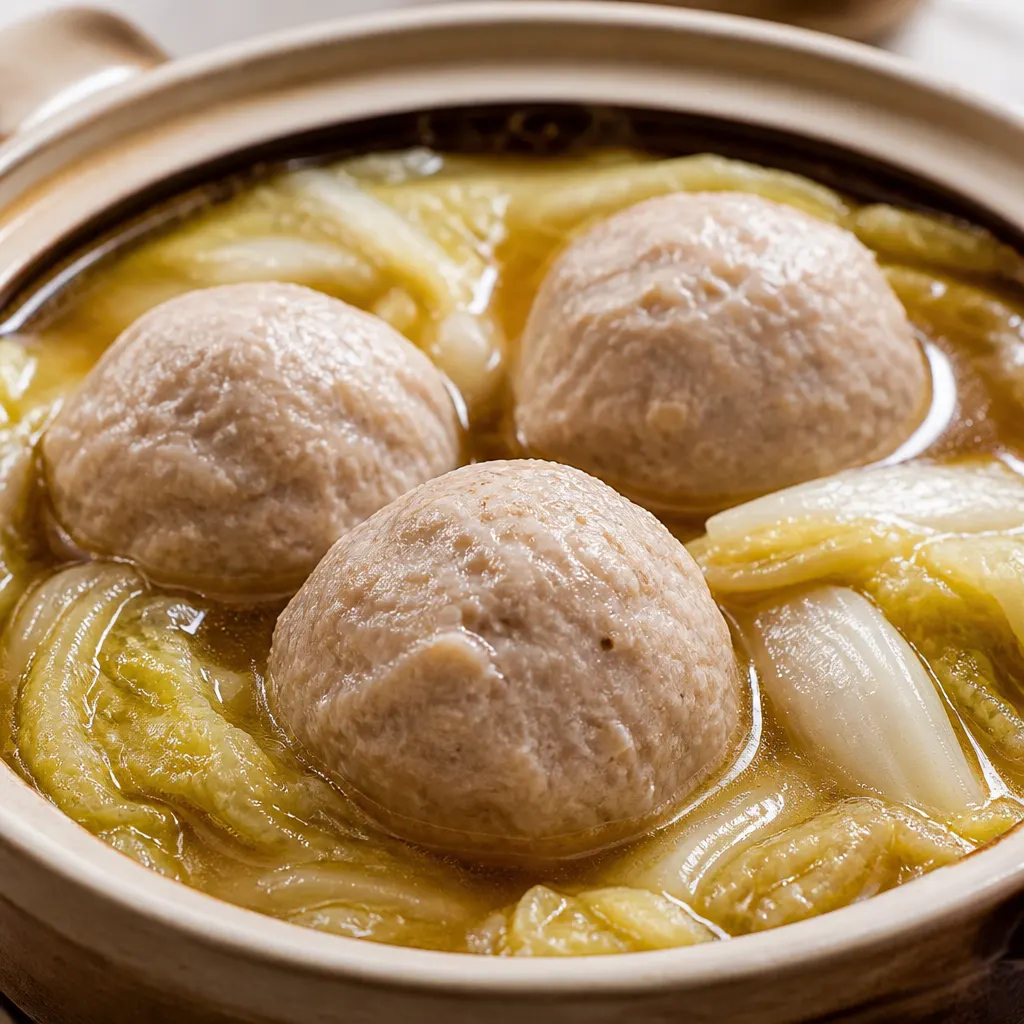
Smoked Lion's Head Meatballs
Lion's head meatballs are a refined Huaiyang specialty, oversized, meltingly tender pork meatballs braised with napa cabbage in a delicate broth, named for their resemblance to a lion's mane. The technique is all about texture — hand-chopped pork and a light touch for tenderness. Smoking the giant meatballs before braising adds a depth the classic version doesn't have. A sophisticated two-stage dish that shows real finesse, the opposite of brute-force barbecue.
Cook Mode
One step at a time, big text, timers, and your screen stays awake. 0/8 steps done.
Ingredients
Tap to tick off · 0/14 gathered
Method
- 5 min
In a large chilled mixing bowl, combine 2 lbs fatty ground pork, 1 egg, 3 tbsp cornstarch, 2 tbsp Shaoxing wine, 1 tbsp soy sauce, 1 tbsp grated ginger, 3 minced scallions, 0.5 cup chopped water chestnuts, 1 tsp sugar, 1 tsp salt, and 1 tsp white pepper. Stir the mixture vigorously in one direction only for 3-5 minutes using chopsticks or your hand until it becomes a tacky, pale paste. This unidirectional stirring aligns the protein fibers, creating the signature 'melting' texture that is cohesive yet light—the hallmark of Huaiyang cuisine.
Why it matters
One-way stirring ensures a delicate protein bind without creating the rubbery texture common in Western-style meatballs.
Common mistake
Stirring in multiple directions or overworking the meat, which can break the fat-protein emulsion and lead to a tough, dry result.
- 5 min
Pick up the entire mass of meat and forcefully throw it against the bottom of the bowl 12-15 times. This classic technique, known as 'da rou', further develops the protein bind necessary to hold these oversized meatballs together without heavy fillers like breadcrumbs. Stop once the meat is sticky enough to pull away from the sides of the bowl in a single mass with a slight sheen; the meat should feel bouncy and elastic to the touch.
Why it matters
High-impact mechanical action creates a physical bond that prevents the grapefruit-sized meatball from falling apart during the braise.
Common mistake
Skipping this step, which often results in the meatball disintegrating into the broth once it starts to simmer.
- 10 min
Divide the pork mixture into 6 to 8 equal portions, roughly the size of a large orange. Wet your hands with cold water to prevent sticking and gently toss each portion from palm to palm to form a smooth sphere. Place the meatballs on a wire rack set over a baking sheet; this allows for 360-degree smoke penetration and prevents the bottom of the meat from steaming against a solid surface, ensuring a uniform exterior set.
Why it matters
Using a wire rack prevents 'flat bottoms' and ensures the smoke adheres to the entire surface area of the meatball.
Common mistake
Making the meatballs too small, which loses the 'lion's head' effect and makes them prone to overcooking during the smoke phase.
- 30 min
Place the formed meatballs in the refrigerator, uncovered, for 30 minutes. This allows the surface moisture to evaporate slightly, forming a tacky 'pellicle' or skin. This skin is critical for smoke adhesion—smoke particles are attracted to surface moisture, but too much moisture results in steaming rather than flavoring. A dry surface ensures the wood phenols can bond effectively to the pork protein.
Why it matters
The pellicle provides a sticky surface for smoke to latch onto, resulting in a cleaner and more distinct smoke profile.
Common mistake
Smoking wet meatballs directly, which leads to a gray, muddy appearance and less smoke flavor.
- 250°F1h
Preheat your smoker to 250°F using apple or oak pellets for a mild smoke profile that won't overpower the delicate ginger and scallion notes. Place the meatballs in the smoker for 60 minutes. Because pork is in the 'danger zone' (40-140°F) during this period, ensure your smoker temp stays consistent. We are looking for an internal temperature of 145°F-150°F and a light amber color; the Goal is to set the shape and infuse depth, not to develop a hard bark.
Why it matters
Fruitwood smoke adds a layer of complexity that distinguishes the modern BBQ version from the purely steamed traditional dish.
Common mistake
Using aggressive woods like mesquite or hickory, which can make the delicate braising broth taste bitter and acrid.
- 15 min
Line the bottom of a heavy Dutch oven with half of the chopped Napa cabbage to create a protective cushion. In a pitcher, whisk 4 cups stock, 2 tbsp soy sauce, 1 tbsp Shaoxing wine, 2 ginger slices, and 1 tsp sugar. Carefully place the smoked meatballs on the cabbage and cover them with the remaining cabbage 'blanket' to keep the tops moist. Pour the liquid around the sides until it reaches halfway up the meatballs, then bring to a faint simmer on the stovetop.
Why it matters
The cabbage blanket prevents the meatballs from drying out and infuses the pork with sweetness as it wilts.
Common mistake
Pouring the liquid directly over the meatballs, which can wash away the smoke-infused surface before it sets in the braise.
- 165°F1h 30m
Cover the pot tightly and reduce heat to the lowest setting for 90 minutes. The liquid should barely move—a 'smiling' simmer rather than a rolling boil. During this phase, the internal temperature of the pork will reach a safe 165°F and beyond, while the connective tissue breaks down to achieve the 'melting' texture. The cabbage will release its own juices, mingling with the pork fats and smoke to create a translucent, savory amber broth.
Why it matters
Slow braising at a low temperature is required to transform the protein into the classic, spoon-tender consistency.
Common mistake
Boiling the meatballs, which makes the protein seize up and become rubbery rather than tender.
- 10 min
Turn off the heat and allow the pot to sit for 10 minutes before serving. This rest period allows the meatballs to reabsorb some of the flavorful braising liquid and prevents them from falling apart when lifted. Carefully serve one meatball per person in a deep bowl, surrounded by the softened cabbage and half-submerged in the smoky broth. Serve immediately with jasmine rice to ensure the guest experiences the maximum aroma of the wood-infused pork.
Why it matters
A brief rest ensures the meatballs stay succulent and retain their structural integrity for plating.
Common mistake
Lifting the meatballs too aggressively while they are piping hot, which can cause them to split or collapse.
Sauce It
Cooks & Reviews
Guild members can rate this recipe, log their cooks and share photos.
Sign in to continueMember reviews
No reviews yet — be the first to rate this cook.
Ask the Pitmaster about this recipe
Substitutions, scaling, technique, troubleshooting — get answers grounded in this cook.
Sign in to try the AI Pitmaster on Smoked Lion's Head Meatballs. New members get 3 free questions.
Sign in to tryComments(0)
Loading comments…