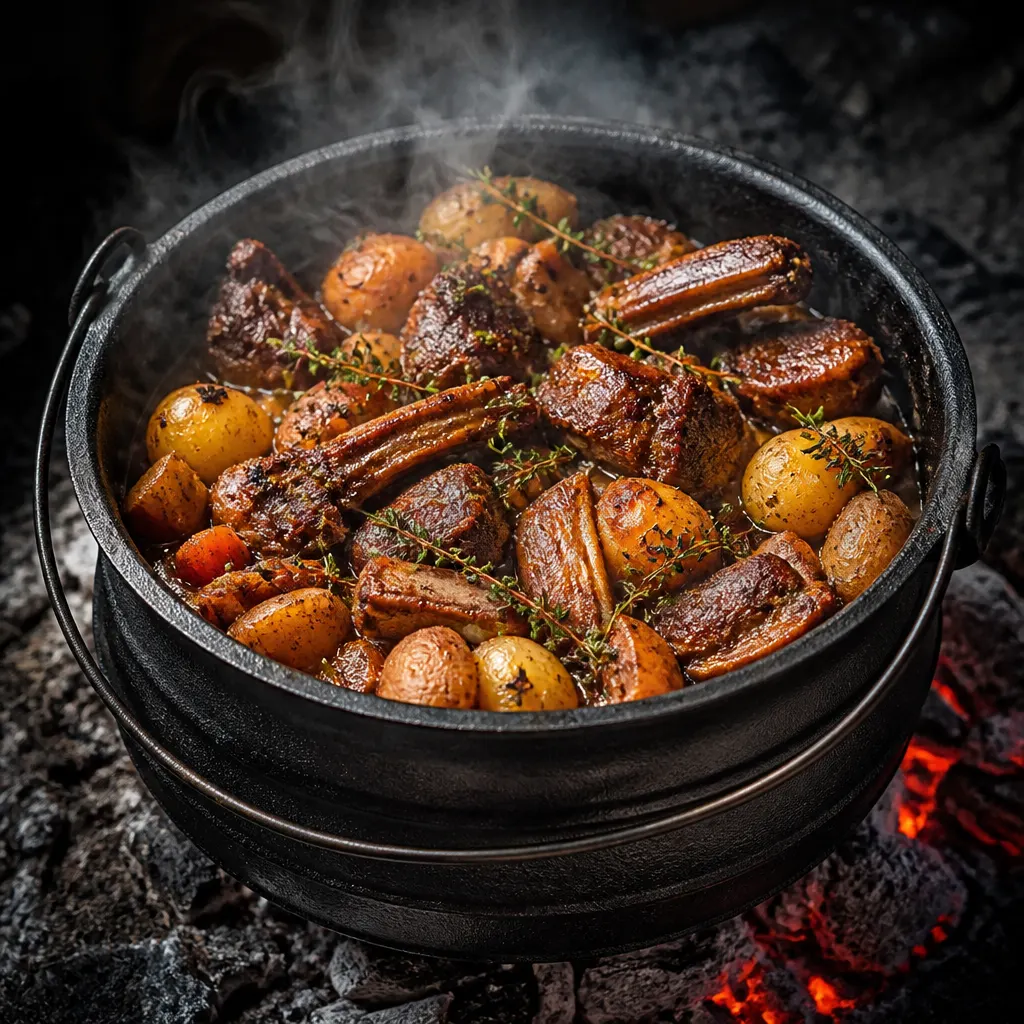
Smoked Lamb Potjiekos
Potjiekos (pot food) is the South African cast-iron-pot stew cooked slowly over coals, a tradition carried by the Voortrekkers. The cardinal rule: don't stir the potjie — layers cook in steam and meld without mixing.
Cook Mode
One step at a time, big text, timers, and your screen stays awake. 0/8 steps done.
Ingredients
Tap to tick off · 0/15 gathered
Method
- 45 min
Begin by cutting the 3 lbs of lamb shoulder or neck into large, uniform 2-inch chunks to ensure even surface area for smoke absorption. Season the meat generously with 2 tbsp coarse salt and 1 tbsp black pepper, coating all sides. Allow the lamb to rest at room temperature for 45 minutes; this dry brine draws moisture to the surface where it dissolves the salt and is then reabsorbed into the muscle, seasoning the meat deeply and altering protein structures to better retain juices during the long cook.
Why it matters
The brine equilibrates moisture and seasons through the flesh; skipping it gives you dry, bland lamb.
Common mistake
Using table salt instead of coarse salt, which can lead to an over-salted exterior.
- 250°F20 min
Preheat your smoker to a stable 250°F. For lamb, oak is the ideal primary wood as its moderate smoke profile balances the natural gaminess of the meat without overpowering it. Pre-warm your oak chunks on the firebox for 5 minutes before adding them to ensure they ignite instantly and produce clean, blue smoke. Position the lamb chunks on the grate with at least one inch of space between each piece to allow for total smoke circulation.
Why it matters
Pre-warming wood drives off surface moisture for a cleaner burn and prevents acrid creosote buildup.
Common mistake
Adding room-temperature wood chunks which can cause a spike in dirty, white smoke.
- 250°F2h
Smoke the lamb chunks for 120 minutes. During this phase, the lamb is in the 'danger zone' (40-140°F), so maintaining a consistent 250°F smoker temp is critical for both food safety and bark development. We are looking for the exterior to turn a deep mahogany color and for the fat to begin rendering. Do not worry about tenderness at this stage; the goal is phenolic smoke absorption and Maillard reaction on the meat's surface before it enters the pot.
Why it matters
Most smoke absorption happens in the first few hours when the meat surface is cool and moist.
Common mistake
Opening the lid frequently, which drops the temperature and stalls the bark-setting process.
- 15 min
While the lamb finishes smoking, heat 2 tbsp oil in a heavy No. 3 cast iron Potjie or Dutch oven over medium-high heat. Add 2 whole sliced onions and 4 cloves of minced garlic. Sauté until the onions are translucent and the garlic is fragrant, about 10 minutes. This creates an 'umami floor' for the stew. If using coals, ensure the pot is stable and the heat is consistent to avoid scorching the aromatics.
Why it matters
Sautéing aromatics releases fat-soluble compounds that provide the base depth for the entire stew.
Common mistake
Burning the garlic, which introduces a permanent bitter note to the finished sauce.
- 10 min
Transfer the smoked lamb chunks from the smoker into the pot with the onions. Pour in 2 cups of red wine and 2 cups of beef or lamb stock. Add 3 whole bay leaves and 1 tbsp brown sugar. Stir once to dissolve the sugar and incorporate the liquids, scraping the bottom of the pot to release any fond (browned bits). This liquid must fully submerge the meat to facilitate the braising process and collagen breakdown.
Why it matters
The acidity in the wine helps tenderize tough connective tissues in the lamb shoulder.
Common mistake
Neglecting to scrape the bottom of the pot, leaving behind the most concentrated flavors.
- 10 min
Following the cardinal rule of Potjiekos, begin layering the vegetables by density. Place 4 whole chunked carrots and 4 whole chunked potatoes directly on top of the meat. DO NOT STIR. Layer 2 cups of butternut squash chunks over the potatoes, and finally, top with 1 cup of green beans. This hierarchy allows the hard root vegetables to simmer in the liquid while the delicate vegetables on top cook gently in the rising steam.
Why it matters
Layering prevents delicate vegetables from disintegrating while ensuring dense ones cook through.
Common mistake
Stirring the pot, which turns the distinct vegetable layers into a mushy porridge.
- 203°F3h
Cover the pot with a tight-fitting lid and reduce heat to maintain a very gentle simmer for 180 minutes. You should hear a rhythmic 'glug-glug' sound. If the liquid evaporates too quickly, carefully pour a splash of stock down the inner side of the pot without disturbing the layers. The goal is an internal lamb temperature of roughly 203°F, where the connective tissue has completely transformed into gelatin.
Why it matters
A gentle simmer provides the steady heat needed for collagen conversion without toughening the muscle fibers.
Common mistake
Boiling too vigorously, which toughens the meat and breaks down the vegetable structure.
- 15 min
Remove the pot from the heat and let it sit, covered, for 15 minutes. This rest allows the internal pressure to stabilize and the juices to thicken slightly. Remove the bay leaves. Only now, perform a single, gentle fold with a large spoon to combine the layers and the sauce. Season with additional salt and pepper to taste before serving over rice or pap. Ensure the lamb is fork-tender and the potatoes are soft but holding their shape.
Why it matters
Resting allows for carryover cooking and ensures the sauce properly coats the ingredients.
Common mistake
Aggressive stirring at the end, which mashes the softened vegetables.
6 more steps locked
You've seen the ingredients and the first two steps. Pit Members get every step, every temp, every glaze — plus the Cook Monitor and Pitmaster AI.
See Membership OptionsAlready a member? Sign in.
Sauce It
Cooks & Reviews
Guild members can rate this recipe, log their cooks and share photos.
Sign in to continueMember reviews
No reviews yet — be the first to rate this cook.
Ask the Pitmaster about this recipe
Substitutions, scaling, technique, troubleshooting — get answers grounded in this cook.
Sign in to try the AI Pitmaster on Smoked Lamb Potjiekos. New members get 3 free questions.
Sign in to tryComments(0)
Loading comments…