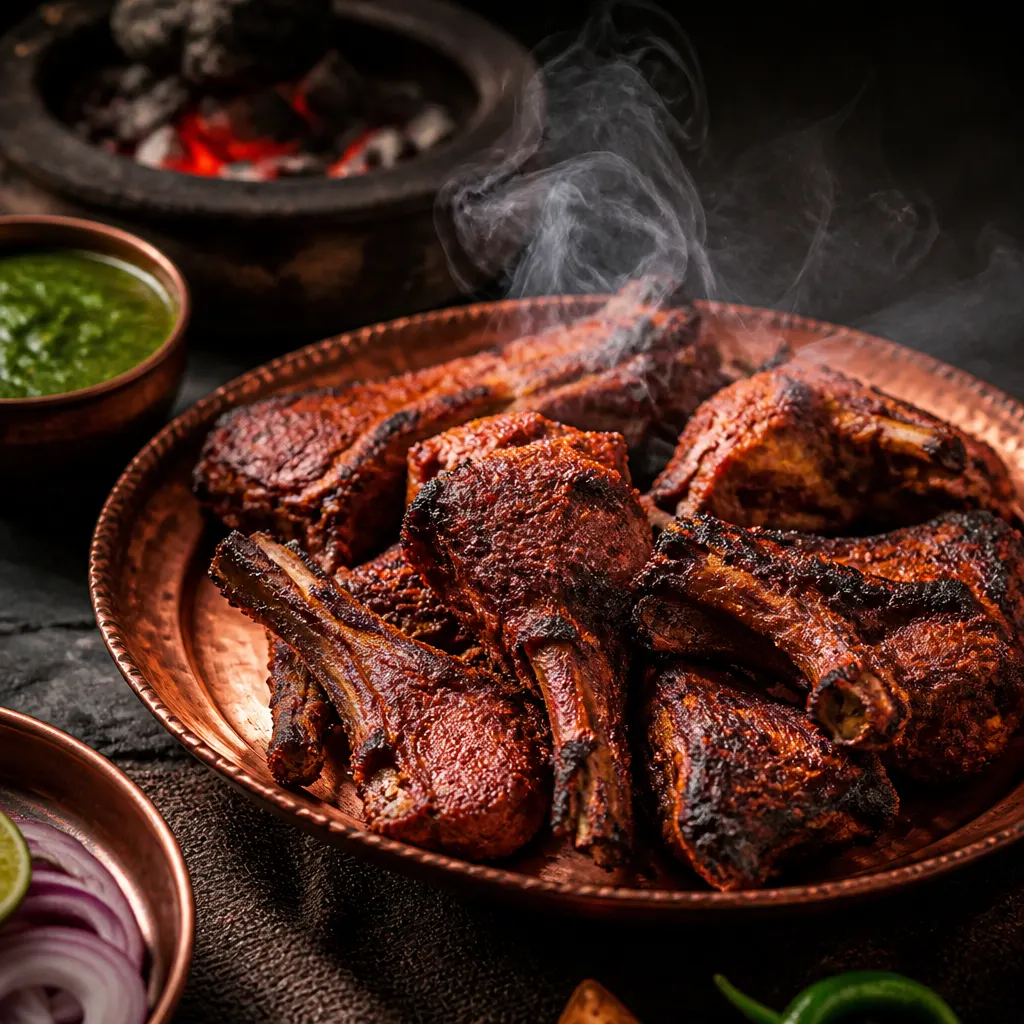
Smoked Lamb for Biryani (Hyderabadi-Style)
Hyderabadi biryani is one of the great achievements of Indian cooking — layers of partially-cooked rice and intensely-marinated meat sealed together and cooked by trapped steam (dum). This version takes the lamb through a smoke stage first, building a depth of flavor the traditional version does not reach.
Cook Mode
One step at a time, big text, timers, and your screen stays awake. 0/7 steps done.
Ingredients
Tap to tick off · 0/18 gathered
Method
- 24h
In a large non-reactive bowl, whisk together 2.0 cups thick yogurt, 3.0 tbsp Kashmiri chili powder, 3.0 tbsp ginger-garlic paste, 2.0 tbsp fried-onion paste, 1.0 tbsp garam masala, 1.0 tbsp salt, 0.25 cup mustard oil, and the juice of 2 lemons. Fold in one bunch each of chopped mint and cilantro. Submerge 3.0 lbs of lamb shoulder chunks (2-inch pieces) into this mixture, ensuring complete coverage. The yogurt serves as an enzymatic tenderizer, while the mustard oil and spices create a fat-soluble marinade that will bridge the gap between meat proteins and the smoke particles during the upcoming cook phase. Refrigerate for 12 to 24 hours.
Why it matters
The lactic acid in yogurt and the acidity of lemon juice begin breaking down the lamb's connective tissue before heat is ever applied.
Common mistake
Using thin, watery yogurt which will slide off the meat and prevent a thick crust from forming during the smoke.
- 250°F3h 30m
Preheat your smoker to 250°F using seasoned oak wood for a robust, clean smoke profile. Arrange the marinated lamb chunks directly on the grates, leaving at least 1-inch of space between pieces to allow for full smoke circulation. Smoke until the lamb reaches an internal temperature of 165°F and develops a deep, mahogany-colored bark. This step is not about finishing the meat, but about depositing phenolic compounds and rendering initial surface fats; the lamb will remain firm and will transition from the 40-140°F danger zone efficiently during this high-heat exposure.
Why it matters
This stage replaces the traditional searing of meat with a depth of wood-fired flavor that permeates the entire biryani.
Common mistake
Smoking the lamb until it is falling apart, which results in mushy meat after the final steaming phase.
- 45 min
While the lamb smokes, rinse 3.0 cups of long-grain basmati rice until the water runs clear to remove excess surface starch. Soak for 30 minutes, then drain. Bring 8.0 cups of water to a boil with whole spices (bay, cardamom, clove, cinnamon, mace) and 2.0 tbsp salt. Add the rice and boil for 5-7 minutes exactly. You are looking for '70 percent doneness'—the grain should be elongated and flexible on the outside but still have a firm, gritty white core when bitten. Drain immediately and spread flat on a tray to air-cool, preventing carryover cooking.
Why it matters
Undercooking the rice initially is the only way to ensure it absorbs the lamb juices later without turning into a paste.
Common mistake
Over-boiling the rice at this stage, which leads to a clumped, soggy biryani.
- 15 min
In a heavy-bottomed pot, place the smoked lamb chunks and any drippings at the bottom as the foundation. Spread half of the parboiled rice over the lamb. Drizzle 0.25 cup of saffron-infused warm milk, 0.5 cup of crispy fried onions, a handful of fresh mint and cilantro, and 0.125 cup of melted ghee over the rice. Repeat with the remaining rice, onions, herbs, and ghee. The saffron milk should be drizzled in a circle to create variegated white and yellow rice grains, a hallmark of technical proficiency.
Why it matters
Proper layering allows the heavy lamb fats to rise as steam while the aromatic saffron and ghee drip down, flavoring every grain.
Common mistake
Mixing the rice and meat together during assembly, which destroys the textural contrast of the dish.
- 210°F45 min
Apply a thick rope of flour-and-water dough (atta) around the rim of the pot and press the lid down firmly to create an airtight seal. If not using dough, use two layers of heavy-duty aluminum foil and a tight-fitting lid weighed down with a heavy object. This creates a high-pressure environment known as 'Dum' cooking. Heat the pot over a low flame—use a heat diffuser or 'tawa' if cooking on gas—to ensure the bottom layer of lamb stays in the 200-210°F range without scorching while the trapped steam finishes the rice.
Why it matters
The seal traps the moisture and volatile aromatics that would otherwise evaporate, forcing them back into the meat and rice.
Common mistake
Allowing steam to escape, which results in dry rice and tough, un-rendered lamb.
- 203°F15 min
Remove the pot from the heat source but do not break the seal. Let the biryani rest undisturbed for 15 minutes. During this rest, the internal pressure equalizes and the moisture that was driven to the top of the pot by the heat redistributes downward. This carryover period allows the lamb shoulder to reach its final tender state (internal temp of approx 203°F) and ensures the rice grains 'set' so they don't break when served.
Why it matters
Resting ensures the meat is fork-tender and the rice achieves its characteristic fluffy, separate texture.
Common mistake
Opening the lid immediately, which causes a sudden loss of moisture and results in 'shattering' the delicate rice grains.
Break the hardened dough seal at the table for the aromatic release. Use a wide, flat rice paddle to dig deep to the bottom of the pot. Lift the smoked lamb and the spice-heavy bottom rice upward in one smooth motion, 'cutting' through the layers rather than stirring. Serve portions that include the dark, smoke-infused meat, the spice-stained bottom rice (khurdi), and the fragrant white and yellow top grains.
Why it matters
Mechanical handling of the rice is the final test of a pitmaster; you must maintain grain integrity while ensuring every plate gets meat.
Common mistake
Vigorously stirring the pot, which mashes the rice and meat into a uniform, unappealing texture.
5 more steps locked
You've seen the ingredients and the first two steps. Pit Members get every step, every temp, every glaze — plus the Cook Monitor and Pitmaster AI.
See Membership OptionsAlready a member? Sign in.
Sauce It
Cooks & Reviews
Guild members can rate this recipe, log their cooks and share photos.
Sign in to continueMember reviews
No reviews yet — be the first to rate this cook.
Ask the Pitmaster about this recipe
Substitutions, scaling, technique, troubleshooting — get answers grounded in this cook.
Sign in to try the AI Pitmaster on Smoked Lamb for Biryani (Hyderabadi-Style). New members get 3 free questions.
Sign in to tryComments(0)
Loading comments…