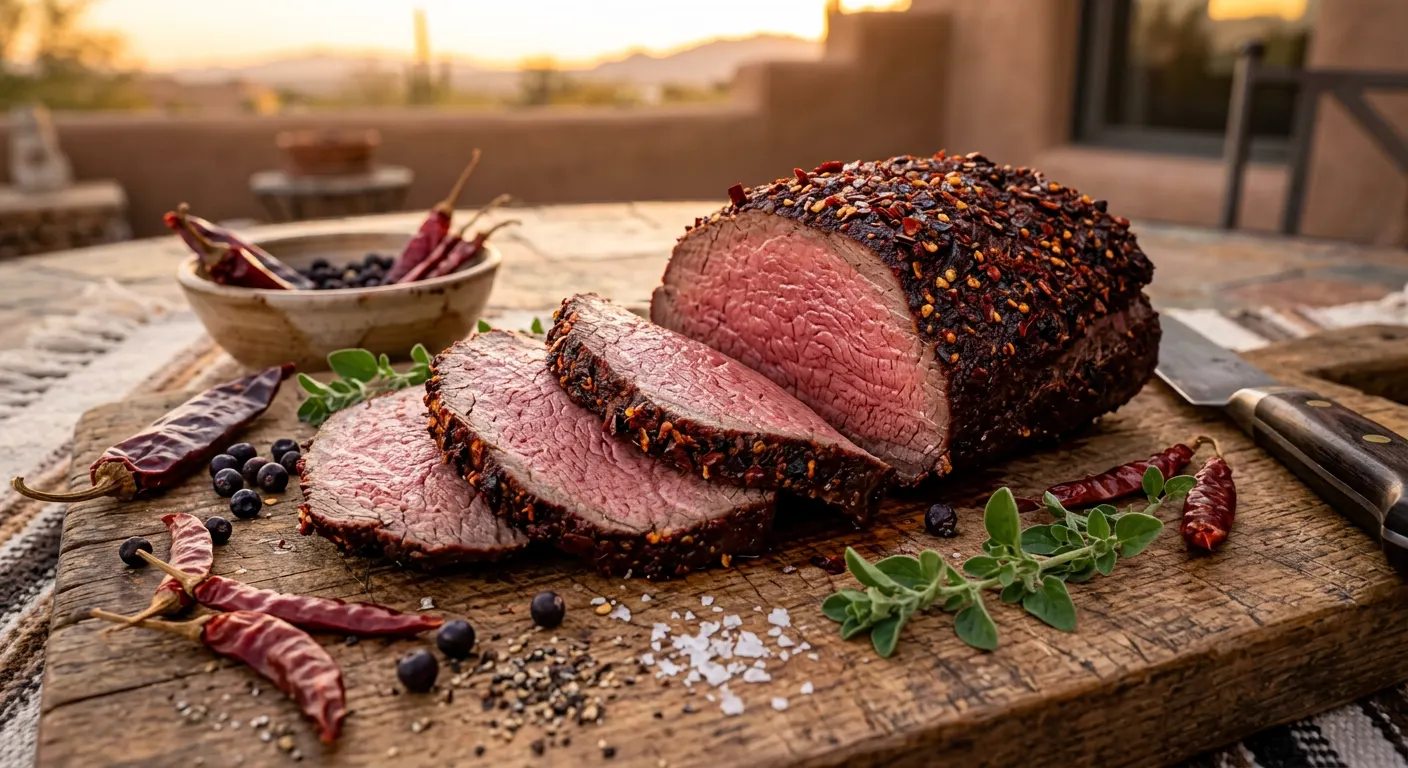
Smoked Chile-Rubbed Elk Roast (Southwest-Style)
Southwest (Pueblo / Dine). Elk was central to the Pueblo and Dine (Navajo) peoples of the Southwest, and this roast honors that with a rub built on the region's defining ingredient, dried red chile, alongside roasted corn and juniper. Elk is even leaner than venison, so a big roast is a real test of restraint, it must come off at a rosy medium-rare or it turns to leather. Smoked over oak with a whisper of mesquite (the one place mesquite belongs on this card, as it's native to the Southwest), it's earthy, gently spicy, and deeply tied to the high desert. A genuine showpiece from a region the rest of the card doesn't touch.
Cook Mode
One step at a time, big text, timers, and your screen stays awake. 0/7 steps done.
Ingredients
Tap to tick off · 0/10 gathered
Method
In a small stone bowl or mortar, combine the ground mild red chile (3.0 tbsp), coarse salt (1.0 tbsp), crushed juniper berries (1.0 tbsp), dried oregano (1.0 tbsp), and ground cumin (1.0 tsp). Whisk in the oil (2.0 tbsp) to form a thick, fragrant paste; the oil is essential here to help the spices adhere and to prevent the lean elk proteins from seizing immediately upon hitting the heat.
Apply the chile paste to the elk roast (5.0 lbs), massaging it firmly into every crevice of the loin or top round. Wrap the roast tightly in butcher paper or plastic wrap and refrigerate for 12 to 24 hours; this long rest allows the juniper and chile to penetrate the dense muscle fibers while the salt dry-brines the meat for better moisture retention.
Preheat your smoker to a steady 250°F using seasoned oak as your primary fuel source. Add a small split of mesquite to the firebox to provide that distinct Southwestern aromatic profile, but keep it minimal to avoid overpowering the delicate game flavor. Allow the elk to sit at room temperature for 30 minutes before loading to ensure a more even cook through the center.
While the smoker stabilizes, prepare your mop liquid in a small saucepan over low heat. Combine the stock (1.0 cup), maple syrup or honey (2.0 tbsp), and rendered fat (2.0 tbsp), whisking until the fat is melted and the syrup is fully integrated. This basting liquid replaces the natural fats that elk lacks, creating a sacrificial moisture barrier during the cook.
Place the roast in the center of the grate, away from direct heat. Brush the meat generously with your prepared mop liquid every 60 minutes, ensuring the exterior stays tacky rather than crusty. Because elk is exceptionally lean, the evaporation of the mop helps cool the surface, slowing down the temperature rise and preventing the outer layers from overcooking.
Begin monitoring the internal temperature with a high-quality probe once you hit the 4-hour mark, as elk can move quickly through the final 10 degrees. Pull the roast off the smoker the exact moment it hits an internal temperature of 130°F. Do not be tempted to go higher; elk carries zero intramuscular fat, and pushing into medium or well-done territory will result in a dry, metallic, and tough texture.
Transfer the roast to a warm cutting board and tent loosely with foil, allowing it to rest for at least 20 minutes. During this time, carryover heat will bring the internal temperature to a perfect, rosy 135°F while the juices redistribute. Slice the roast thin against the grain to break up the long muscle fibers, serving immediately with traditional accompaniments like blue corn bread.
5 more steps locked
You've seen the ingredients and the first two steps. Pit Members get every step, every temp, every glaze — plus the Cook Monitor and Pitmaster AI.
See Membership OptionsAlready a member? Sign in.
Free Guide
5 Techniques Competition Smokers Use That Home Cooks Don't
Join the Guild email list and we'll send you the free guide — the exact moves that separate backyard cooks from competition pitmasters.
Cooks & Reviews
Guild members can rate this recipe, log their cooks and share photos.
Sign in to continueMember reviews
No reviews yet — be the first to rate this cook.
Ask the Pitmaster about this recipe
Substitutions, scaling, technique, troubleshooting — get answers grounded in this cook.
Sign in to try the AI Pitmaster on Smoked Chile-Rubbed Elk Roast (Southwest-Style). New members get 3 free questions.
Sign in to tryComments(0)
Loading comments…