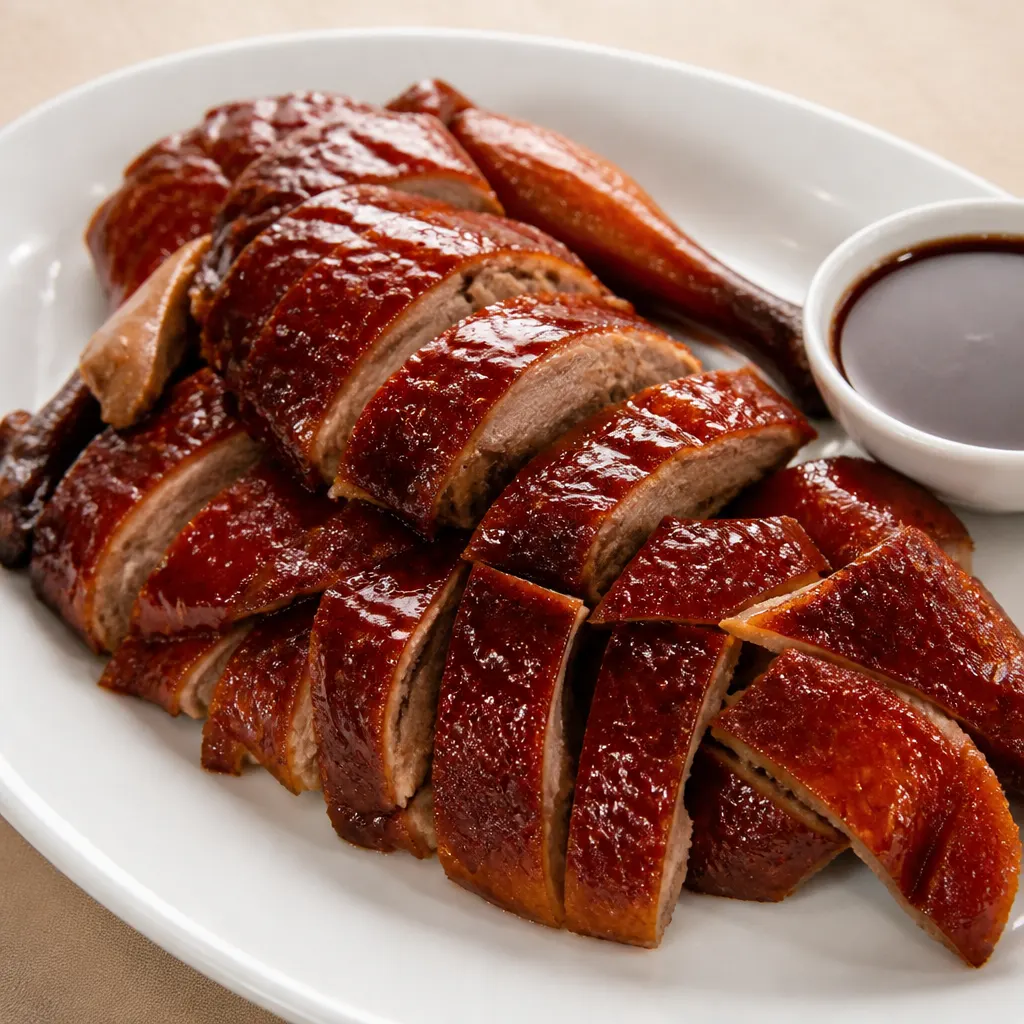
Smoked Cantonese Roast Goose (Siu Ngo)
Roast goose is the king of Cantonese roast meats, even more prized than duck — the crown jewel of restaurants in Hong Kong and Guangdong where whole geese hang lacquered and glistening in the window. The skin is impossibly crisp, the meat rich and dark, and the cavity is filled with a fragrant master sauce that flavors the bird from inside as it cooks. This is a serious multi-day project — scalding, glazing, drying, and a long smoke — but the payoff is one of the great roast birds on earth.
Cook Mode
One step at a time, big text, timers, and your screen stays awake. 0/9 steps done.
Ingredients
Tap to tick off · 0/13 gathered
Method
- 30 min
Begin with a cleaned 9 lb whole goose. Use a clean needle or bamboo skewer to prick the skin all over at a shallow angle, careful to only pierce the subcutaneous fat layer and not the muscle fibers. Focus on the breast, thighs, and the area where the wings meet the body. This is a critical move to create escape routes for the heavy goose fat, preventing it from getting trapped under the skin which would result in a rubbery, greasy finish rather than the desired shattering crispness.
Why it matters
Fat must have a pathway to escape the bird during the cook or the skin will never become crisp.
Common mistake
Piercing into the meat, which allows juices to leak out and dries out the bird.
- 20 min
Whisk together 3 tbsp Hoisin, 2 tbsp Ground bean sauce, 1 tbsp Five-spice, 2 tbsp Shaoxing wine, 1 tbsp Sugar, 1 head crushed Garlic, 4 Ginger slices, and 2 Star anise. Pour this mixture into the cavity of the bird. Using a metal skewer or heavy butcher's twine, sew the cavity shut completely to make it liquid-tight. This creates an internal pressure cooker environment where the aromatics steam the meat from the inside out while it smokes.
Why it matters
The internal sauce acts as a wet-cure that seasons the deep muscle tissue where dry rubs cannot penetrate.
Common mistake
Leaving a gap in the sewing, which allows the flavorful 'master sauce' to leak out into the smoker.
- 15 min
Place the goose on a rack over a sink. Pour a full kettle of boiling water over every inch of the skin until it tightens and turns slightly translucent. This process, known as scalding, begins the denaturation of surface proteins and expands the skin, making it more receptive to the glaze. Immediately pat the bird bone-dry with paper towels after scalding to prevent bacterial growth in the 40-140°F danger zone.
Why it matters
Scalding tightens the skin surface and jump-starts the fat rendering process.
Common mistake
Skipping the scalding step, which leads to loose, flabby skin after roasting.
- 15 min
In a small saucepan, combine 0.25 cup Maltose (or honey), 2 tbsp White vinegar, 2 tbsp Shaoxing wine, and 1 cup Hot water. Simmer until the maltose is fully dissolved. While the liquid is warm, brush a thin, even coat over the entire surface of the goose. The maltose provides the sugar necessary for the Maillard reaction and deep mahogany color, while the vinegar lowers the pH of the skin, aiding in the breakdown of proteins for a crispier texture.
Why it matters
The sugar-vinegar glaze is the chemical foundation for the signature Cantonese 'lacquered' look.
Common mistake
Applying the glaze too thick, which can cause it to burn before the fat fully renders.
- 48h
Place the glazy goose on a wire rack on a sheet pan and refrigerate, uncovered, for 24 to 48 hours. If possible, use a small fan to circulate cold air around the bird. This duration is mandatory for the development of the pellicle and the dehydration of the skin. By the end of this phase, the skin should feel like parchment paper or dry plastic; this lack of surface moisture is what allows the skin to fry in its own fat once it hits the heat.
Why it matters
Moisture is the enemy of crispiness; the dryer the skin before smoking, the better the final texture.
Common mistake
Covering the bird or rushing this step, which leaves the skin wet and chewy.
- 300°F20 min
Preheat your smoker to 300°F using apple or cherry wood. These fruit woods provide a mild, sweet smoke that complements the delicate five-spice and gamey goose meat without overpowering it. Place the goose breast-side up on the grates. Ensure there is a drip pan underneath to catch the massive amount of rendered fat, as goose can produce up to 2-3 cups of liquid gold that can cause grease fires if ignored.
Why it matters
Consistent 300°F heat is required to render fat while simultaneously setting the sugar-based glaze.
Common mistake
Cooking at too low a temp (225°F), which results in 'smoked leather' skin instead of crackling.
- 300°F4h 30m
Smoke the goose until the skin is a deep, glistening mahogany. Monitor the internal temperature in the thickest part of the thigh, aiming for 175°F. Unlike chicken, goose is a red-meat bird and requires a higher finishing temp in the dark meat to fully break down the connective tissue and render the heavy fat deposits. Rotate the bird halfway through the cook to ensure even color across the breasts.
Why it matters
High finishing internal temps ensure the rich, dark meat is tender rather than tough and greasy.
Common mistake
Pulling the bird based on color alone before the internal fat has fully liquified.
- 180°F20 min
Remove the goose and let it rest for 20 minutes on a cutting board. This allow the juices to redistribute and a slight carryover cook to occur. Carefully snip the twine or remove the skewers over a bowl to collect the internal 'master sauce' that has been simmering inside the bird. This liquid is concentrated goose essence and will serve as your primary dipping gravy.
Why it matters
Resting prevents the juices from purging instantly when the skin is pierced for carving.
Common mistake
Discarding the internal liquid, which contains the majority of the dish's seasoning.
- 10 min
Using a heavy meat cleaver, chop the goose through the bone into bite-sized rectangular pieces. This is the traditional service style which releases the marrow and keeps the meat succulent. Arrange on a platter, drizzle a bit of the recovered internal gravy over the meat (avoiding the skin to keep it crisp), and serve with the remaining gravy and plum sauce on the side.
Why it matters
Chopping through the bone is essential for the authentic texture and flavor release of Siu Ngo.
Common mistake
Using a standard carving knife and slicing away from the bone, which loses the traditional aesthetic.
7 more steps locked
You've seen the ingredients and the first two steps. Pit Members get every step, every temp, every glaze — plus the Cook Monitor and Pitmaster AI.
See Membership OptionsAlready a member? Sign in.
Sauce It
Cooks & Reviews
Guild members can rate this recipe, log their cooks and share photos.
Sign in to continueMember reviews
No reviews yet — be the first to rate this cook.
Ask the Pitmaster about this recipe
Substitutions, scaling, technique, troubleshooting — get answers grounded in this cook.
Sign in to try the AI Pitmaster on Smoked Cantonese Roast Goose (Siu Ngo). New members get 3 free questions.
Sign in to tryComments(0)
Loading comments…