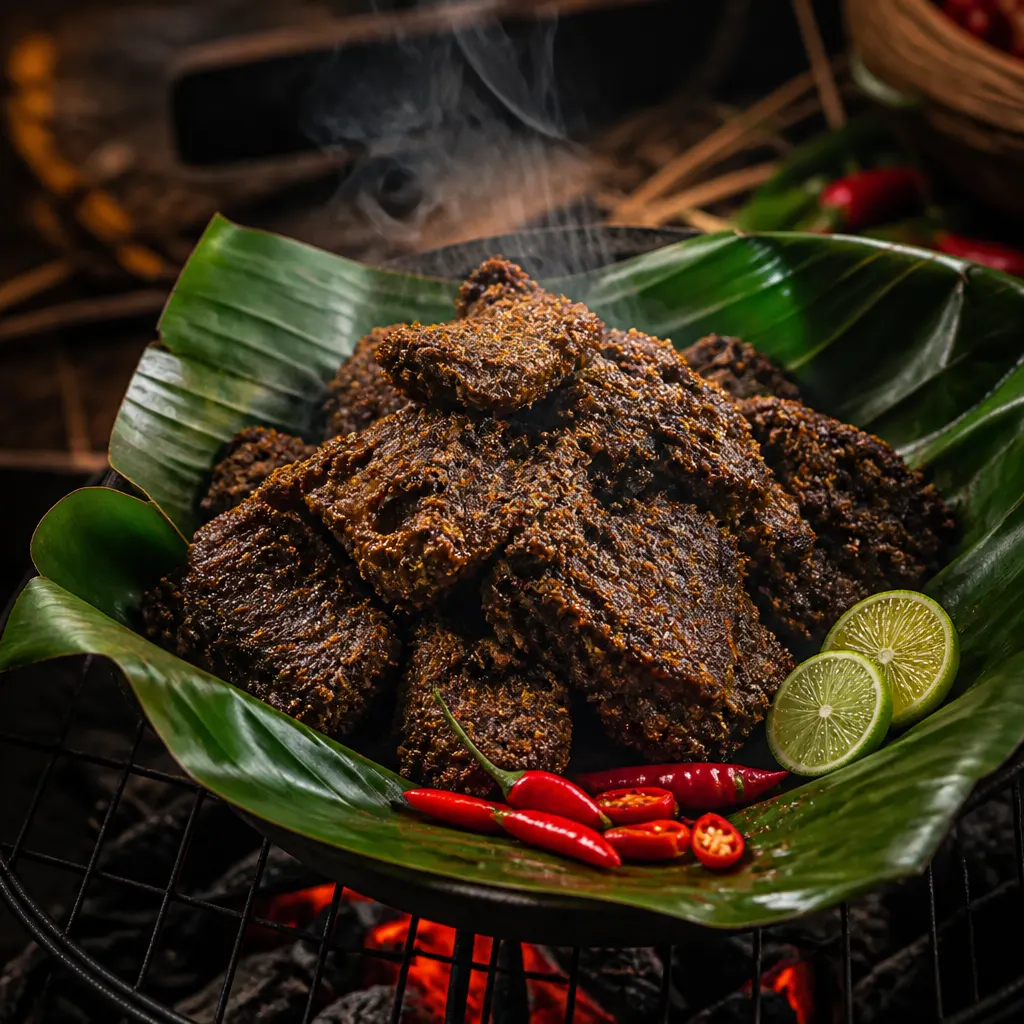
Smoked Beef Rendang
Indonesia's legendary dry curry from West Sumatra. Beef is hard-smoked, then cooked low and slow in a fragrant spice paste and coconut milk until the liquid completely cooks away and the meat is coated in a dark, dry, lacquered crust of pure spice and toasted coconut.
Cook Mode
One step at a time, big text, timers, and your screen stays awake. 0/9 steps done.
Ingredients
Tap to tick off · 0/18 gathered
Method
Using a high-speed blender or food processor, combine the soaked dried red chilies (10.0), peeled shallots (5.0), the peeled cloves from a whole head of garlic (1.0), peeled ginger (3.0 inch), peeled galangal (3.0 inch), fresh turmeric (3.0 inch), and the white parts of the lemongrass stalks (3.0). Process until a smooth, thick paste forms; you may need to add a splash of water or oil to help it catch. This paste, known as the 'bumbu', is the concentrated flavor foundation of the entire dish.
Place the cubed beef chuck or brisket (4.0 lbs) in a large non-reactive bowl or vacuum-seal bag. Scoop out exactly half of your prepared spice paste and massage it thoroughly into the meat until every chunk is evenly coated. Cover or seal the container and refrigerate for 12 hours. This step allows the aromatics to penetrate the muscle fibers and provides a sticky surface for the smoke to adhere to later.
Preheat your smoker to 250°F using a mix of oak and apple wood for a balance of strength and sweetness. Arrange the marinated beef chunks on a wire rack to ensure maximum airflow and smoke contact on all sides. Smoke the beef for approximately 4 hours until a dark, mahogany crust forms on the exterior; the internal temperature isn't the focus here, as we are prioritizing smoke absorption and surface dehydration before the braise.
While the beef is smoking, heat a wide, dry skillet over medium-low heat and add the grated coconut (1.0 cup). Stir constantly and aggressively for 15-20 minutes until the coconut turns a deep, dark chestnut brown and smells intensely nutty—be careful, as it turns from golden to burnt very quickly. Immediately transfer the hot coconut to a mortar and pestle or spice grinder and process until it releases its oils and forms a coarse, dark paste known as kerisik.
In a heavy-bottomed Dutch oven or wide pot, heat 3 tablespoons of neutral oil over medium heat. Add the remaining half of the spice paste along with the ground coriander (2.0 tbsp) and ground cumin (1.0 tsp). Sauté the paste for 5-8 minutes, stirring frequently, until the paste darkens slightly and the oil begins to separate from the solids ('pecah minyak'), indicating the spices are fully cooked and aromatic.
Into your bloomed spice paste, stir in the full-fat coconut milk (3.0 cans), kaffir lime leaves (5.0), turmeric leaf if available (1.0), and cinnamon sticks (2.0). Add the tamarind paste (2.0 tbsp), palm sugar (2.0 tbsp), and salt (2.0 tbsp), whisking until the liquid is uniform. Carefully add the smoked beef chunks into the pot, ensuring they are mostly submerged in the coconut mixture.
Bring the pot to a very gentle simmer, then reduce the heat to low; cook UNCOVERED for 3 to 4 hours. Stir the pot every 20-30 minutes to prevent the sugars from scorching on the bottom. As the water evaporates from the coconut milk, the sauce will thicken into a rich, bubbling gravy, and the beef will begin to become fork-tender while absorbing the spices.
Once the sauce has reduced to a thick, sludge-like consistency, stir in your prepared kerisik (toasted coconut paste). At this stage, you must stir more frequently—almost constantly—as the liquid is nearly gone and the risk of burning is high. Continue cooking until the oil separates completely and the beef is coated in a dark, dry, lacquered crust of spices with almost no standing liquid remaining; this is the 'Dry Rendang' state.
Remove the cinnamon sticks and the kaffir lime leaves before serving. While the rendang is delicious immediately, the flavors are legendary for deepening significantly after an overnight rest in the refrigerator. Reheat gently and serve with steamed jasmine rice or lontong (rice cakes) to balance the intense, smoky, and fatty complexity of the beef.
7 more steps locked
You've seen the ingredients and the first two steps. Pit Members get every step, every temp, every glaze — plus the Cook Monitor and Pitmaster AI.
See Membership OptionsAlready a member? Sign in.
Sauce It
Cooks & Reviews
Guild members can rate this recipe, log their cooks and share photos.
Sign in to continueMember reviews
No reviews yet — be the first to rate this cook.
Ask the Pitmaster about this recipe
Substitutions, scaling, technique, troubleshooting — get answers grounded in this cook.
Sign in to try the AI Pitmaster on Smoked Beef Rendang. New members get 3 free questions.
Sign in to tryComments(0)
Loading comments…