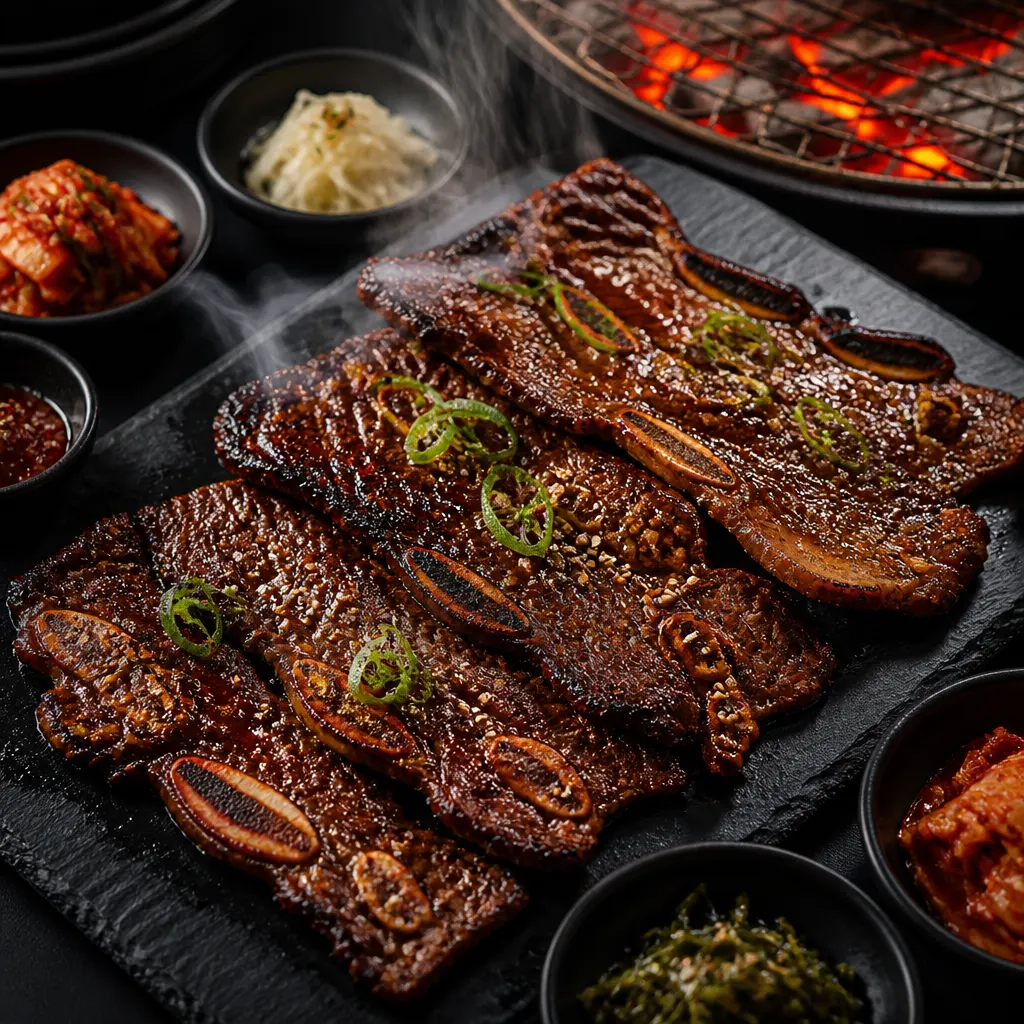
Smoked Beef Galbi (LA-Style Short Ribs)
Korea's gateway to smoked barbecue — thin cross-cut flanken short ribs in the classic soy-sugar-sesame-garlic-pear marinade, smoked gently then charred hard over screaming heat. The grated Asian pear is the secret: its enzymes tenderize the beef while adding a clean fruity sweetness that plain sugar can't match.
Cook Mode
One step at a time, big text, timers, and your screen stays awake. 0/7 steps done.
Ingredients
Tap to tick off · 0/11 gathered
Method
- 10 min
Begin by creating the marinade, which provides both flavor and tenderization. In a large bowl, whisk together 0.5 cup of soy sauce, 0.333 cup of brown sugar, and 0.25 cup of mirin until the sugar is fully dissolved. Next, incorporate the flavor-critical aromatics: 2 tbsp of toasted sesame oil, 6 cloves of grated garlic, and 1 tbsp of grated ginger. The most important component is half of a whole, grated Asian pear; this fruit contains proteolytic enzymes that chemically break down tough connective tissues in the beef. Finish the marinade by stirring in 1 tsp of black pepper.
Why it matters
The Asian pear's enzymes provide a natural enzymatic tenderization that cannot be replicated by acid or salt alone, while the sugar is essential for the final high-heat caramelization.
Common mistake
Using pear juice instead of grated fresh pear, which significantly reduces the enzymatic potency and results in less tender meat.
- 24h
Place the 3 lbs of flanken-cut short ribs in a single layer inside a large resealable bag or non-reactive glass dish. Pour the prepared marinade over the ribs, ensuring every surface is completely coated. Add 4 whole chopped scallions, reserving some of the green tops for the final garnish. Squeeze as much air as possible from the bag before sealing and massage the marinade into the meat. For food safety, refrigerate immediately for a minimum of 6 hours; however, for maximum flavor penetration and tenderness from the enzymes, allow the ribs to cure for a full 24 hours.
Why it matters
This extended curing time allows the marinade's enzymes to break down tough muscle fibers and the salt to season the meat through and through, ensuring a tender and flavorful result.
Common mistake
Marinating for less than 6 hours, which prevents the enzymes and salt from having enough time to effectively tenderize and season the beef.
- 275°F
Prepare your smoker for indirect cooking, targeting a stable temperature of 275°F. Use a mild wood like apple or a classic like oak to complement the beef without overpowering the marinade flavors. It is critical to fill your smoker's water pan to introduce humidity into the cooking chamber. This moisture prevents the thin, exposed edges of the flanken-cut ribs from drying out and becoming tough during the initial smoking phase.
Why it matters
A stable, humid, indirect heat environment allows the ribs to absorb smoke flavor and render fat slowly without the marinade's sugars burning prematurely.
Common mistake
Placing the meat in the smoker before the temperature has stabilized, leading to inconsistent cooking and poor smoke absorption.
- 275°F1h 15m
Remove the short ribs from the marinade, allowing any excess liquid to drip off thoroughly; do not pat them dry, as the thin coating of marinade will form the initial glaze. Arrange the ribs in a single layer directly on the smoker grates, ensuring there is space between each piece for even air and smoke circulation. Smoke for approximately 60 to 75 minutes. The goal in this stage is to infuse them with smoke and begin rendering the fat until they reach an internal temperature of about 165°F and develop a deep mahogany color.
Why it matters
This low-temperature phase gently renders fat and infuses the meat with smoke, building a deep flavor foundation that cannot be achieved with direct grilling alone.
Common mistake
Leaving too much marinade on the ribs, which causes them to steam on the smoker grate rather than forming a proper bark.
- 4 min
To achieve the classic Galbi char, the ribs must be seared over intense, direct heat. Either open all smoker vents and move the ribs over a direct heat zone, or transfer them to a separate grill preheated to its highest setting. Sear for just 1 to 2 minutes per side, flipping frequently. The high sugar content from the brown sugar and pear will cause the surface to caramelize and char very quickly. You must watch for flare-ups and move the ribs constantly to develop a crispy, browned crust without burning.
Why it matters
This rapid, high-heat finish creates intense Maillard reaction and caramelization, producing the signature sweet, charred, and crispy texture of authentic Korean BBQ.
Common mistake
Walking away from the grill during the sear, allowing the high-sugar marinade to turn from caramelized to bitter carbon in seconds.
- 10 min
Once the ribs are charred to your liking, immediately transfer them to a cutting board. Tent them loosely with foil and let them rest for 5 to 10 minutes. This resting period is non-negotiable for juicy meat. During cooking, muscle fibers tighten and push moisture to the surface; resting allows these fibers to relax and reabsorb those flavorful juices, ensuring every bite is succulent.
Why it matters
Resting allows the juices, which were driven to the surface by heat, to redistribute throughout the meat, preventing them from spilling out when sliced.
Common mistake
Slicing into the meat immediately after it comes off the heat, resulting in a dry finished product and a puddle of lost flavor on the cutting board.
- 5 min
After the rest, prepare the ribs for serving. Sprinkle them generously with 2 tbsp of toasted sesame seeds for nutty flavor and texture, followed by the fresh, sharp bite of the remaining chopped scallion greens you reserved earlier. For traditional service, use a pair of clean kitchen shears to snip the meat into individual bite-sized pieces between the small cross-cut bones. Serve immediately with steamed rice, kimchi, and lettuce leaves for making ssam wraps.
Why it matters
The final garnishes add crucial freshness, texture, and aromatic contrast that balance the rich, savory, and sweet flavors of the smoked meat.
Common mistake
Forgetting the fresh garnishes, which leaves the final dish feeling heavy and one-dimensionally rich.
Sauce It
Cooks & Reviews
Guild members can rate this recipe, log their cooks and share photos.
Sign in to continueMember reviews
No reviews yet — be the first to rate this cook.
Ask the Pitmaster about this recipe
Substitutions, scaling, technique, troubleshooting — get answers grounded in this cook.
Sign in to try the AI Pitmaster on Smoked Beef Galbi (LA-Style Short Ribs). New members get 3 free questions.
Sign in to tryComments(0)
Loading comments…