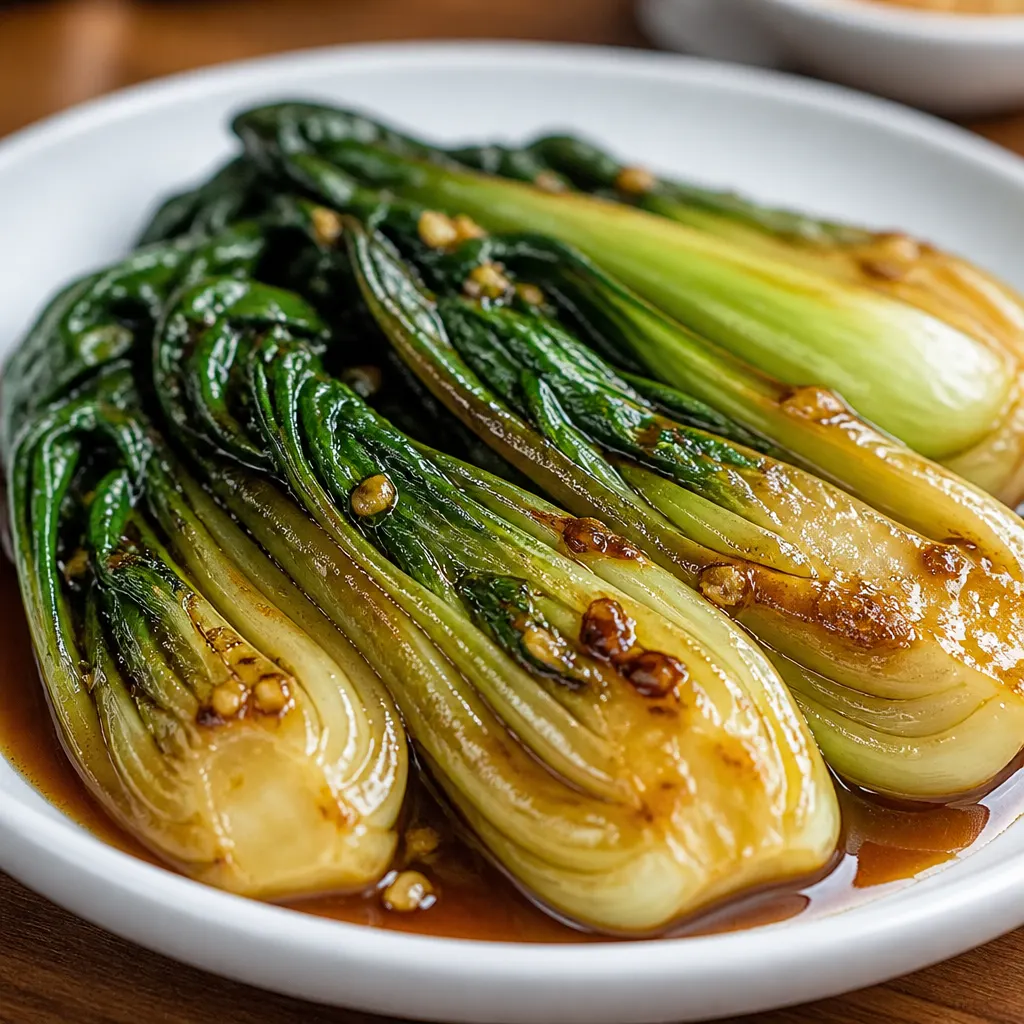
Smoked Baby Bok Choy with Garlic-Oyster Sauce
Chinese greens are usually flash-cooked, but smoking baby bok choy gives this everyday vegetable a savory depth that turns a humble side into something memorable. A quick smoke softens the stems and chars the edges, then a glossy garlic-oyster sauce ties it to the table. It's the perfect green counterpoint to all the rich smoked meat on this card, and about the easiest thing you can make. Vegetarian if you use a mushroom-based oyster sauce.
Cook Mode
One step at a time, big text, timers, and your screen stays awake. 0/7 steps done.
Ingredients
Tap to tick off · 0/8 gathered
Method
- 10 min
Begin by washing 6 heads of baby bok choy thoroughly to remove any grit trapped between the stems. Using a sharp knife, slice each head lengthwise from the root through the leaves to create 12 uniform halves. This vertical cut is critical because it keeps the leaves attached to the core, ensuring the vegetable remains intact on the grates rather than scattering or falling through during the smoking process.
Why it matters
Keeping the root intact allows the bok choy to be flipped easily while maintaining its structure for presentation.
Common mistake
Slicing off the root end entirely, which causes the individual leaves to separate and burn quickly.
- 5 min
Lightly brush the cut sides of the halved bok choy with 1 tablespoon of neutral oil. This thin layer of fat serves two purposes: it facilitates even heat transfer to the dense stems and prevents the delicate leaves from sticking to the smoker grates. Do not over-oil, as excess fat will drip and cause flare-ups that can impart a bitter, dirty soot flavor to the greens.
Why it matters
A thin oil coating acts as a thermal bridge between the air and the plant cells, ensuring the stems soften before the leaves disintegrate.
Common mistake
Using a low-smoke point oil like extra virgin olive oil which can turn acrid at smoker temperatures.
- 275°F15 min
Preheat your smoker to 275°F using apple or fruit wood. These woods provide a mild, sweet profile that complements the natural sweetness of the brassica without overpowering its delicate flavor. Ensure your smoke is 'thin blue' rather than white and billowy; because bok choy has a high surface-area-to-mass ratio, it will absorb smoke compounds much faster than a large roast.
Why it matters
Vegetables lack the heavy proteins and fats of meat to buffer smoke, so a clean-burning fire is essential to avoid a 'creosote' taste.
Common mistake
Placing the vegetables in the smoker before the fire has stabilized, resulting in a bitter, ashy flavor.
- 275°F25 min
Place the bok choy halves directly on the grates, cut-side down. Smoke at 275°F for 20 to 30 minutes. You are looking for specific tactile cues: the white stems should yield slightly to pressure (tender-crisp), and the leafy green edges should be starting to wilt and show very light char. Unlike meat, there is no target internal temperature; you are cooking by visual and tactile feedback to avoid the 40-140°F danger zone for excess time while maintaining structural integrity.
Why it matters
The high moisture content in bok choy allows it to steam from the inside out while absorbing external wood flavor.
Common mistake
Overcooking until the stems lose all snap, which results in a soggy, unappealing texture.
- 3 min
While the greens are smoking, heat a small saucepan over medium heat with the remaining teaspoon of oil. Add 4 cloves of minced garlic and sauté until just golden and fragrant. Be vigilant; garlic contains high sugar content and can burn in seconds. By frying the garlic first, you mellow the raw bite and infuse the fat with aromatic compounds that will distribute more evenly throughout the final sauce.
Why it matters
Frying the garlic denatures the enzymes that cause harshness, creating a sweeter, more complex aromatic base.
Common mistake
Browning the garlic too deeply, which introduces a permanent bitterness to the sauce.
- 5 min
To the golden garlic, add 2 tablespoons of oyster sauce, 1 tablespoon of soy sauce, 1 tablespoon of Shaoxing wine, 1 teaspoon of sugar, and 1 teaspoon of sesame oil. Simmer for 2-3 minutes until the sugar dissolves and the sauce thickens slightly into a glossy glaze. The Shaoxing wine provides acidity to cut through the salt, while the sesame oil adds a final layer of toasted nuttiness that mirrors the smokiness of the wood.
Why it matters
A simmered sauce ensures the flavors are fully integrated and the sugar is properly dissolved for a smooth mouthfeel.
Common mistake
Boiling the sauce too long, which can cause the soy sauce to become overly salt-concentrated and the sesame oil to lose its aroma.
- 2 min
Remove the bok choy from the smoker and arrange them on a warm platter, cut-side up to catch the glaze. Immediately pour the hot garlic-oyster sauce over the centers of the stems, allowing it to run down into the leaves. Serve immediately while the contrast between the crisp stem and the wilted leaf is at its peak. There is no 'rest' period needed for vegetables as they do not have the muscle fibers that require moisture redistribution like a brisket.
Why it matters
Serving immediately preserves the delicate balance of 'tender-crisp' that defines well-executed Cantonese-style greens.
Common mistake
Letting the smoked greens sit for too long, which allows carryover heat to turn them mushy.
Cooks & Reviews
Guild members can rate this recipe, log their cooks and share photos.
Sign in to continueMember reviews
No reviews yet — be the first to rate this cook.
Ask the Pitmaster about this recipe
Substitutions, scaling, technique, troubleshooting — get answers grounded in this cook.
Sign in to try the AI Pitmaster on Smoked Baby Bok Choy with Garlic-Oyster Sauce. New members get 3 free questions.
Sign in to tryComments(0)
Loading comments…