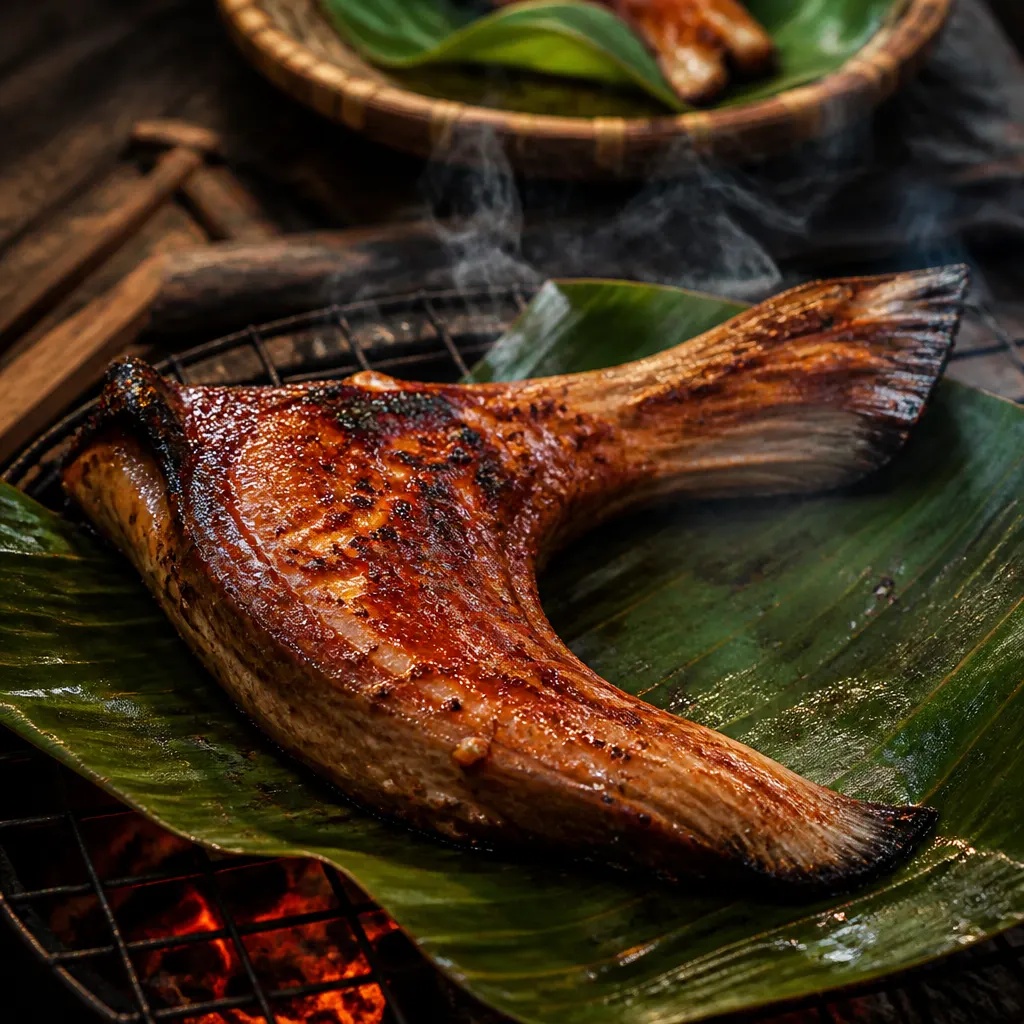
Smoked Ahi Collar (Kama)
The collar (kama) is the prized cut behind the gills, rich and fatty and revered by chefs who know fish. It's a cut most people throw away, which makes it both a bargain and a mark of someone who really knows their stuff. Marinated in shoyu and ginger and smoked gently, it's a restaurant-tier dish.
Cook Mode
One step at a time, big text, timers, and your screen stays awake. 0/8 steps done.
Ingredients
Tap to tick off · 0/8 gathered
- — MAIN —
- — MARINADE —
Method
- 15 min
Begin by inspecting the 2 ahi tuna collars (kama), which should be approximately 1 lb each. Use a sharp knife to remove any residual scales or excess blood clots from the bone-side and gill area. Rinse the collars under cold running water and pat them thoroughly dry with paper towels. Understanding the anatomy of the collar is vital; it is composed of bone, skin, and fat-rich meat that requires careful handling to keep the structure intact before the curing process begins.
Why it matters
Proper trimming ensures even salt penetration and removes impurities that can cause off-flavors when smoked.
Common mistake
Leaving too many scales on the skin which prevents the marinade from reaching the fat-rich flesh.
- 4h
In a non-reactive bowl, whisk together 0.333 cup soy sauce, 2 tbsp mirin, 2 tbsp sake, 2 tbsp grated ginger, 1 tsp sesame oil, and 1 tbsp brown sugar until the sugar is fully dissolved. Place the collars in a heavy-duty gallon freezer bag and pour the marinade over them, ensuring the ratio of liquid covers all crevices of the bone-in cut. Seal the bag while removing as much air as possible to maximize surface contact between the fish and the curing agents.
Why it matters
The salt in the soy sauce denatures the proteins to retain moisture while the ginger and alcohol neutralize fishy aromatics.
Common mistake
Curing for less than 2 hours, which results in a lack of flavor depth in the thickest parts of the collar.
- 45 min
Remove the collars from the marinade and discard the excess liquid. Pat the collars dry with paper towels—do not rinse them. Place the fish on a wire cooling rack over a sheet pan and set it in a cool, breezy spot or under a fan for 30 to 60 minutes. You are looking for a tacky, slightly shiny surface to develop. This 'pellicle' is a thin layer of proteins that have migrated to the surface, which is essential for smoke particles to adhere to the fish rather than sliding off with moisture.
Why it matters
A proper pellicle creates a surface for the smoke to bond to and prevents the 'white curd' (albumin) from leaking out.
Common mistake
Putting wet fish into the smoker, which leads to steaming rather than smoking.
- 225°F20 min
Preheat your smoker to a stable 225°F using guava or alder wood. These mild woods are preferred for seafood as they provide a sweet, delicate smoke profile that won't overpower the subtle sweetness of the ahi. Ensure you have a clean, blue smoke (combustion) rather than thick white billowy smoke. If using a pellet grill or offset, ensure the water pan is filled to provide a humid environment, which helps keep the fatty collar meat from drying out during the cook.
Why it matters
Clean smoke management prevents the bitter creosote taste that easily ruins thin-skinned seafood.
Common mistake
Using heavy woods like mesquite or hickory which dominate the delicate flavor of the tuna.
- 225°F1h 15m
Place the collars on the grates, skin-side down. Close the lid and maintain a steady 225°F. Monitor the internal temperature using a probe inserted into the thickest part of the meat, being careful not to hit the bone, which can give a false high reading. You are looking for the flesh to transition from translucent to opaque and firm. The collagen in the collar will begin to soften, and the fat will start to render, basting the meat from within.
Why it matters
Low and slow heat allows the high fat content of the kama to render without seizing the protein fibers.
Common mistake
Opening the lid frequently, which causes temperature swings and extends the cook time into the danger zone.
- 140°F15 min
As the collars approach an internal temperature of 140°F, perform a flake test with a fork. The meat should pull away from the bone in large, succulent flakes. Because fish has very little connective tissue compared to beef, it is easy to overcook. Pull the collars once they reach 140°F; carryover cooking will bring them to the final safe and palatable temperature of 145°F while they rest.
Why it matters
The window between perfectly moist and chalky/dry for tuna is extremely narrow.
Common mistake
Waiting until 145°F to pull the fish, which results in overcooked tuna after carryover heat.
- 10 min
Transfer the smoked collars to a warm platter. Cover them loosely with foil—do not wrap them tightly, as this will soften the skin you've worked to set. Let the fish rest for at least 5 to 10 minutes. This allows the internal juices to redistribute and the temperature to equalize throughout the bone-in cut, ensuring every bite is uniformly moist.
Why it matters
Resting prevents the juices from immediately draining away when you begin eating.
Common mistake
Skipping the rest and serving immediately, leading to a loss of the rendered fats on the plate.
- 5 min
Serve the ahi collars hot with a side of grated daikon radish and fresh lemon or lime wedges. Instruct guests to use their chopsticks or forks to pick the meat directly from the bone structure, as the richest meat is often tucked in the 'nooks' of the collar. The sharpness of the citrus and the bite of the daikon provide a necessary acid balance to the heavy, fatty nature of the smoked kama.
Why it matters
Acid and crunch are the essential culinary counterpoints to the richness of smoked fish oil.
Common mistake
Forgetting the citrus, which helps cut through the intense fattiness of the collar.
Sauce It
Cooks & Reviews
Guild members can rate this recipe, log their cooks and share photos.
Sign in to continueMember reviews
No reviews yet — be the first to rate this cook.
Ask the Pitmaster about this recipe
Substitutions, scaling, technique, troubleshooting — get answers grounded in this cook.
Sign in to try the AI Pitmaster on Smoked Ahi Collar (Kama). New members get 3 free questions.
Sign in to tryComments(0)
Loading comments…