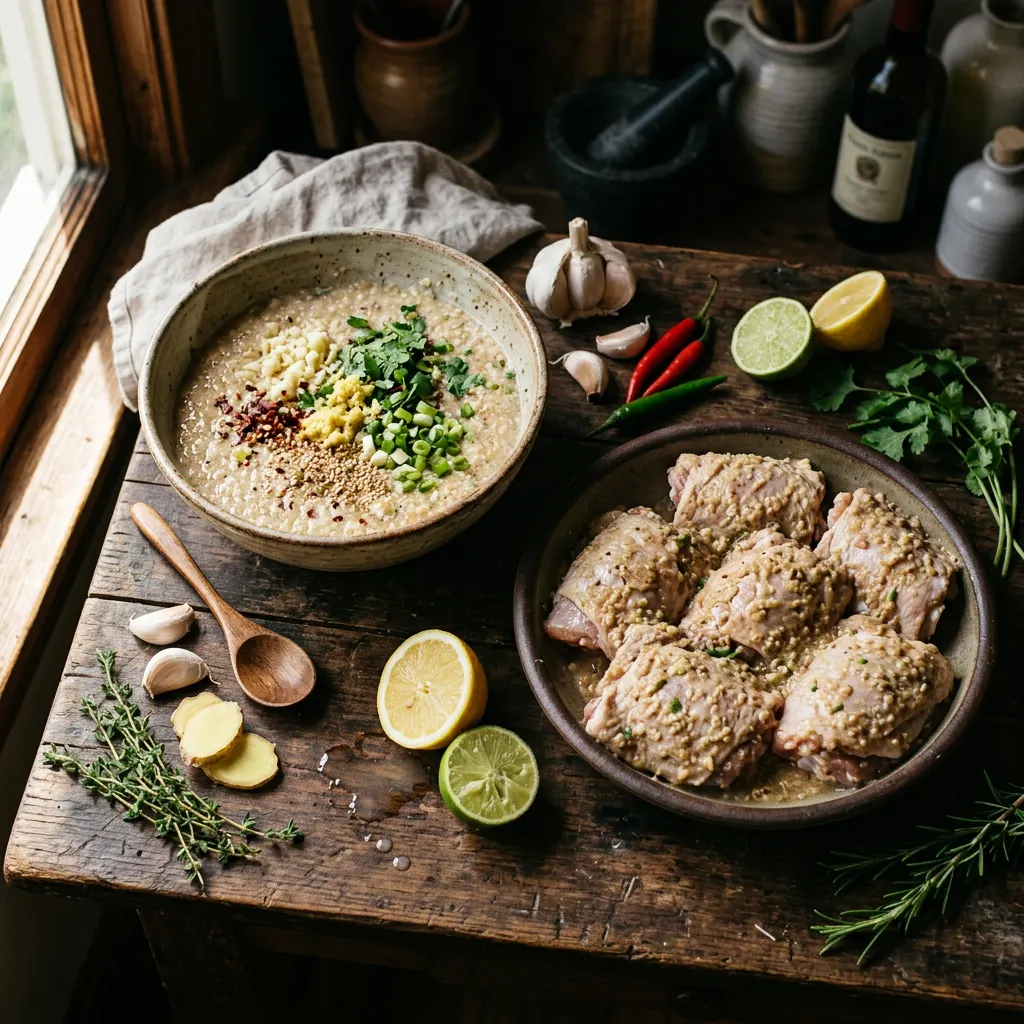
Shio Koji
The single most useful thing in a serious cook's fridge. Fermented rice koji tenderizes, seasons, and deepens umami all at once. Works on meat, fish, poultry, and vegetables. Best on chicken, pork, and white fish.
Cook Mode
One step at a time, big text, timers, and your screen stays awake. 0/11 steps done.
Ingredients
Tap to tick off · 0/9 gathered
Method
To make: stir the rice koji with the salt and water, cover loosely, and let it sit at room temperature 7 to 10 days, stirring once a day, until it smells sweet and the grains go soft. Keeps for months in the fridge.
- 5 min
In a clean glass jar, combine the dried koji rice, filtered water, and sea salt. Stir well to ensure the salt is mostly dissolved and the koji is fully submerged.
Why it matters
Thorough mixing at the start ensures even salt distribution and hydration of the koji, which are critical for proper fermentation.
Common mistake
Not dissolving the salt completely can lead to pockets of overly salty or undersalted koji, affecting the final flavor balance.
Coat the meat in a thin layer — about 1 tbsp per pound — and rest in the fridge. Fish: 30 minutes to a few hours. Chicken and pork: 8 to 24 hours. Wipe the excess off before cooking (koji browns fast), then pat dry and hit the fire.
- 72°F24h
Loosely cover the jar with its lid or a breathable cloth secured with a rubber band. Place the jar in a warm spot, ideally around 68-77°F (20-25°C), away from direct sunlight.
Why it matters
A slightly warm environment encourages the koji mold's enzymatic activity, starting the breakdown of starches and proteins into sugars and amino acids, which are responsible for umami.
Common mistake
Using an airtight lid can cause pressure build-up and prevent necessary airflow, which the koji needs to thrive.
- 5 min
Once a day, open the jar and give the mixture a good stir with a clean spoon. This redistributes the koji and liquid, preventing mold growth on the surface and ensuring even fermentation.
Why it matters
Stirring aerates the mixture and ensures all parts of the koji are submerged in the brine, preventing unwanted surface mold and promoting consistent fermentation throughout the batch.
Common mistake
Forgetting to stir or using a dirty utensil can introduce unwanted bacteria or inhibit the fermentation process.
- 168h
Continue daily stirring for 7-14 days. The shio koji is ready when the rice grains have softened significantly and can be easily mashed between your fingers. It will also have a sweet, savory, and slightly tangy aroma.
Why it matters
The change in texture indicates that the enzymes have effectively broken down the rice, creating the characteristic flavor and tenderizing properties of shio koji.
Common mistake
Stopping the fermentation too early will result in less potent shio koji with underdeveloped flavor and tenderizing power.
- 72°F168h
Continue daily stirring and fermentation for 7-14 days. The shio koji is ready when the rice grains have softened significantly and the mixture has a pleasant, slightly sweet, and savory aroma. It should have a consistency similar to a thick porridge.
Why it matters
This extended period allows the koji enzymes (amylase and protease) to break down starches into sugars and proteins into amino acids, creating its characteristic umami and tenderness.
Common mistake
Stopping fermentation too early, resulting in a less flavorful and less effective shio koji.
Once the shio koji has reached the desired consistency, close the jar tightly and transfer it to the refrigerator. This will slow down the fermentation process significantly.
Why it matters
Refrigeration is crucial for halting active fermentation and preserving the quality and flavor of the finished shio koji for an extended period.
Common mistake
Leaving shio koji at room temperature after it's ready can lead to over-fermentation, resulting in an overly sour taste or spoilage.
Once the shio koji is ready, seal the jar tightly and store it in the refrigerator. It will continue to slightly ferment but at a much slower rate. It can be stored for several months.
Why it matters
Refrigeration slows down enzymatic activity and prevents spoilage, preserving the shio koji's quality for longer.
Common mistake
Leaving shio koji at room temperature after fermentation is complete, which can lead to over-fermentation or spoilage.
- 5 min
For a smoother texture, you can blend the finished shio koji in a food processor or with an immersion blender until it reaches your desired consistency. This can make it easier to spread or mix into marinades.
Why it matters
Blending provides a more uniform texture, which can be desirable for certain applications where a smooth marinade or sauce is preferred.
Common mistake
Over-blending if you prefer some texture, or not blending enough for a truly smooth paste.
Shio koji can be stored in the refrigerator for several months. Use it as a marinade for meats, fish, or vegetables, typically 1-2 tablespoons per pound of food. Marinate for at least 30 minutes, or preferably several hours to overnight. It can also be blended into a paste for smoother application.
Why it matters
Proper storage ensures the longevity of your shio koji, allowing you to enjoy its benefits over time. Its versatility makes it a powerful flavor enhancer in many dishes.
Common mistake
Not adhering to proper refrigeration can lead to spoilage.
Cooks & Reviews
Guild members can rate this recipe, log their cooks and share photos.
Sign in to continueMember reviews
No reviews yet — be the first to rate this cook.
Ask the Pitmaster about this recipe
Substitutions, scaling, technique, troubleshooting — get answers grounded in this cook.
Sign in to try the AI Pitmaster on Shio Koji. New members get 3 free questions.
Sign in to tryComments(0)
Loading comments…