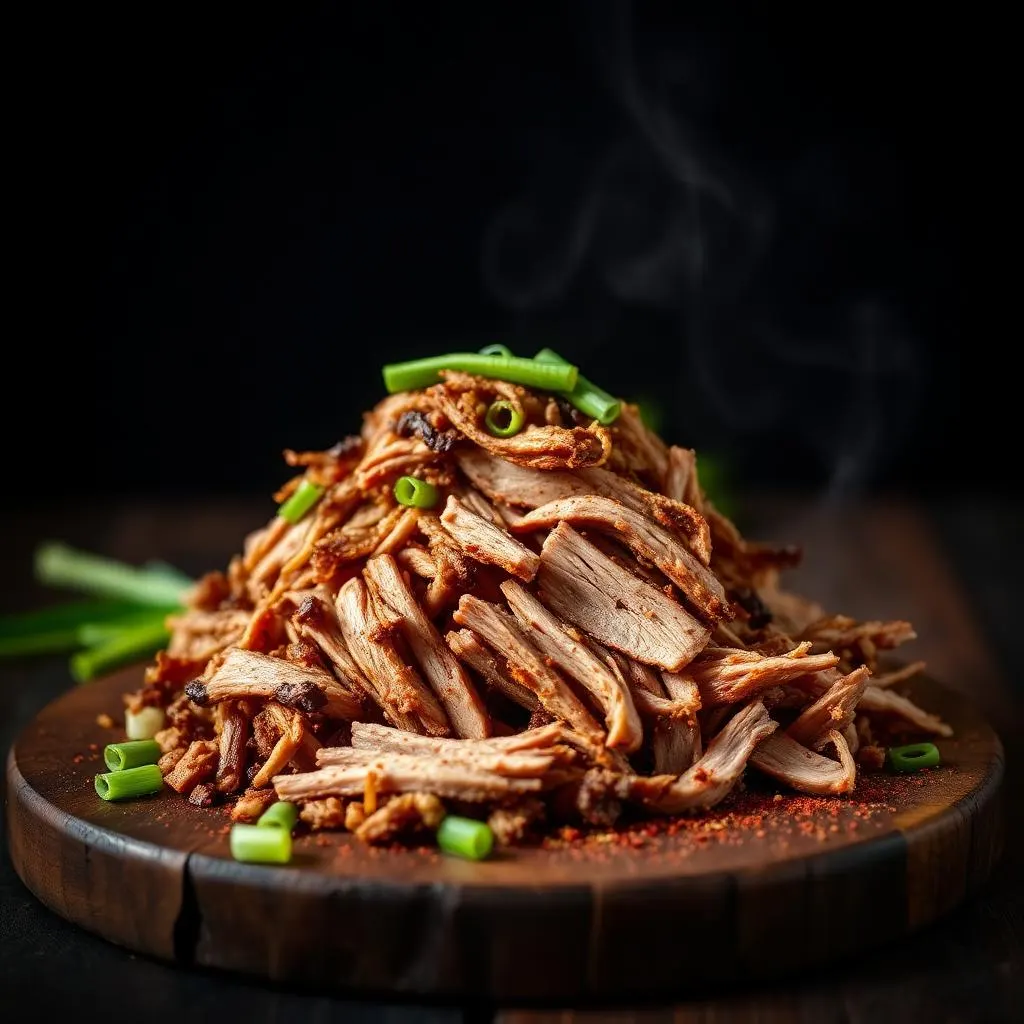
Island-Spiced Pulled Pork Shoulder
The most forgiving cut in barbecue meets the loudest seasoning in the Caribbean. Marinated in jerk overnight, smoked low and slow, then pulled and tossed in its own juices.
Cook Mode
One step at a time, big text, timers, and your screen stays awake. 0/8 steps done.
Ingredients
Tap to tick off · 0/15 gathered
- — MAIN —
- — JERK PASTE —
Method
- 20 min
In a food processor, blend the 5 whole scotch bonnet peppers, 1 bunch of scallions, 8 garlic cloves, 2 inches of ginger, 3 tbsp ground allspice, 2 tbsp fresh thyme, 2 tbsp brown sugar, 1 tbsp black pepper, 1 tsp cinnamon, 1 tsp nutmeg, 3 tbsp soy sauce, 3 tbsp lime juice, 0.25 cup vegetable oil, and 1 tbsp salt. Pulse until the mixture forms a coarse, wet paste. This paste introduces the holy trinity of Jamaican flavor—heat, allspice, and scallion—while the acid in the lime begins to penetrate the muscle fibers.
Why it matters
The oil-based paste acts as a carrier for the fat-soluble compounds in the peppers and spices, ensuring deep flavor penetration.
Common mistake
Removing the seeds from the scotch bonnets; much of the authentic jerk character and heat is found in the pepper membranes.
- 12h
Using a sharp knife, score the fat cap of the 8 lb bone-in pork shoulder in a 1-inch crosshatch pattern. Rub the jerk paste aggressively over every square inch of the meat, forcing the aromatics deep into the scored fat and any natural crevices. Seal the pork in a large vacuum bag or heavy-duty plastic wrap to ensure maximum contact between the spice enzymes and the protein. Refrigerate for at least 12 hours, but no more than 24 hours to avoid a mushy surface texture.
Why it matters
The overnight rest allows the salt and soy sauce to equilibrate throughout the meat, seasoning the center of the 8lb shoulder.
Common mistake
Applying the paste just before cooking, which only flavors the surface and leaves the interior bland.
- 250°F45 min
Preheat your smoker to a stable 250°F. If you have access to pimento wood, use it for the most authentic flavor; otherwise, use oak and throw a handful of whole allspice berries onto the coals to mimic the Caribbean smoke profile. Ensure the smoke is 'thin and blue'—this indicates clean combustion. Clean out any old ash to ensure the firebox can breathe throughout the long cook, preventing bitter creosote buildup on the pork.
Why it matters
The pimento wood smoke is the defining characteristic of jerk; without it, you are simply making spicy smoked pork.
Common mistake
Starting the cook with thick, white smoke which deposits a bitter, acrid film on the meat.
- 250°F4h
Place the pork shoulder on the grate with the fat cap facing up, allowing the melting fat to baste the meat. Close the lid and leave it undisturbed for the first 4 hours to let the bark set. This allows the smoke to react with the jerk paste, forming a dark, crusty mahogany exterior. Maintaining the 250°F environment ensures we move through the 40-140°F food safety danger zone efficiently while still allowing time for fat rendering.
Why it matters
Opening the lid during the first few hours drops the temp and stalls the bark formation process.
Common mistake
Peeking too often, which extends the cook time significantly due to heat loss.
- 165°F3h
Monitor the internal temperature until it reaches approximately 165°F. At this point, the 'stall' occurs as evaporative cooling on the surface equals the heat intake. Wrap the shoulder tightly in double-layered heavy-duty foil or peach butcher paper. Add a splash of apple juice or more lime juice inside the wrap if the meat looks dry. This traps heat and moisture, steaming the collagen and breaking it down into gelatin quickly.
Why it matters
Wrapping pushes the meat through the stall faster and prevents the bark from becoming overly dry or burnt.
Common mistake
Wrapping too loosely, which allows steam to escape and results in a longer cook time.
- 203°F2h
Continue cooking until the internal temperature reaches 200°F to 205°F. Use a thermometer probe to test for 'butter-like' resistance; the probe should slide into the thickest part of the shoulder with no tugging. The bone should feel loose and ready to pull away from the meat. This specific temp range is where the connective tissues fully liquefy, which is essential for pork that can be easily pulled by hand.
Why it matters
Internal temperature is just a guide; tactile resistance is the true indicator of perfectly rendered pork.
Common mistake
Pulling the meat based on time alone rather than internal temperature and probe tenderness.
- 1h
Remove the wrapped pork from the smoker and place it into an empty room-temperature cooler (Faux-Cambro). Let the meat rest for at least 45 to 90 minutes. This allows the internal juices, which have been driven to the center by the heat, to redistribute back toward the surface. Carryover cooking will occur here, potentially raising the temp another 5 degrees before it begins to slowly descend.
Why it matters
Shredding a roast immediately causes the juices to evaporate instantly, leaving the meat dry and stringy.
Common mistake
Skipping the rest, which results in a puddle of juice on the cutting board instead of inside the pork.
- 15 min
Unwrap the pork in a large tray to catch all the juices (the 'liquid gold'). Remove the bone—it should slide out clean—and use two forks or meat claws to shred the pork into bite-sized pieces. Toss the shredded meat back through the accumulated jerk-infused juices in the pan to ensure every strand is coated in the spicy, savory liquid before serving to your 10 guests.
Why it matters
Re-incorporating the juices ensures a moist final product and amplifies the jerk seasoning throughout.
Common mistake
Discarding the juices found in the foil wrap.
Sauce It
Cooks & Reviews
Guild members can rate this recipe, log their cooks and share photos.
Sign in to continueMember reviews
No reviews yet — be the first to rate this cook.
Ask the Pitmaster about this recipe
Substitutions, scaling, technique, troubleshooting — get answers grounded in this cook.
Sign in to try the AI Pitmaster on Island-Spiced Pulled Pork Shoulder. New members get 3 free questions.
Sign in to tryComments(0)
Loading comments…